
Last updated October 16, 2026
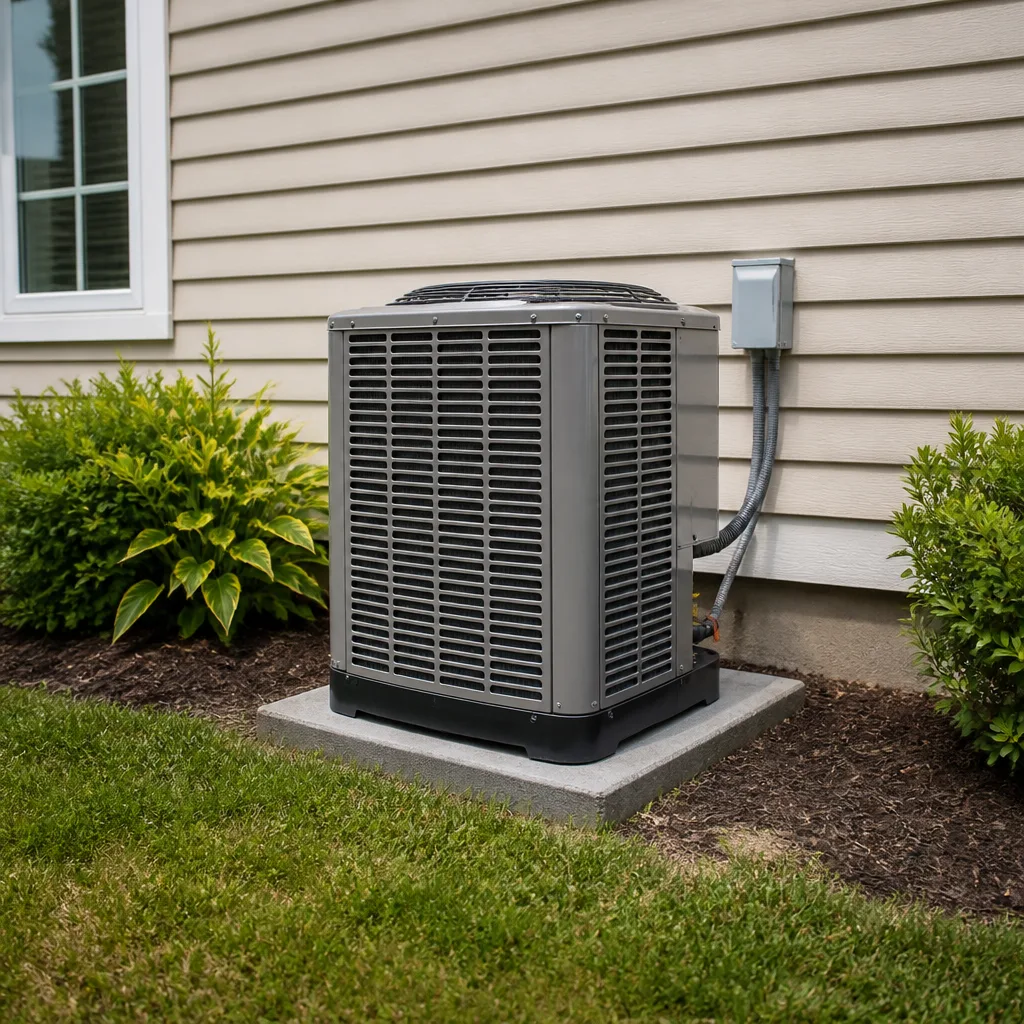 AC repair
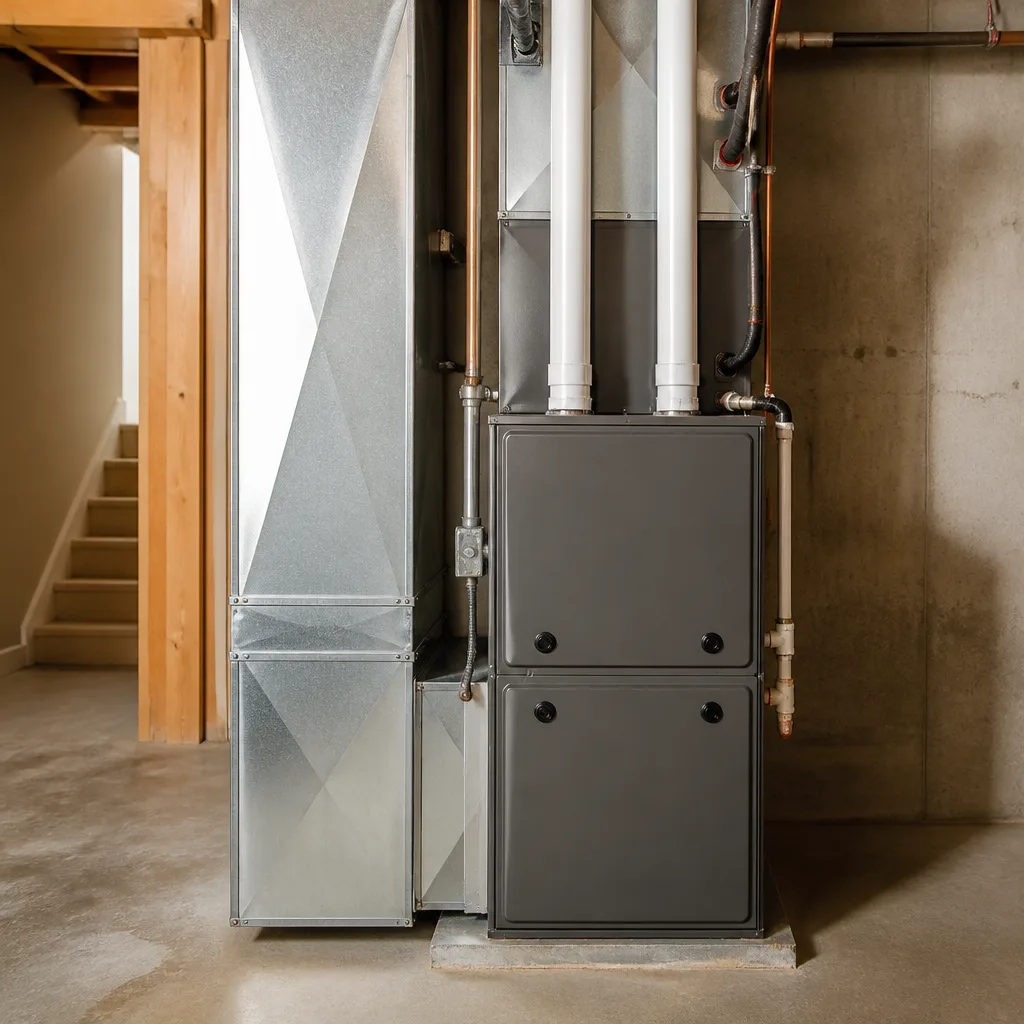 Furnace & heating
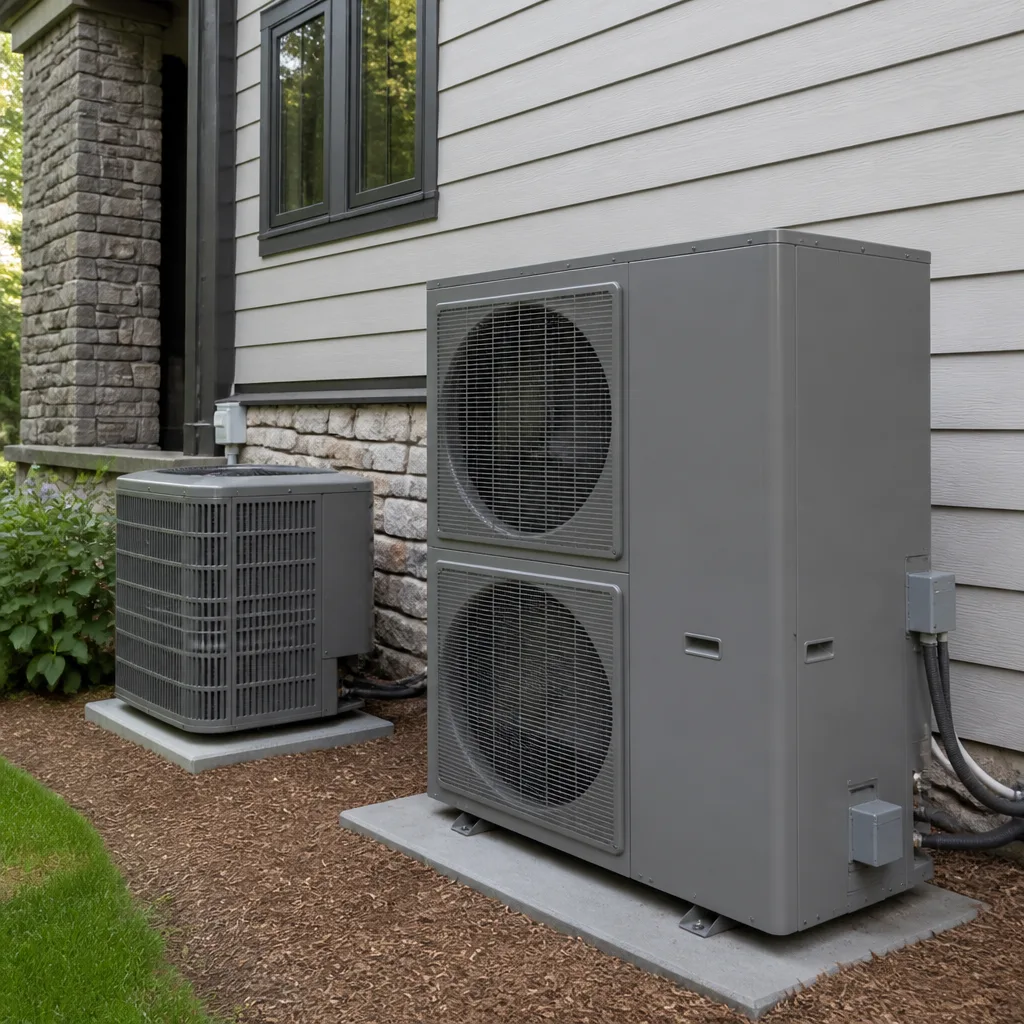 Heat pumps
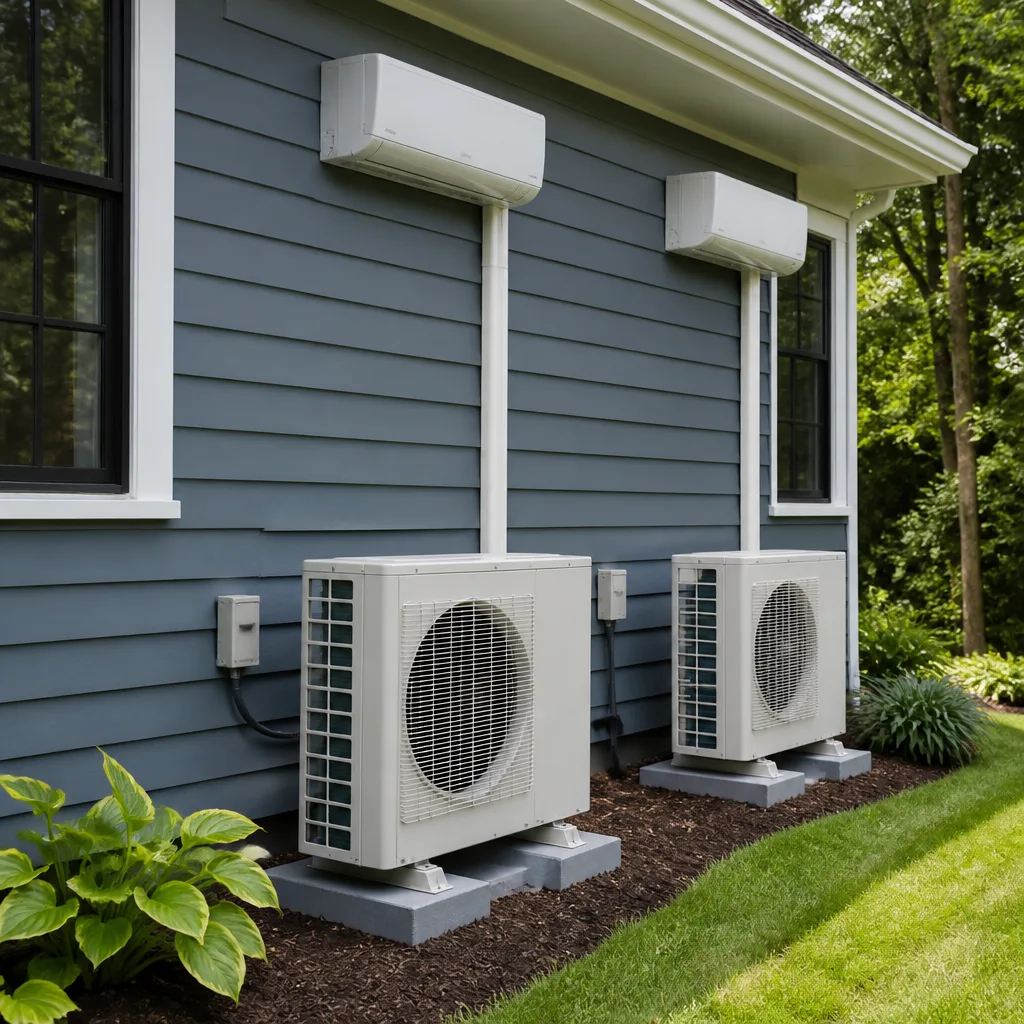 Ductless mini splits
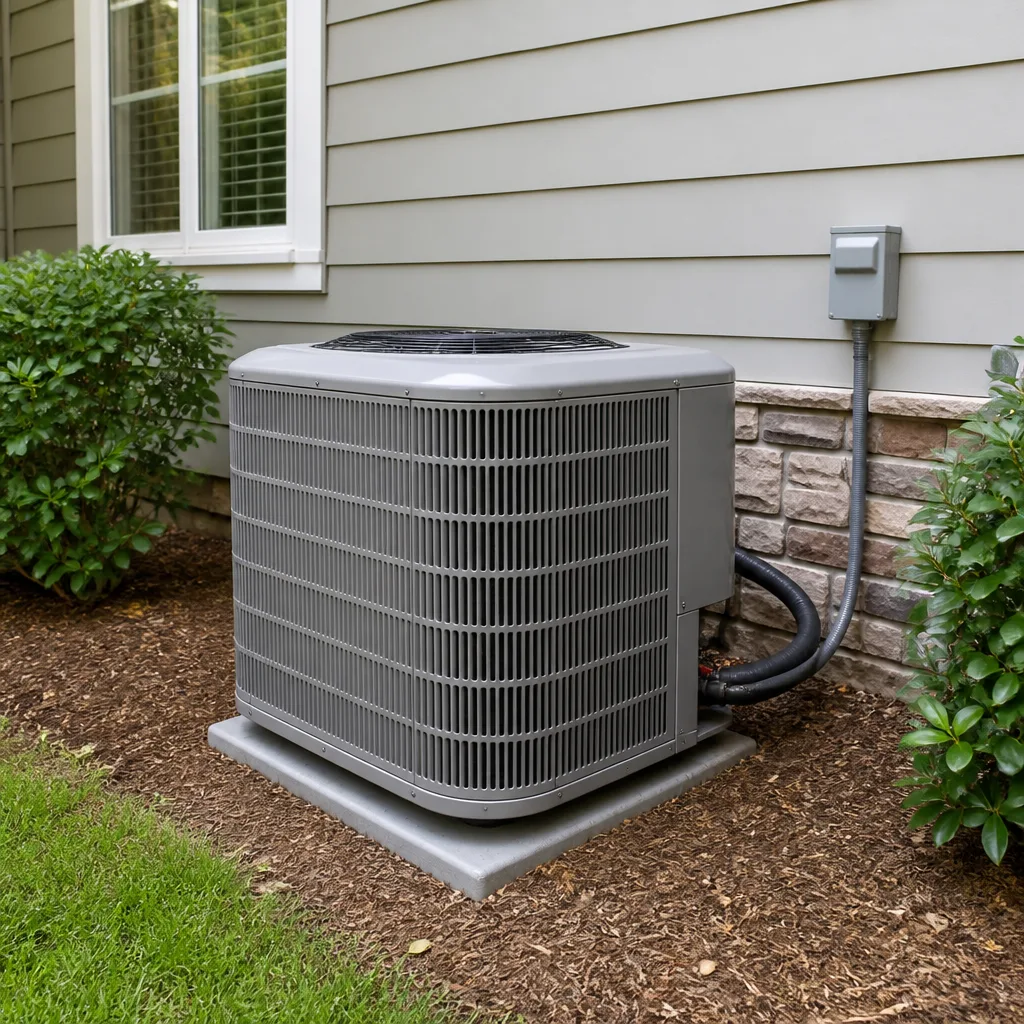 Carrier
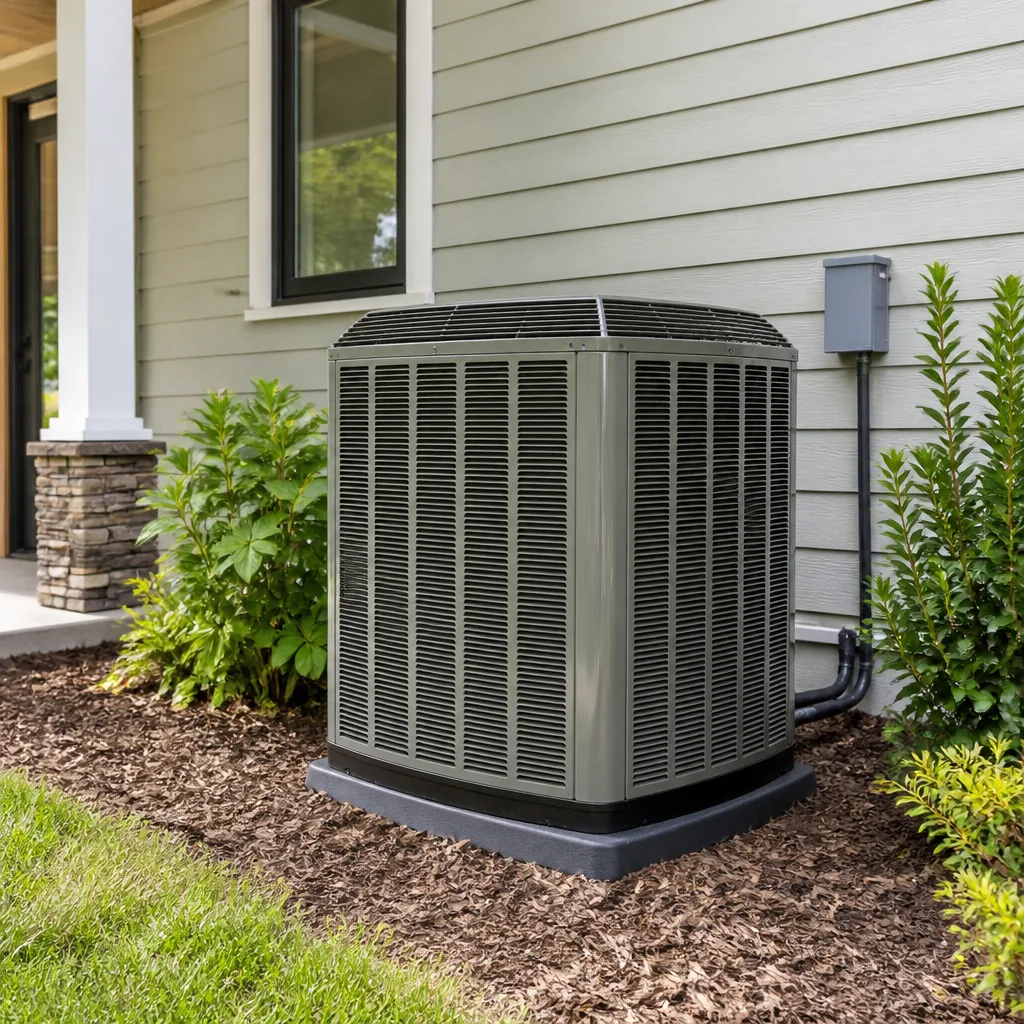 Trane
Trane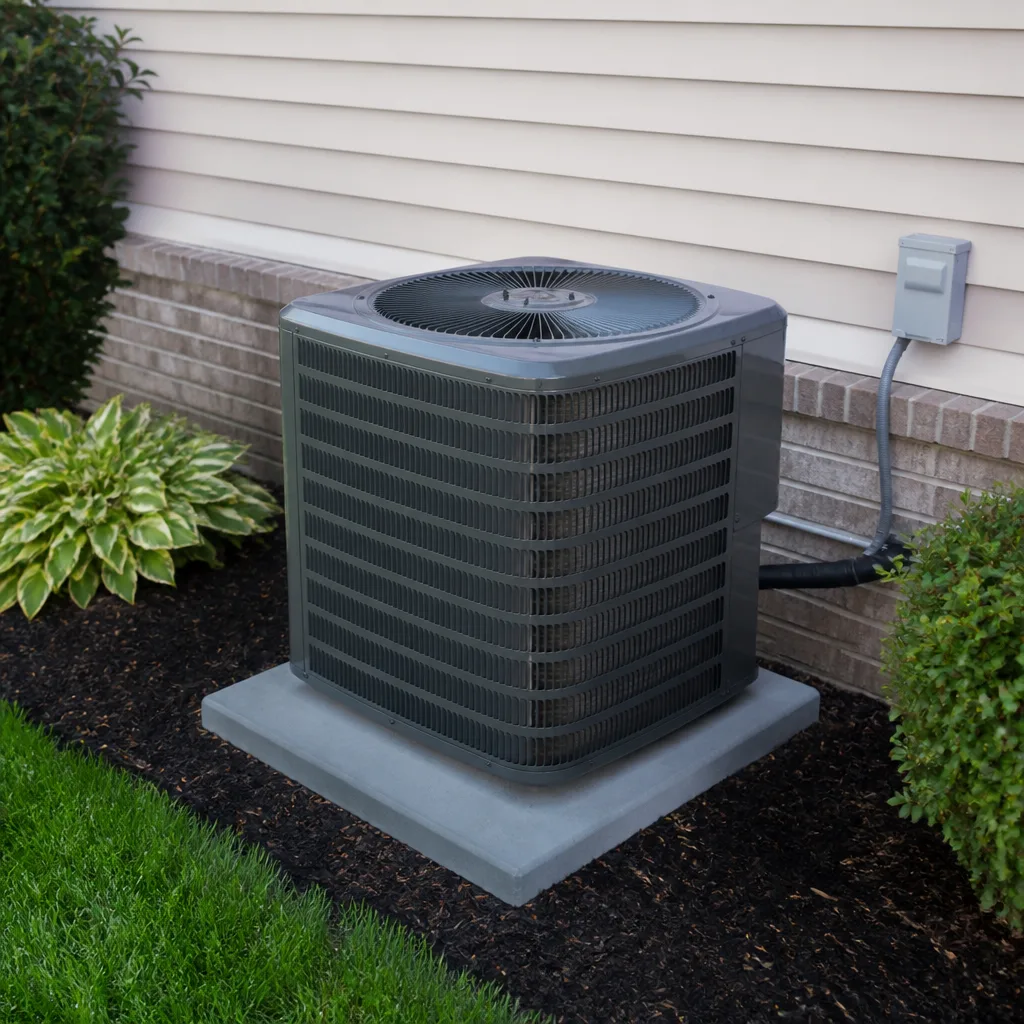 Goodman
Seasonal tune-up and full diagnostic on your Carrier, Trane, or Goodman system - readings shown to you before any repair is proposed
Diagnosis first, numbers second - you approve the repair price before a single part goes in.
Get your free estimateDIY vs Professional HVAC: The Sandy Springs Homeowner’s Decision Guide
Most “DIY vs professional” debates miss the real dividing line. It isn’t whether you’re handy enough to swap a capacitor. It’s whether the task is legal for you to perform in Georgia, whether it kills your manufacturer warranty, and whether it creates a disclosure problem when you sell the house. This guide lays out those boundaries in plain terms, and you can find How to Hire a HVAC Contractor in Sandy Springs: A Step-by-Step Guide if you need help choosing the right professional, so you can make a decision based on facts rather than a YouTube video’s confidence level. If you own a home in Sandy Springs, you’ll come away knowing exactly which HVAC jobs are genuinely yours to do, and which ones belong in the hands of a licensed contractor.
Styles & brands we work with
Quick Answer
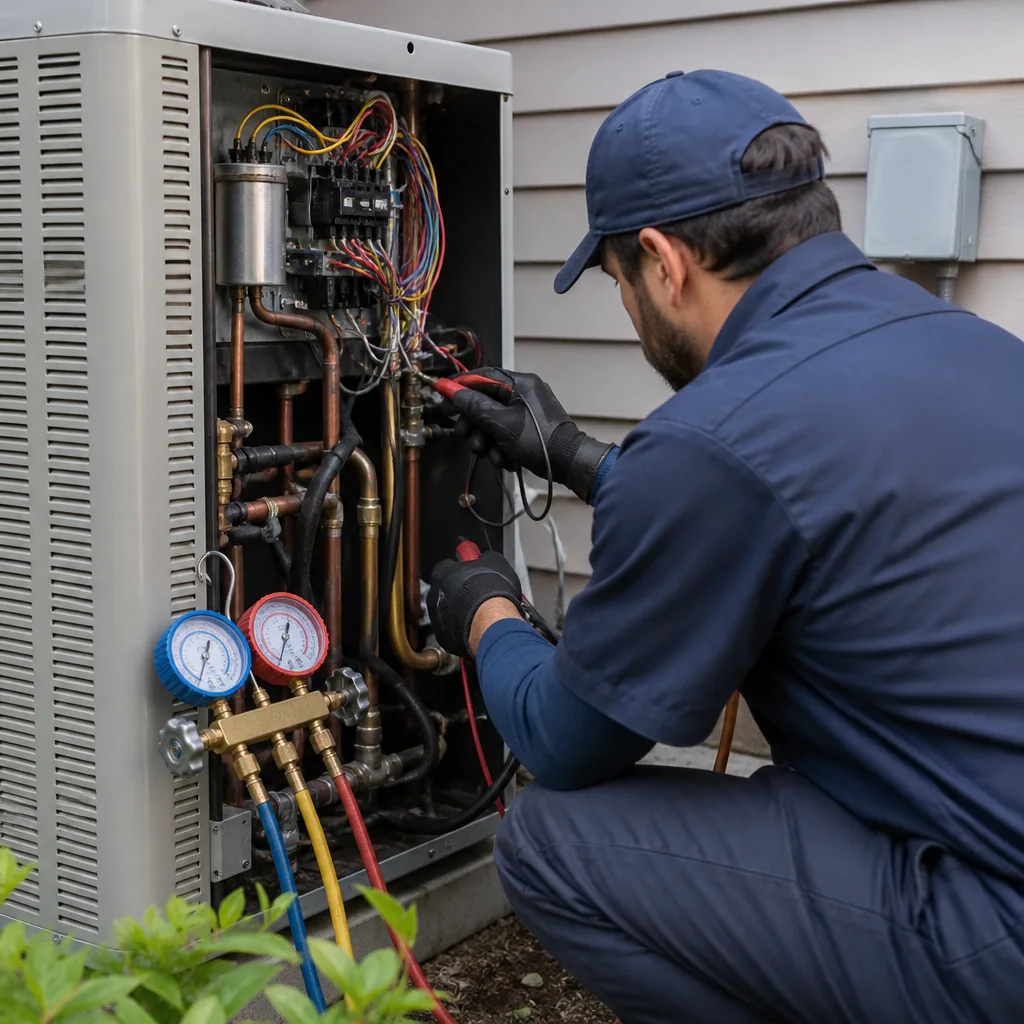
In Sandy Springs, Georgia homeowners can legally handle basic HVAC maintenance such as filter changes, thermostat battery replacement, and condensate line clearing without a license. However, any task involving refrigerant, gas lines, electrical panel connections, or heat pump component replacement requires an EPA Section 608 certification, a Georgia contractor’s license, or both. The practical answer for most homeowners: handle the five-minute maintenance items yourself, and leave anything that touches refrigerant, gas, or live electrical to a licensed professional.
Table of Contents
- The Legal Boundary: What Georgia Homeowners Can and Cannot Do
- Warranty Voidance: The Expensive Fine Print Most Guides Skip
- The Honest Cost Comparison: What DIY Actually Saves (and What It Doesn’t)
- Duct Sealing with Mastic: The Highest-ROI Legitimate DIY Task in Sandy Springs
- Resale and Insurance Risk: What a Home Inspector Is Trained to Flag
- Refrigerant and the EPA: Why the Law Is the Loudest Voice in the Room
- Seven Tasks You Can Safely Do This Weekend
- Common Mistakes to Avoid
- When to Call a Professional
- Frequently Asked Questions
- The Bottom Line
The Legal Boundary: What Georgia Homeowners Can and Cannot Do
Georgia law draws a clear line for HVAC work, and it has nothing to do with how capable you are with a wrench. The line is set by licensure requirements and federal environmental regulations. Here is the plain breakdown.
What Georgia homeowners CAN do on their own systems without a license:
- Replace or wash air filters
- Swap out thermostat batteries, and in most cases, replace a standard thermostat that runs on low-voltage wiring
- Clear a condensate drain line with a wet/dry vacuum or white vinegar flush
- Clean debris from around the outdoor condenser unit (leaves, grass clippings, cottonwood fuzz)
- Inspect visible ductwork for gaps or disconnections in an unfinished basement or attic
- Replace a blown fuse or reset a tripped breaker connected to the HVAC system
What Georgia homeowners CANNOT do without a license or federal certification:
- Add, remove, or recover refrigerant of any kind (R-410A, R-22, or the newer A2L refrigerants entering the market)
- Brazing or soldering refrigerant lines
- Replacing a compressor, evaporator coil, condenser coil, reversing valve, or thermal expansion valve (TXV)
- Installing or reconnecting gas line connections to a furnace
- Running new electrical circuits from the panel to an HVAC unit
- Replacing a heat pump’s outdoor unit or indoor air handler
One point that trips up Sandy Springs homeowners every summer: the “handyman” exception. Someone who is not a licensed Georgia contractor but calls themselves a handyman cannot legally perform the restricted tasks above either, even if they are working on your property with your permission. In the eyes of Georgia law, paying an unlicensed person to do licensed work puts the liability on you as the homeowner, not on them.
Warranty Voidance: The Expensive Fine Print Most Guides Skip
Manufacturer warranties are not written as a show of goodwill. They are written as a series of conditions, and one of those conditions is almost always that installation and major repairs must be performed by a licensed contractor. This is not a suggestion buried in fine print. It is usually on the first or second page of the warranty certificate.
Carrier’s standard limited warranty, for example, states that the warranty does not cover damage caused by “improper installation, application, service, or maintenance” and that the owner may be required to provide proof of installation by a licensed professional. Lennox warranties go further with language about “unauthorized modification” and “repairs performed by unqualified personnel” being express grounds for voiding coverage.
What this means in practical terms: if you replace a failing capacitor yourself and your compressor fails two months later, the manufacturer is within its rights to deny the compressor claim because the system was serviced by an uncertified individual. You might feel that the two events are unrelated. The manufacturer’s warranty examiner will not care. The burden of proof shifts to you, and that is a fight most homeowners lose.
How to check your own warranty before touching equipment:
- Find the model and serial number on the data plate of your outdoor condenser and indoor air handler.
- Visit the manufacturer’s website (Carrier, Trane, Lennox, Goodman, Rheem, York, Daikin, Bryant, or American Standard all publish warranty terms online).
- Search for the phrase “unauthorized repair” or “qualified technician” in the warranty document.
- Look for any requirement that installation be registered within a set number of days (commonly 60 or 90, depending on the brand).
- If you bought the home with an existing system, check whether the warranty was transferred properly. Most brands allow a transfer within a limited window, often 60 to 90 days from closing.
In our experience in Sandy Springs, homeowners are surprised by how aggressively manufacturer claims departments enforce warranty language. This is especially true on newer systems, where warranty coverage is a major part of the purchase value. A DIY repair that saves $180 in the moment can void $6,000 in compressor coverage without the homeowner ever realizing it until the big failure happens.
The Honest Cost Comparison: What DIY Actually Saves (and What It Doesn’t)
The DIY versus professional question is a money question for most people, and it deserves honest math. Not inflated numbers from a company trying to scare you, and not optimistic numbers from a forum poster who did the job once and had it work out. Here is the comparison for the most common jobs Sandy Springs homeowners attempt on their own.
Thermostat replacement or upgrade:
- DIY parts cost: $25 to $80 for a basic programmable thermostat. Smart thermostats from brands like Ecobee or Nest run $130 to $250.
- DIY time: 45 minutes to 2 hours, depending on your comfort with low-voltage wiring and whether the existing wiring has a common wire (C-wire).
- Professional installation: $150 to $220 including the thermostat provided and wired correctly, the old thermostat handled, and a test of the full heating and cooling cycle.
The breakeven scenario is straightforward here. If you are comfortable turning off power at the breaker, matching wire labels, and running a basic test, thermostat replacement is a legitimate DIY win. If you open the wall and see wires that do not match the labels on the new thermostat, or if you have a heat pump system that requires configuring O/B reversing valve settings, the professional cost starts to look cheap compared to the troubleshooting afternoon you are about to have.
Capacitor replacement:
- DIY parts cost: $15 to $45 for the capacitor itself.
- Professional repair: $180 to $320, which includes diagnosis, the part, replacement, and a written guarantee on the repair.
This is the one that seduces people. The part is cheap and the YouTube tutorials are concise. What rarely gets mentioned: capacitors store electrical charge, and a capacitor that still holds a charge can deliver a serious shock long after power is off. A professional knows how to safely discharge it. More importantly, a professional is trained to check whether the capacitor failure was a symptom of something else, like a failing compressor drawing too much current. Changing the capacitor without understanding why it failed may buy you three weeks, not three years.
Contactor replacement:
- DIY parts cost: $15 to $30.
- Professional repair: $160 to $290, with diagnosis of the underlying cause.
Same pattern as the capacitor. Cheap part, real risk, and the chance of missing a deeper electrical problem. Plus, if your unit is still under a parts warranty, the capacitor, contactor, and many other components may be covered. The manufacturer will cover the part, but only if a licensed contractor does the diagnosis and labor. That changes the math entirely.
Duct Sealing with Mastic: The Highest-ROI Legitimate DIY Task in Sandy Springs
If there is one genuinely worthwhile HVAC task a Sandy Springs homeowner can do without touching anything dangerous or warranty-sensitive, it is sealing accessible ductwork with mastic. Most older Sandy Springs homes were built during the 1970s through 1990s construction waves, and duct leakage in those homes routinely runs 20 to 35 percent according to Department of Energy testing data. That means a third of the air your system conditions is blowing into the attic, crawlspace, or wall cavity before it ever reaches a register.
Duct sealing with mastic is not the same as wrapping a joint in duct tape. Duct tape, despite the name, is the wrong material for ducts and actually degrades and falls off within a year or two in hot attic conditions. Mastic is a thick, paste-like sealant designed specifically for HVAC ductwork. It stays flexible, fills small gaps, and bonds well to galvanized metal and duct board. It is available at most hardware stores and building supply houses in Sandy Springs for about $15 to $30 per gallon or quart.
How to do it correctly, in the right order:
- Turn the system off completely before you start, not just at the thermostat but at the breaker if possible.
- Work only on ductwork you can see and reach safely, typically in an unfinished attic or an accessible crawlspace. Do not squeeze into spaces you cannot safely move through.
- Inspect each joint where two duct sections meet, plus any place where a duct connects to a register boot or the main supply trunk.
- Look for visible gaps, separated seams, or tape that has peeled away. Run your hand near the joint with the system running before you turn it off to feel for escaping air.
- Apply mastic with a chip brush or a gloved hand, pressing it into the gap and spreading it about an inch beyond the joint on each side.
- Allow the mastic to dry fully (usually 24 to 48 hours) before running the system again.
- Seal the register boots where they meet the drywall from inside the room with caulk, if accessible by removing the vent cover.
For a home in Sandy Springs where summer cooling bills regularly run $200 to $400 in peak months, cutting duct leakage by even 10 to 15 percent translates into a real and ongoing reduction in monthly cost. It also improves the balance of air between rooms, which is a common complaint in two-story homes across neighborhoods like Dunwoody Panhandle and the river corridor. This is one DIY task where the risk is low, the materials are cheap, and the return is measurable.
Resale and Insurance Risk: What a Home Inspector Is Trained to Flag
Sandy Springs real estate moves fast, and when a home goes under contract, the buyer almost always orders an inspection. Home inspectors in Georgia follow a standard set of inspection protocols from ASHI and InterNACHI, and those protocols include HVAC-specific checks. Here is what an inspector is trained to look for, and how your DIY work will read to them.
When an inspector opens the air handler cabinet or the condenser panel and sees field-installed parts that do not match the manufacturer’s specifications, they flag it. If they see wiring connections that are not up to code, they flag that too. If they see evidence of refrigerant line work that was clearly not done by a licensed contractor, such as improperly insulated lines, brazed joints that look hand-made, or mismatched components, they flag the system as “further evaluation recommended by a licensed HVAC contractor.” That language alone can delay closing or trigger a price renegotiation.
The bigger issue is disclosure. When you sell a home in Georgia, you complete a Seller’s Property Disclosure Statement. One of the sections asks whether you are aware of any significant repairs, modifications, or replacements performed without a permit or by someone other than a licensed contractor. If you did unlicensed refrigerant work or installed a heat pump component without a permit-work that should follow HVAC Permits, Codes & Inspections in GA: What You Need to Know-and you check “no,” you have created a material misrepresentation. That exposure follows the house at resale, and it follows you personally if the buyer discovers the issue after closing.
Insurance is a related but separate risk. Most Sandy Springs homeowners’ policies contain language about “reasonable maintenance” and prompt repair of covered systems. If a claim involves water damage from a condensate backup or fire damage from an electrical fault, the insurer will investigate. If their adjuster finds that the proximate cause involves HVAC work performed by someone other than a licensed contractor, the claim can be denied. This is not hypothetical. Adjusters are trained to look for this.
The practical takeaway: the DIY tasks on the legal list at the top of this guide do not create resale or insurance exposure. The DIY tasks where you saw someone on YouTube “save $2,000” almost certainly do. The line is the same line drawn by state law and manufacturer warranty language. It is not a coincidence.
Refrigerant and the EPA: Why the Law Is the Loudest Voice in the Room
Every DIY HVAC conversation eventually reaches the topic of refrigerant, and it tends to reach it quickly. Refrigerant handling is the clearest, least ambiguous legal boundary in the entire field. You either hold an EPA Section 608 certification, or you do not. If you do not, you cannot legally purchase refrigerant, and you cannot legally add, remove, or recover it. That includes “topping off” a system that seems low, which is the most common DIY attempt.
The EPA enforces Section 608 of the Clean Air Act, which covers refrigerants that deplete ozone or contribute to climate change. This includes the R-410A still present in many Sandy Springs systems and the R-22 still running in some older units in 1990s construction. Violation penalties run up to $37,500 per day, per violation. The EPA has pursued individual homeowners, not just contractors, in enforcement actions.
Beyond the federal violation, there is a practical problem: you cannot buy the refrigerant legally. Anyone selling it to an uncertified buyer is violating federal law themselves, and legitimate supply houses in Georgia will not sell to someone who cannot produce a certification card. The “refill kits” sold online for automotive systems are not compatible with residential HVAC equipment, despite how the packaging may look. Using an automotive can on a residential system is illegal, dangerous, and likely to destroy the compressor.
There is also the matter of newer refrigerant chemistry. The industry is transitioning to A2L refrigerants, which are mildly flammable under certain conditions. This changes installation and service protocols in ways that a homeowner following 2015-era advice will not understand. The safe and legal path is unchanged: refrigerant work is professional work, full stop.
Seven Tasks You Can Safely Do This Weekend
The legal tasks list from earlier is useful, but some people need it broken into a practical weekend checklist. Here are seven low-risk, high-value HVAC tasks you can do in Sandy Springs without a license, without voiding a warranty, and without needing special tools beyond what most homeowners already own; for additional projects after these, browse our more guides & resources.
- Change the air filter. This is the single highest-frequency task in HVAC and the one most often skipped. In Sandy Springs, where pollen season starts in late February and runs hard through April, filters clog faster than they do in most of the country. A clogged filter restricts airflow, which raises energy use and shortens compressor life. Check it monthly during peak pollen season.
- Clear the condensate drain line. Clogged condensate lines are the number one cause of water damage calls in Georgia summers. Pour one cup of white vinegar into the line access point once every two to three months. If the line is actively clogged, use a wet/dry vacuum on the outside drain point to pull the blockage free.
- Clean the outdoor condenser. Georgia humidity accelerates debris buildup on condenser coils. Turn off the breaker, remove the outer grille if it is designed for removal, and use a garden hose with a moderate spray to rinse leaves, pollen, and grass clippings from the coil fins. Never use a pressure washer, which bends fins and reduces efficiency.
- Check and clean supply and return vents. Walk the house and ensure no vents are blocked by furniture, rugs, or curtains. Vacuum the vent openings to remove dust and pet hair that accumulates in Sandy Springs homes with pets.
- Inspect visible ductwork for obvious gaps. Go into the attic or crawlspace on a cool morning and look for places where ducts have separated at joints or where old tape has failed. Mark them, photograph them, and decide whether they are within your comfort zone for mastic sealing using the process described earlier.
- Test the thermostat’s temperature reading. Tape an accurate thermometer to the wall next to the thermostat and compare readings after 30 minutes. If the thermostat is off by more than 2 degrees, it may need recalibration or replacement.
- Listen for unusual sounds during a full cycle. Turn the system on and walk the house. Hissing, grinding, banging, or short cycling (the system turning on and off every few minutes) are signs that something is wrong. Note when they happen and what they sound like, then decide whether you need a professional diagnosis.
Common Mistakes to Avoid
- Using automotive refrigerant in a residential system. The fitting is different, the refrigerant type is different, and modern residential systems are not designed for it. This mistake destroys compressors and voids warranties in one afternoon.
- Believing a thermostat swap is always just five wires. If you have a heat pump, and many Sandy Springs homes do, the thermostat needs proper O/B reversing valve configuration. Getting this wrong means your system heats when it should cool and cools when it should heat.
- Sealing ductwork with duct tape. This fails so reliably that it has become a joke inside the trade. Use mastic or foil-faced tape designed for HVAC, never the gray fabric tape.
- Recharging refrigerant without checking for a leak first. A system does not “use up” refrigerant. If it is low, there is a leak. Adding refrigerant without finding and fixing the leak is a temporary patch that wastes money and damages the compressor over time.
- Oversizing a replacement filter or buying one with a higher MERV rating than the system was designed for. High-MERV filters restrict airflow, which makes the system work harder. Unless the system was designed for a MERV 13 filter, and most residential systems in Sandy Springs were not, a MERV 8 to MERV 11 is the sensible range.
- Ignoring the electrical safety step. Turning the thermostat to “off” is not the same as de-energizing the system. The outdoor condenser and indoor air handler both carry high-voltage power even when the system is not actively cooling or heating. Always turn off the breaker at the panel before opening any access cover.
- Assuming a self-diagnosis is correct. HVAC symptoms overlap heavily. A system that won’t start could be a capacitor, a contactor, a control board, a thermostat, a breaker, or a safety switch. Parts cannon repair, swapping components until something works, is the most expensive way to diagnose a system.
When to Call a Professional
Call a licensed contractor any time the work involves refrigerant, gas lines, electrical panel connections, compressor or coil replacement, or any repair on a system still under manufacturer warranty. Call when you have already tried the simple fixes and the system still is not working. Call when the problem is intermittent, because those are the hardest to diagnose correctly. Call when the system makes a sound you cannot identify, because sound is one of the most reliable diagnostic signals in HVAC and acting on a guess is expensive. Call when the system short-cycles, leaks water, or trips a breaker more than once. Dalton Heating & Air Sandy Springs offers free estimates and honest diagnostic service in Sandy Springs. Call us at (478) 400-5908 to schedule.
Frequently Asked Questions
Yes, Georgia homeowners can legally perform simple maintenance on their own systems without a license, including filter replacement, thermostat battery replacement, condensate line clearing, and cleaning debris from the outdoor unit. Repairs involving refrigerant, gas connections, or compressor and coil replacement require an EPA certification or a Georgia contractor’s license and are not legal for an uncertified homeowner to perform.
Capacitor replacement is the task most likely to be not worth doing. The part is cheap at $15 to $45, but the risk of electrical shock is real, and if the capacitor failed due to an underlying problem such as a failing compressor, replacing the capacitor alone does not fix the actual issue. A professional diagnosis runs about $180 to $320 and includes a written guarantee.
No, changing your own filter will not void your warranty, and manufacturers actually require regular filter changes as a condition of warranty coverage. The tasks that void warranties are repair and installation work performed by someone other than a licensed contractor, especially anything involving refrigerant or component replacement.
Most HVAC companies in Sandy Springs charge between $75 and $120 for a diagnostic service call, and that fee is typically applied to the repair if you proceed with the work described. At Dalton Heating & Air Sandy Springs, the price is in writing before any work starts, and the diagnostic includes a written explanation of what was found.
For legitimate DIY tasks like filter changes, thermostat swaps, and duct sealing, a Sandy Springs homeowner can reasonably save $250 to $600 per year compared to paying for those services. The savings evaporate quickly, however, if you attempt restricted work and damage the system, void a warranty, or create a resale disclosure problem.
The buyer’s home inspector is trained to flag HVAC systems that show evidence of non-code or unpermitted installation, and the Georgia Seller’s Property Disclosure Statement asks directly about unlicensed repairs. If you fail to disclose unlicensed refrigerant or component work and the buyer discovers it after closing, you can be liable for the repair costs and the nondisclosure.
The Bottom Line
The decision between DIY and professional HVAC in Sandy Springs is not about how handy you are. It is about three fixed boundaries: Georgia law, manufacturer warranty language, and resale disclosure obligations. Those boundaries allow you to handle filter changes, thermostat swaps, condensate line clearing, and duct sealing with mastic. They prohibit you from touching refrigerant, gas connections, electrical panel work, and component replacement. Stay on the right side of those lines, and you will save money where savings are real and spend money where spending is required. For everything on the professional side, Dalton Heating & Air Sandy Springs offers written pricing, a written guarantee on every repair, and technicians who work on all nine major residential HVAC brands including Rheem, York, Daikin, and Bryant. Call (478) 400-5908 for a free estimate, or visit our Dalton Heating & Air Sandy Springs home page to see our full service area. For specific repair needs, see our AC Repair in Sandy Springs, Heat Pump Installation in Sandy Springs, or Furnace Repair in Sandy Springs pages.
Written by Marco Benitez, Owner at Dalton Heating & Air Sandy Springs, serving Sandy Springs since 2003.
See the difference
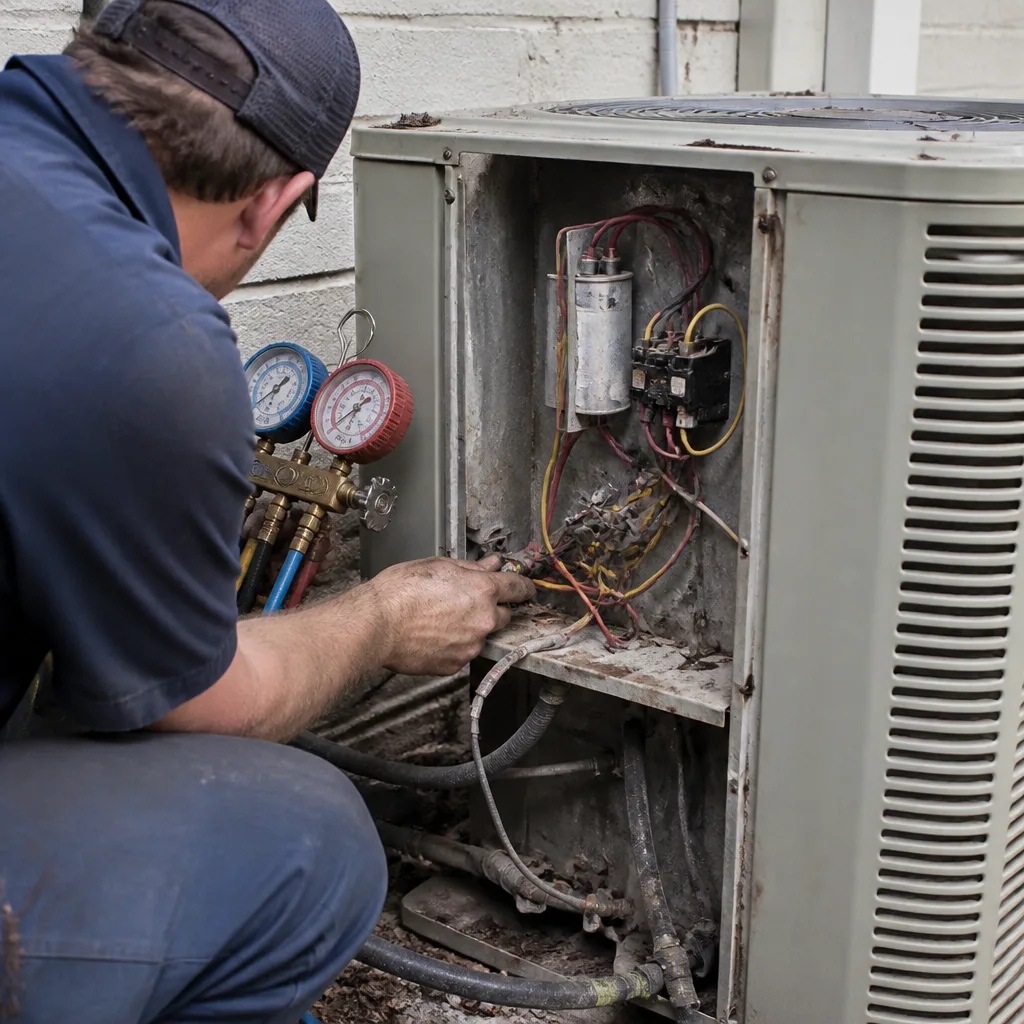 Before
 After
After Before
 After
After Before
 After
After