
Last updated October 16, 2026
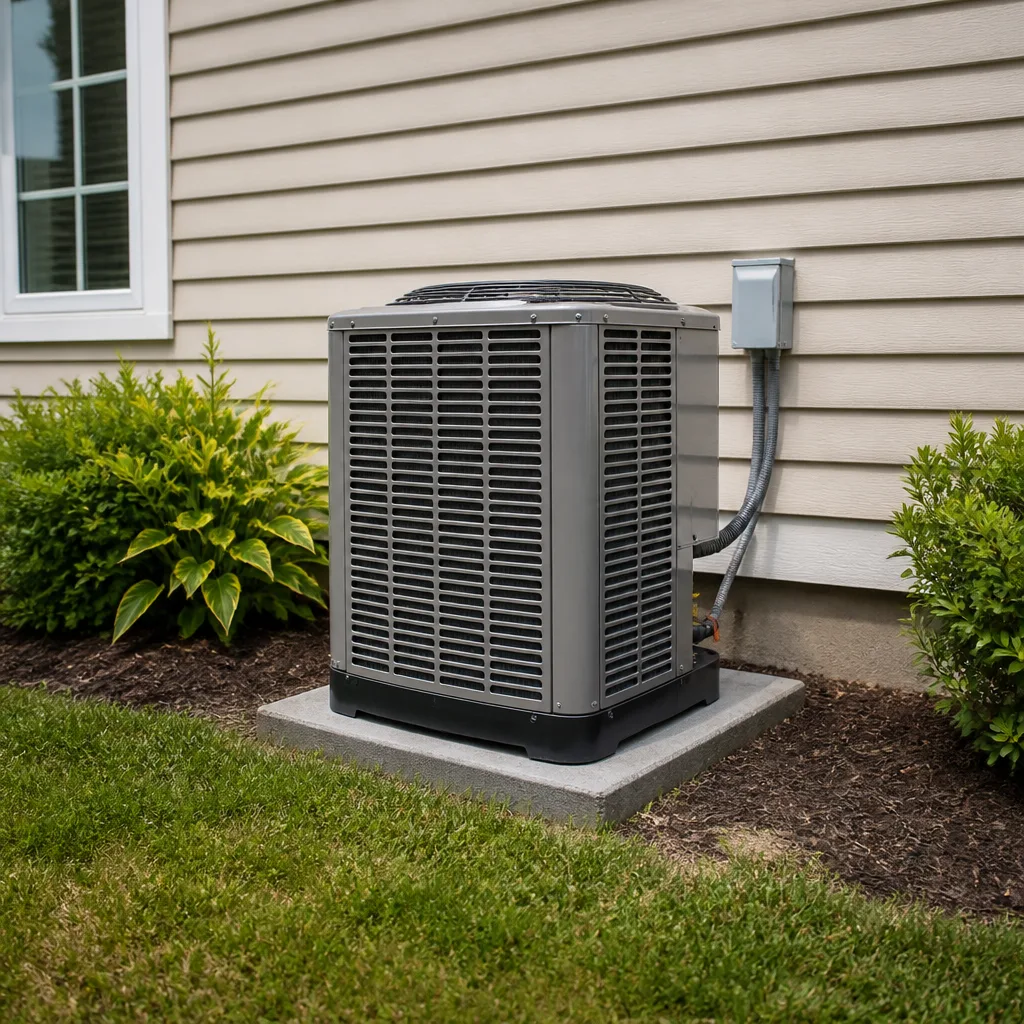 AC repair
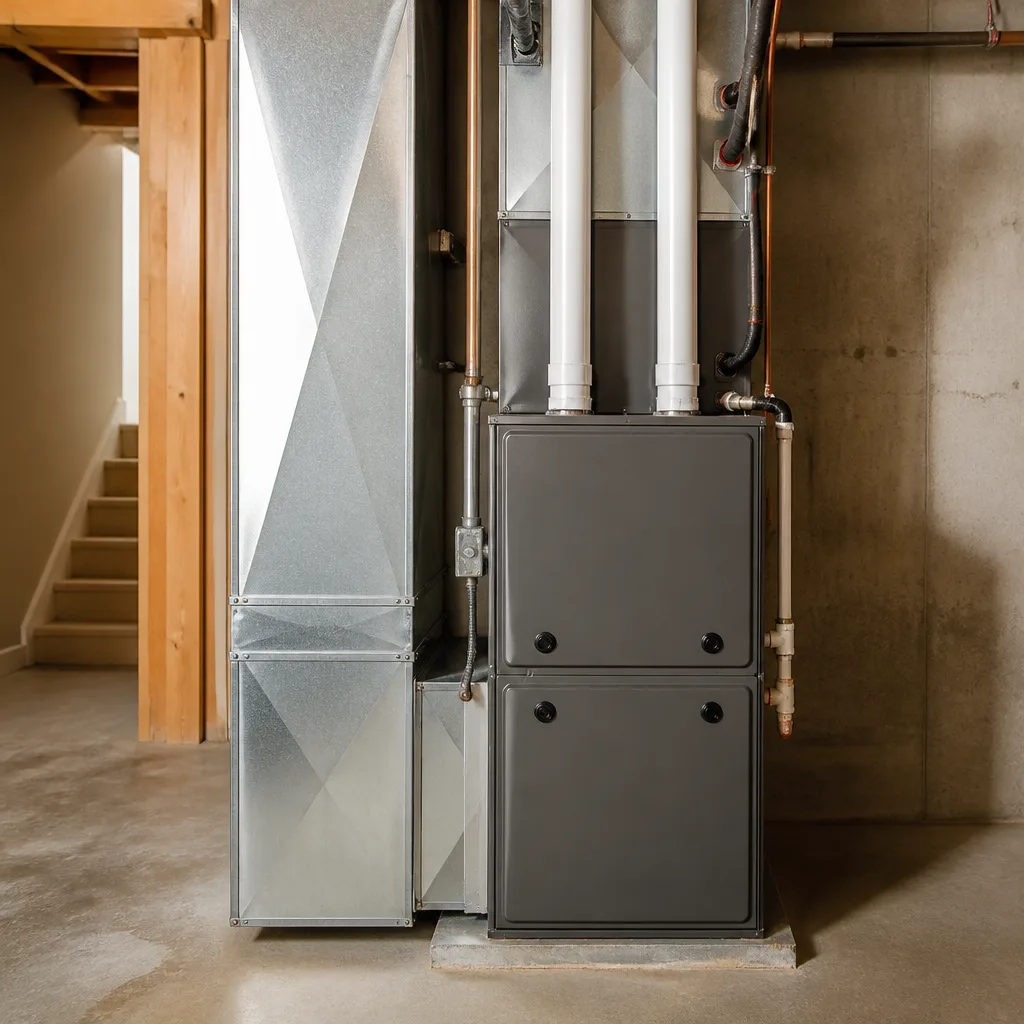 Furnace & heating
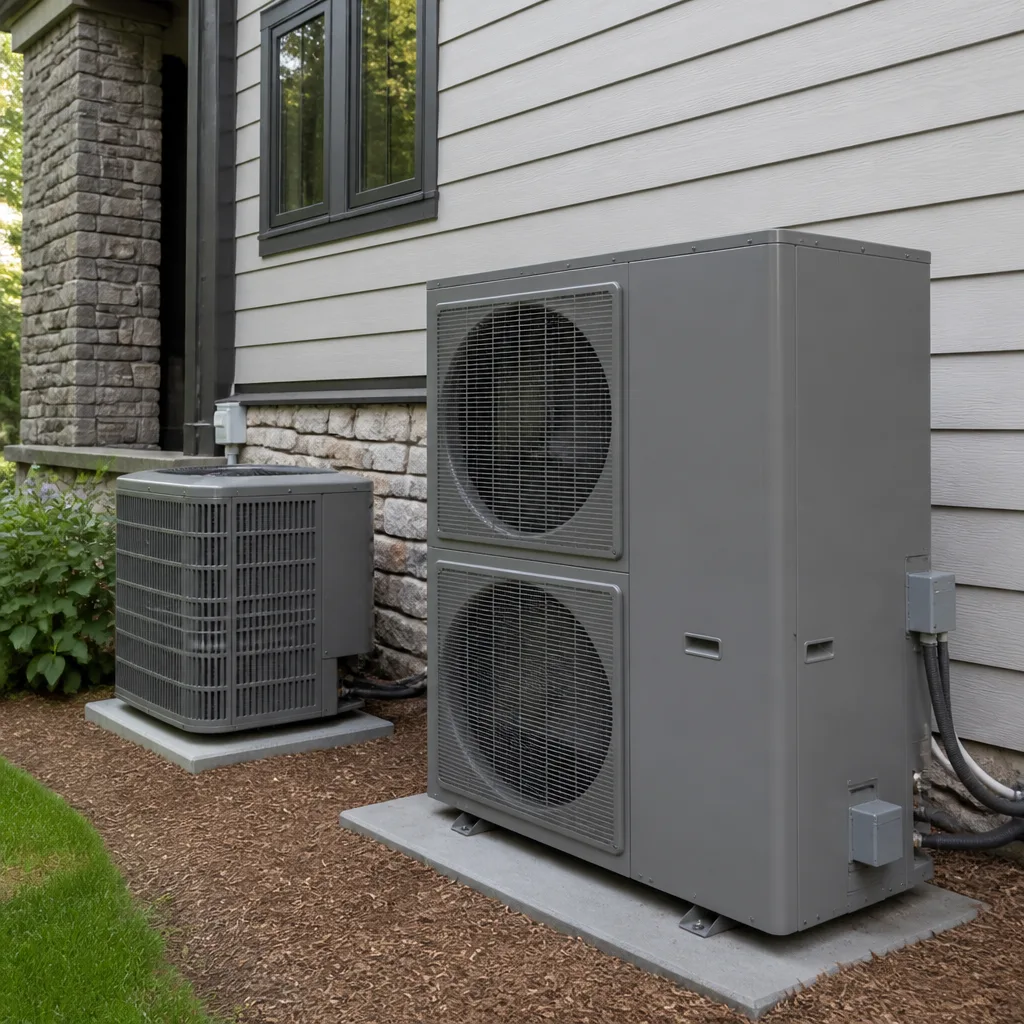 Heat pumps
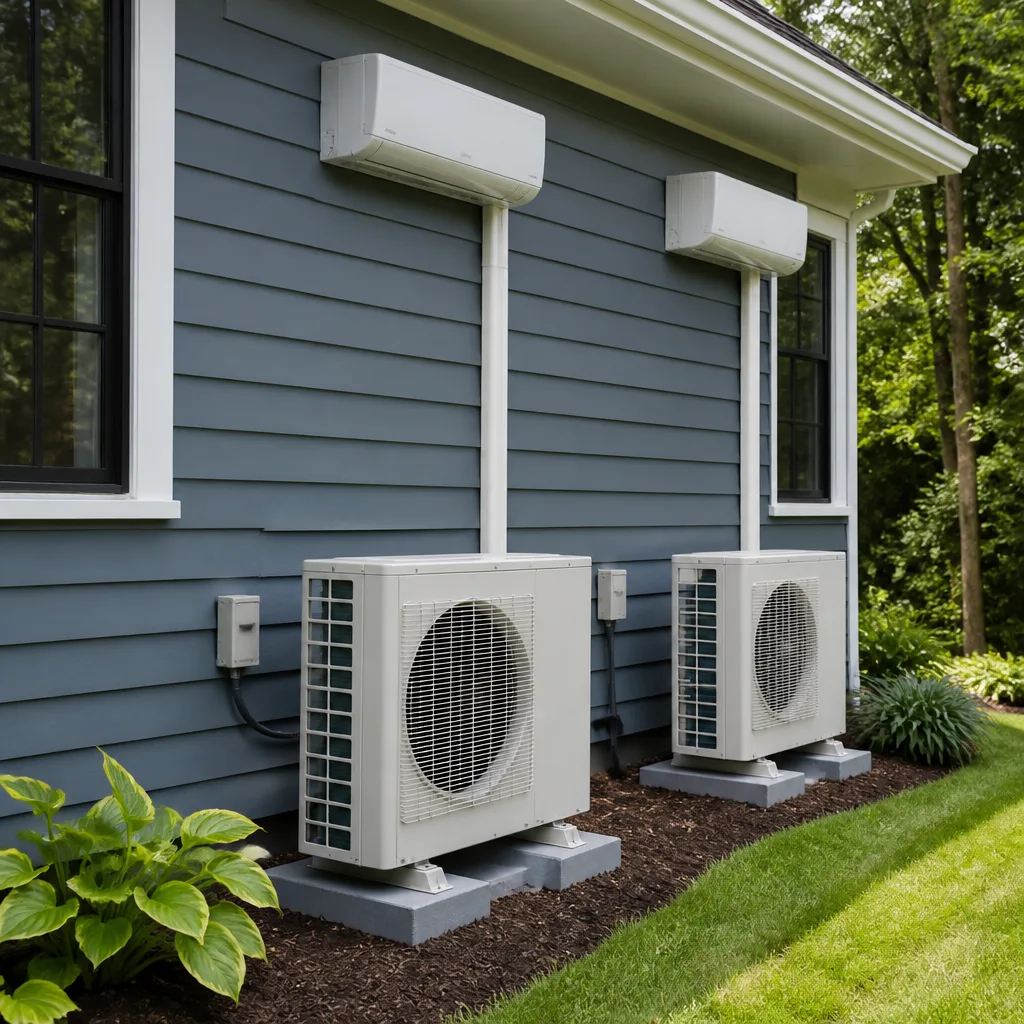 Ductless mini splits
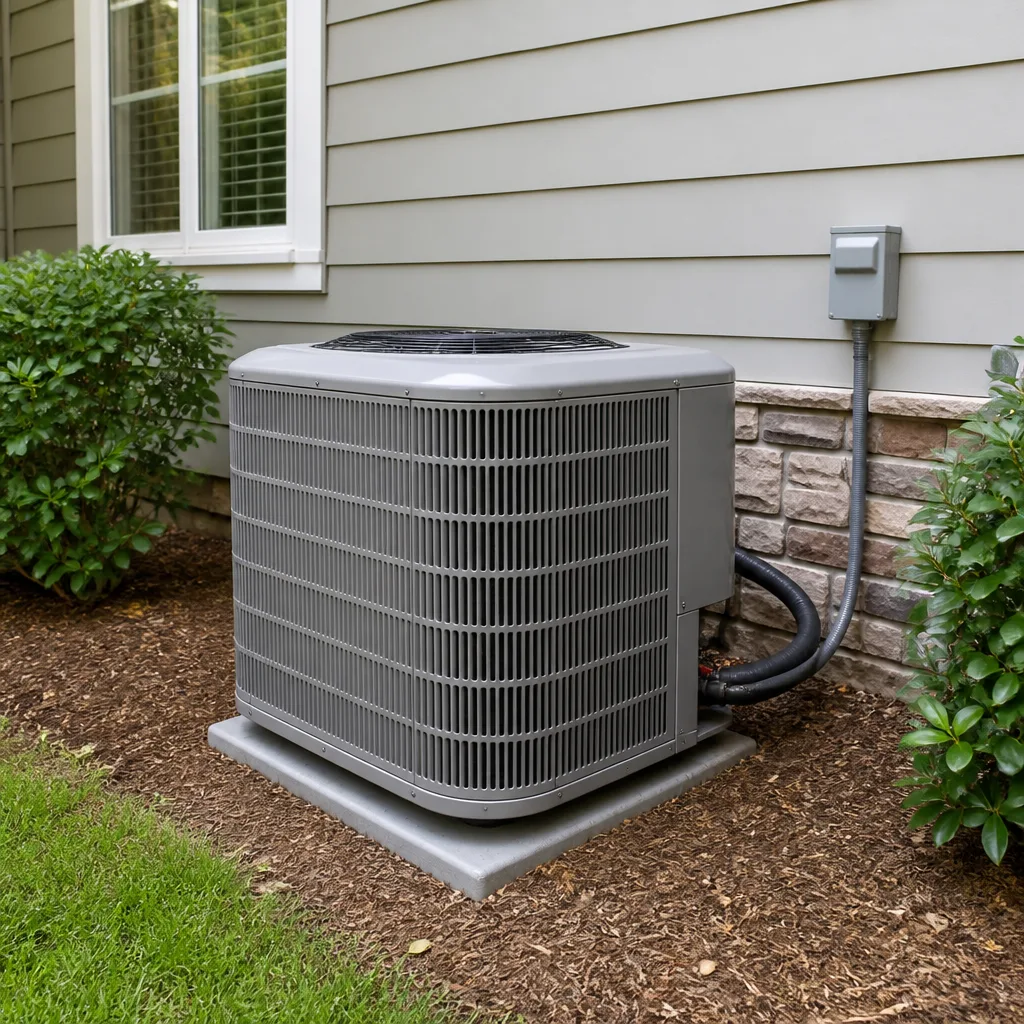 Carrier
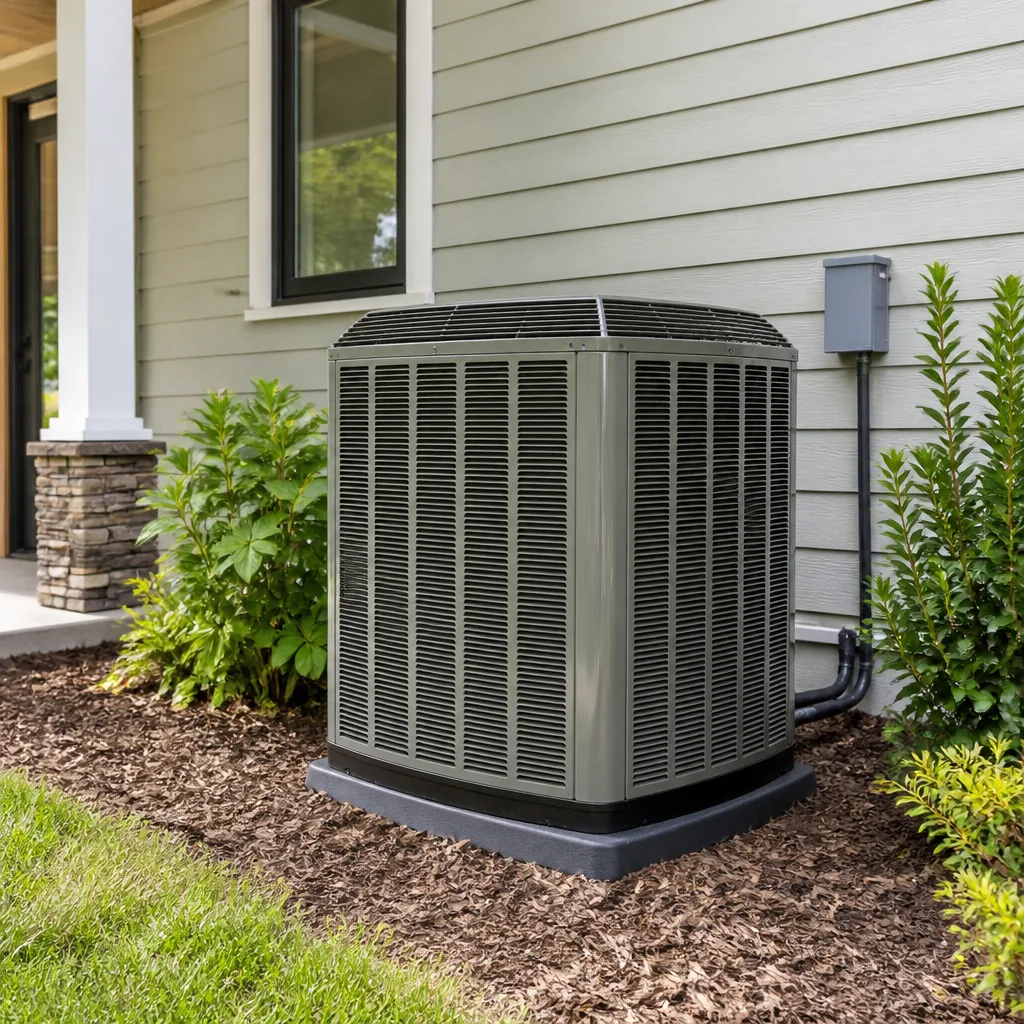 Trane
Trane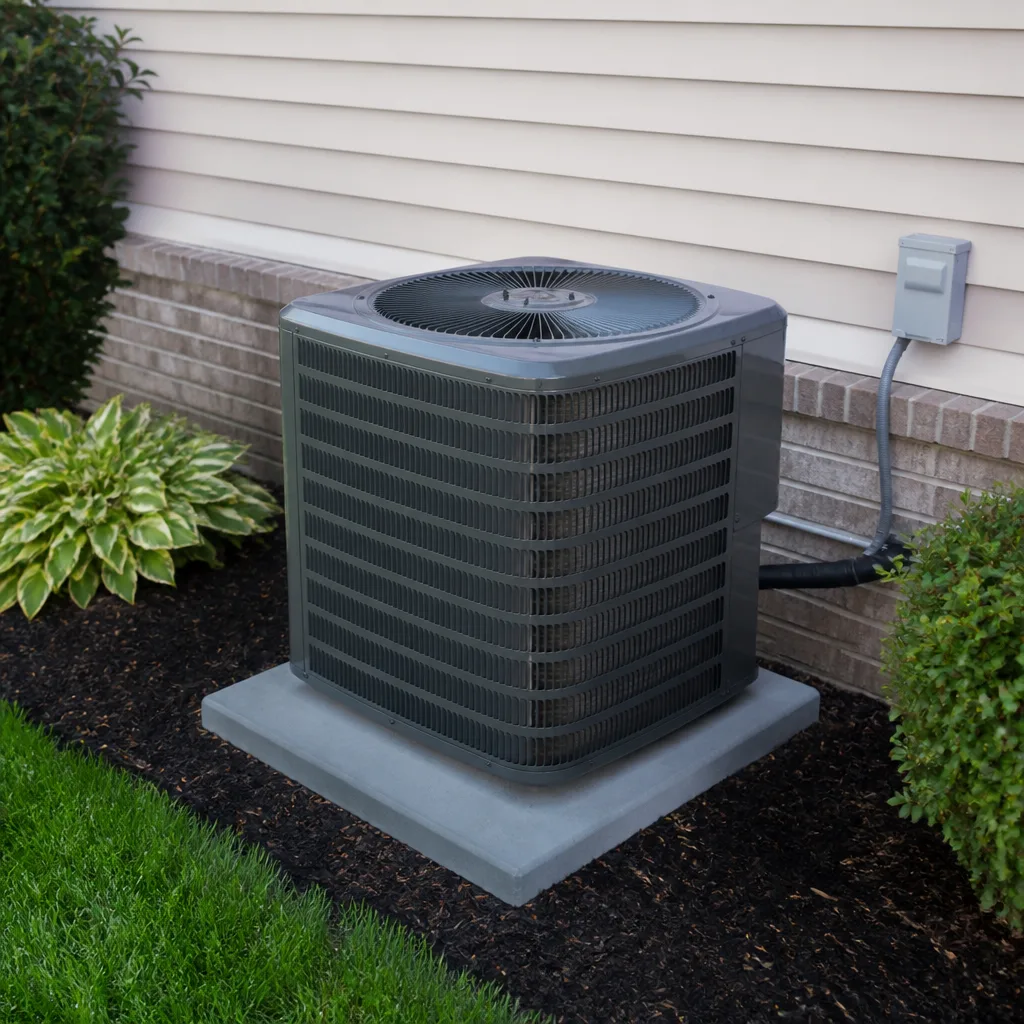 Goodman
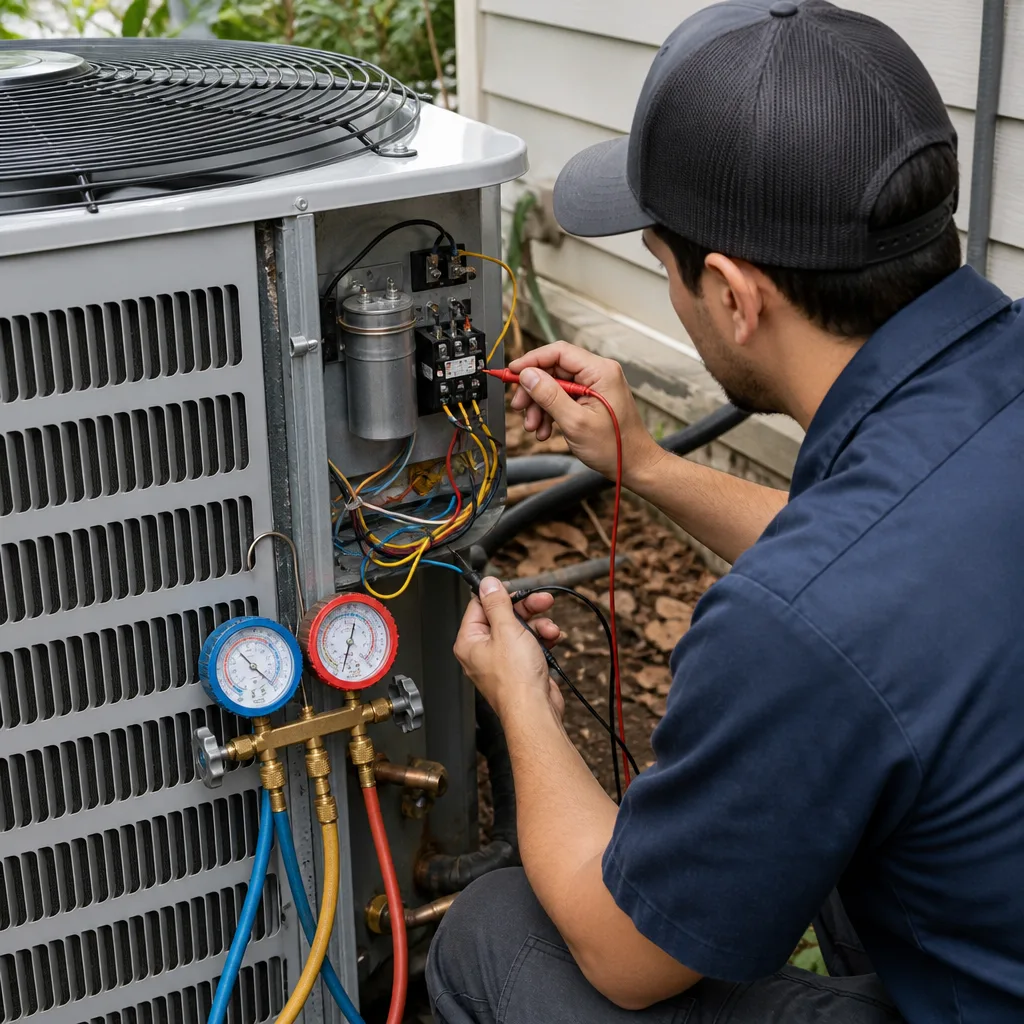
Seasonal tune-up and full diagnostic on your Carrier, Trane, or Goodman system - readings shown to you before any repair is proposed
Diagnosis first, numbers second - you approve the repair price before a single part goes in.
Get your free estimateHVAC Cost Breakdown: The Sandy Springs Homeowner’s Reference for 2026
Here’s a number most HVAC companies won’t volunteer: the labor markup on equipment sold and installed by the same contractor typically runs 25-40% above wholesale distributor cost. That’s legal, it’s standard practice, and it’s almost never disclosed. But it explains why two quotes for the “same” system in Sandy Springs can land $1,800 apart. This guide breaks down where your money actually goes on an HVAC replacement in 2026, what you can negotiate, what you shouldn’t, and how Sandy Springs homeowners can use rebates and financing structure to bring the real cost down.
Styles & brands we work with
Quick Answer
A full HVAC system replacement in Sandy Springs, GA runs roughly $7,500 to $16,500 installed in 2026, depending on equipment tier, home size, and efficiency rating. Repairs are far cheaper most of the time, typically $150 to $600 per visit. The number on your quote is built from five cost categories: equipment, installation labor, materials and supplies, permit fees and code compliance, and profit margin. Understand those five, and you’ll make a smarter financial decision than someone comparing totals alone.
Table of Contents
- The Five Cost Categories Inside Every HVAC Quote
- Repair vs. Replacement: What Each Actually Costs in Sandy Springs
- System Costs by Home Size: A 2026 Reference Table
- Equipment Tiers: Carrier, Lennox, Goodman, and What You’re Really Paying For
- Permits, Refrigerant Recovery, and Haul-Away: The Hidden Line Items
- The Financing Math: 0% Promos vs. Home Equity in 2026
- Georgia Power Rebates and the Federal 25C Tax Credit
- When a Higher-SEER2 System Actually Pays Off in Sandy Springs
- Common Mistakes to Avoid
- When to Call a Professional
- Frequently Asked Questions
- The Bottom Line
The Five Cost Categories Inside Every HVAC Quote
Every HVAC quote you’ll see in Sandy Springs, whether it’s from a national chain or a two-truck local shop, contains the same five cost categories. The quote might show one lump sum on a single line, but the contractor built that number from these layers. Once you know them, you can ask better questions.
1. Equipment Cost
This is the condenser, the air handler or furnace, and the evaporator coil. If you’re replacing a full system, a contractor buys this equipment from a distributor like Mingledorff’s or Baker Distributing, both of which serve the metro Atlanta market. The wholesale price is typically 25-40% less than what appears on your quote. Contractors mark up equipment to cover warranty administration, storage, and the risk that a unit arrives damaged or fails early.
2. Installation Labor
Installation labor for a full system replacement in Sandy Springs typically runs $1,800 to $4,000 depending on complexity. A straightforward change-out in a ranch home with the air handler in a garage or closet is on the low end. A two-story home in Dunwoody Panhandle with the furnace in a finished attic and no catwalk is on the high end. Installing crews are usually two technicians for a day, sometimes two days on complicated jobs.
3. Materials and Supplies
This covers line set (the copper tubing connecting indoor and outdoor units), duct transitions, condensate pumps, pad for the outdoor unit, electrical whip, disconnect box, and sheet metal fittings. On most replacements in Sandy Springs, materials run $500 to $1,500. Older homes in neighborhoods like Huntcliff or Peachtree Park often need more sheet metal work because original duct transitions don’t match modern equipment dimensions.
4. Permit Fees and Code Compliance
Sandy Springs requires a mechanical permit for HVAC replacements, and understanding HVAC Permits, Codes & Inspections in GA: What You Need to Know helps you verify the fee structure is based on project valuation and contractors are required to pull the permit before work begins. Expect $150 to $400 in permit cost baked into your quote. A contractor who offers to skip the permit is saving you money now and creating a liability problem when you sell the home. Code compliance also covers things like a proper disconnect within sight of the condenser, which an inspector will check.
5. Overhead and Profit
This is the contractor’s margin. It covers office staff, trucks, insurance, workers’ compensation, ongoing training, and the cost of standing behind a warranty. This layer typically adds 15-30% to the total. A company that installs correctly and honors a written labor warranty has higher overhead than a crew that takes cash, skips permits, and changes phone numbers every two years. The price difference isn’t greed; it’s the cost of reliability.
Key takeaway: When comparing quotes, ask for the breakdown by category. Some contractors won’t provide it, which tells you something. Those that do give you a basis for comparison that goes beyond a single number.
Repair vs. Replacement: What Each Actually Costs in Sandy Springs
Most furnace repairs run $150 to $450 depending on the part, and most AC repairs in Sandy Springs land between $180 and $600. A failed capacitor is a $200 call. A failed blower motor is a $450 call. A refrigerant leak that requires locating, repairing, and recharging can run $500 to $1,200 depending on how long the leak has been active and whether the system uses R-410A or the newer A2L refrigerant that carries higher per-pound costs. Before you decide to replace, ask a simple question: is the repair more than one-third the cost of a new system, and is the system more than ten years old? If both are true, replacement becomes the smarter math.
The replacement threshold works like this. If your 12-year-old R-410A system needs a $1,800 compressor and a new indoor coil, you’re at $3,200 on a system that will likely need another major component within two years. The compressor warranty expires soon, and R-410A is being phased down under EPA rules, which means refrigerant prices per pound are climbing every year. Spending $8,400 on a new 15-SEER2 system with a ten-year parts warranty resets the clock. Spending $3,200 on a patch buys you maybe two summers. The challenge in Sandy Springs is that summers are brutal from June through September, and a system that fails in July puts you in an emergency replacement situation, which is the most expensive way to buy an HVAC system-exactly why our HVAC Warning Signs: A Sandy Springs Homeowner’s Reference Guide is worth reviewing before peak season.
We handle repairs and replacements across Sandy Springs, and the pattern we see is consistent: homeowners who maintain their systems get 14 to 18 years before replacement. Homeowners who skip annual service get 10 to 12 years and pay more in repair costs along the way. Our AC Repair in Sandy Springs service includes a written price before any work starts and a full-year written guarantee on every repair, so you’re never guessing whether the repair will hold.
System Costs by Home Size: A 2026 Reference Table
These are installed price ranges for full system replacements in Sandy Springs at 2026 pricing. The ranges reflect a complete change-out: condenser, air handler or furnace, coil, thermostat, permit, and standard materials. They assume the existing ductwork is serviceable. If your ducts are damaged, collapsed, or poorly designed, add $2,000 to $6,000.
| Home Size (sq ft) | System Type | Installed Price Range | Typical Equipment Size |
|---|---|---|---|
| 1,200 – 1,600 | Central split AC + gas furnace | $7,200 – $10,400 | 2 – 2.5 ton / 60,000 BTU |
| 1,600 – 2,200 | Central split AC + gas furnace | $8,400 – $12,300 | 3 – 3.5 ton / 80,000 BTU |
| 2,200 – 2,800 | Central split AC + gas furnace | $9,800 – $14,600 | 4 ton / 100,000 BTU |
| 2,800 – 3,500 | Central split AC + gas furnace | $11,500 – $16,800 | 5 ton / 120,000 BTU |
| 1,200 – 1,600 | Heat pump (all-electric) | $7,800 – $11,200 | 2 – 2.5 ton |
| 1,600 – 2,200 | Heat pump (all-electric) | $9,000 – $13,100 | 3 – 3.5 ton |
| 2,200 – 2,800 | Heat pump (all-electric) | $10,500 – $15,400 | 4 ton |
| 1,200 – 1,800 | Package unit (gas/electric rooftop or ground-mount) | $7,500 – $11,000 | 2 – 3 ton |
Sandy Springs has an unusually mixed housing stock. You’ll find 1950s brick ranches along the Peachtree-Dunwoody corridor, 1980s two-story builds in Hammond Hills, and newer construction in Perimeter Center and along Roswell Road. Home size is a rough guide, but the real sizing factor is Manual J load calculation, which accounts for insulation, window orientation, ceiling height, and duct leakage. A 2,200-square-foot house with original single-pane windows and zero attic insulation might need a 4-ton system, while the same footprint with spray foam and low-E windows might run fine on a 3-ton. A contractor who does a Manual J before quoting is rare. A contractor who quotes you a system size based entirely on square footage is guessing.
Equipment Tiers: Carrier, Lennox, Goodman, and What You’re Really Paying For
Every major manufacturer builds equipment at three tiers: builder-grade, mid-range, and premium. The differences come down to efficiency (SEER2 for cooling, AFUE for heating), noise level, parts warranty, and features like variable-speed operation. Here’s what sits in each tier for the brands you’ll see most often in Sandy Springs quotes.
Builder-Grade (Entry Tier)
Goodman is the dominant name here, along with base-model Carrier Comfort and Lennox Merit. Goodman’s reputation took a hit in the 1990s, but current production is reliable and parts are widely available, which matters if you’re keeping the home as a rental. A 14-SEER2 Goodman full system installed runs $7,200 to $9,500 in Sandy Springs. These systems are single-stage, meaning they run at full speed or not at all. They cool effectively, but they’re louder and less efficient at dehumidification than higher-tier units.
Mid-Range (Value Tier)
Carrier Comfort, Lennox Elite, Rheem Classic, and York LX fall here. Expect 15-17 SEER2, single-stage or two-stage operation, and 10-year parts warranties with registration. Installed pricing in Sandy Springs runs $9,500 to $13,000. The functional upgrade you’re paying for is two-stage cooling, which runs the system at about 70% capacity on mild days. That means longer runtimes at lower fan speed, which removes more humidity. In Sandy Springs, where July dew points sit in the low 70s, that matters more than the temperature number on the thermostat, and it’s one reason we publish Seasonal HVAC Care for Sandy Springs: Year-Round Homeowner’s Guide for local homeowners.
Premium Tier
Carrier Infinity, Lennox Signature, and Daikin variable-speed models sit here. These are 18-24 SEER2 systems with variable-speed compressors that modulate output in hundredths of a percent. Installed pricing runs $13,500 to $18,500. What you’re buying is humidity control, near-silent operation, and the lowest operating cost. The break-even analysis gets nuanced at this tier because the equipment cost jumps faster than the efficiency gain. For a Sandy Springs home with high ceilings, large south-facing glass, or a spouse who’s sensitive to noise, the premium tier makes sense. For a 1,400-square-foot ranch with good shade, it rarely pencils out.
Permits, Refrigerant Recovery, and Haul-Away: The Hidden Line Items
When you get a quote, the equipment and labor are obvious. The smaller costs are where contractors differ, sometimes by hundreds of dollars. Here’s what to look for and how to get them line-itemed.
- Permit fees. Sandy Springs requires a mechanical permit for HVAC replacement. Ask each contractor: “Does your price include the permit?” If the answer is no, you’re going to get a supplemental bill. If the contractor doesn’t pull a permit, the city has no record of the work, which complicates insurance claims and home resale.
- Refrigerant recovery. Federal EPA rules require the old system’s refrigerant to be recovered, not vented into the atmosphere. Recovery requires a machine and a technician’s time. It runs $75 to $200 on most jobs. Every legitimate contractor includes this; some bury it in materials, others show it as a line item.
- Haul-away and disposal. The old condenser and air handler weigh hundreds of pounds and can’t go in the regular trash. Haul-away runs $75 to $150. Contractors who install frequently get volume pricing at scrap yards and may keep the line item low or waive it.
- Electrical upgrades. A 2026 code requirement in Sandy Springs requires a dedicated disconnect within sight of the condenser. If your existing disconnect is out of code or the breaker panel is older than 25 years, the electrician’s work adds $200 to $600. Ask whether electrical work is included or billed separately.
- Duct modifications. New equipment doesn’t always match existing duct connections. A transition fitting here, a plenum modification there: it’s standard, but some quotes omit it, then add it after the old system is out and the crew is standing in your attic.
- Thermostat and controls. A basic single-stage thermostat runs $40. A communicating thermostat on a Carrier Infinity or Lennox Signature runs $300 to $600 and is required for full system functionality. Make sure the quote tells you which thermostat is included.
Sandy Springs sits at the intersection of humid subtropical and the northern edge of the southern climate zone, so code requirements are heavily influenced by the metro Atlanta adoption of the IECC. If your system was installed before 2015 and the air handler is in unconditioned attic space, code may require duct sealing or insulation upgrades as part of the replacement. That’s not a contractor padding the bill; that’s the inspector’s checklist.
The Financing Math: 0% Promos vs. Home Equity in 2026
The 72-month 0% promotional finance offer sounds like free money. It isn’t. Here’s the math most contractors won’t walk you through.
0% HVAC financing works like a retail store card. You make monthly payments, but if the balance isn’t paid in full by the end of the promotional period, the interest is retroactive, usually at 26-29% APR from the original purchase date. On a $12,000 system with a 72-month term, the payment is $167 per month. Pay on time and you get six years interest-free. Miss by one month or fail to clear the balance by month 72, and you owe back interest on the entire original balance. That’s not a penalty on the remaining balance; it’s retroactive interest on all $12,000 from day one.
Compare that to a home equity line of credit (HELOC) in 2026. Sandy Springs area HELOC rates vary by lender and credit profile, but figure 7-9% variable. A $12,000 draw at 8% over 72 months costs about $210 per month and roughly $3,100 in total interest. That’s not free, but it’s predictable, the interest may be tax-deductible if the funds are used for home improvement (verify with your tax advisor), and there’s no retroactive interest trap.
The smart play depends on your budget discipline, not your credit score. If you can set up automatic payments and will absolutely clear the balance before month 72, the 0% promo beats a HELOC. If your income is irregular or you carry other debt, the HELOC’s predictability is worth the interest. Before you sign any 0% finance agreement, read the “if not paid in full” disclosure. If the APR is above 24%, treat the 0% as a loan from a creditor that wants you to fail.
Georgia Power Rebates and the Federal 25C Tax Credit
Georgia Power runs an HVAC rebate program for residential customers in Sandy Springs. The 2026 rebate structure pays per unit based on efficiency tier:
- Air source heat pump (SEER2 15.2+, HSPF2 8.1+): typically $400 to $550 rebate
- High-efficiency central AC (SEER2 17+): typically $300 to $450 rebate
- Smart thermostat installed with system: typically $50 to $100 rebate
These rebates are issued as bill credits or checks after the installation is complete. Your contractor must be a registered Georgia Power trade ally for the rebate to process, so ask before signing. Rebate tiers change periodically; the numbers above represent the 2026 program as currently published.
The federal 25C tax credit is a direct reduction of your tax liability, not a deduction. In 2026, qualifying heat pumps and central AC systems can earn a credit of up to $600 for the equipment, provided the system meets efficiency requirements: for split-system heat pumps, 15.2 SEER2 and 8.1 HSPF2 minimum; for central AC, 16 SEER2 minimum. The credit is non-refundable, so it only helps if you owe federal income tax. An $8,400 system that qualifies for a $600 credit effectively costs $7,800, plus whatever Georgia Power rebate applies. Added together, the effective price of a qualifying system in Sandy Springs can drop by $1,000 to $1,200 below the quoted number.
To claim the credit, keep the manufacturer’s certification statement that shows the system’s AHRI reference number and efficiency rating. Your tax preparer needs that document. Without it, the credit is disallowed.
When a Higher-SEER2 System Actually Pays Off in Sandy Springs
SEER2 is the 2023-updated efficiency metric for central AC and heat pumps. It measures cooling output per watt of electricity consumed under a more realistic test procedure than the old SEER. The short version: a 17-SEER2 system uses about 12% less electricity than a 14-SEER2 system for the same cooling load.
The question is whether the price premium is worth it. Here’s a break-even calculation for a Sandy Springs homeowner.
Assume a 2,200-square-foot home cooling an average of 1,400 runtime hours per year (typical for metro Atlanta’s climate, where AC runs heavily May through October). A 3-ton 14-SEER2 system draws about 2.57 kW at full load and consumes roughly 3,600 kWh per cooling season. A 17-SEER2 system draws about 2.12 kW and consumes roughly 2,960 kWh. The difference is about 640 kWh per year. At Georgia Power’s residential rate, which has trended upward in the 2024-2026 period and currently sits in the 13-15 cent per kWh range in Sandy Springs, that 640 kWh saves $83 to $96 per year.
The price premium for a 17-SEER2 two-stage system over a 14-SEER2 single-stage runs $1,800 to $2,600 installed. Simple division says the payback period is 19 to 31 years, which is longer than the equipment’s lifespan. On paper, the higher-SEER2 system never breaks even.
But the paper math misses three things. First, higher-SEER2 equipment is usually two-stage or variable-speed, which controls humidity better. Sandy Springs summers are muggy, and dehumidification is worth something measurable in comfort, even if it’s hard to put in dollars. Second, Georgia Power rates rise over time; a 12% efficiency advantage is worth more per year in 2032 than in 2026. Third, premium equipment holds value better at resale; homebuyers in Sandy Springs increasingly ask about HVAC age and efficiency during inspection contingency periods.
The practical rule we give homeowners: buy the higher SEER2 if you plan to stay in the home five or more years and you value lower indoor humidity in summer. Buy the builder-grade if you’re selling within three years or the home is a rental where the tenant pays utilities.
Common Mistakes to Avoid
- Comparing quotes by total price alone. Two quotes $2,000 apart can be identical equipment with different permit, duct, and electrical treatment. Ask for line-item breakdowns before you decide.
- Skipping the permit to save $200. Unpermitted HVAC work in Sandy Springs becomes your problem when you sell the home. The home inspector may flag it, the buyer may demand corrective work, and the city may require a retroactive permit at a penalty rate.
- Replacing the outdoor unit without touching the indoor coil. In Sandy Springs humidity, a mismatched indoor coil kills efficiency and voids equipment warranties. Always replace the coil when replacing the condenser, unless the system is under three years old.
- Signing a 0% finance deal without reading the retroactive interest clause. If the promotional period expires with a balance, you owe back interest at the cash price, often 26-29% APR on the full original amount.
- Accepting a quote that doesn’t include a written labor warranty. Manufacturer parts warranties cover defective components, not installation errors. A contractor who won’t put the labor warranty in writing is planning to bill you for the return trip.
- Buying the biggest system for the square footage. Oversized systems short-cycle in Sandy Springs summers, which means poor humidity removal and wasted energy. A Manual J load calculation beats a square-footage rule of thumb every time.
- Waiting until the system fails to start the process. Emergency replacement in July or August in Sandy Springs means paying a premium for same-week installation and accepting whatever equipment the distributor has in stock. Planning a replacement in March or October gives you pricing leverage.
When to Call a Professional
An HVAC system involves refrigerant under pressure, 240-volt electrical connections, natural gas or electric heat sources, and combustion venting. A mistake in any of those areas can cause a fire, carbon monoxide exposure, or a catastrophic refrigerant release. If your system is making unusual noises, not holding temperature, cycling on and off rapidly, or producing a burning smell, shut it down and call a technician. Do not attempt to open the sealed system, recover refrigerant, or modify gas connections yourself. These aren’t homeowner tasks.
Sandy Springs homeowners can get a free replacement estimate from Dalton Heating & Air Sandy Springs home anytime, including evenings and weekends, by calling (478) 400-5908. We’ll walk the property, run the load calculation, and put a written price in front of you before any work begins.
Frequently Asked Questions
A full system replacement in Sandy Springs runs $7,500 to $16,500 installed, depending on home size, equipment tier, and efficiency rating. Builder-grade systems in smaller homes start around $7,200; premium variable-speed systems in large homes exceed $16,000. Call (478) 400-5908 for a free written estimate with a line-item breakdown.
Repair makes sense when the cost is less than one-third the price of replacement and the system is under ten years old. Replacement makes sense when the repair exceeds one-third of replacement cost, the system is over ten years old, or you’re facing a second major repair within two years. We cover this decision in our Furnace Repair in Sandy Springs guide as well.
SEER2 is the efficiency metric that replaced SEER in 2023, using a more demanding test procedure that reflects real-world static pressure. A system rated 15 SEER under the old test might rate 14.3 SEER2 under the new one. For 2026 rebates and tax credits, the SEER2 number is what counts.
Heat pumps work well in Sandy Springs because winters are mild and electricity rates are moderate. A heat pump handles both heating and cooling, which means one system instead of a furnace plus AC. Our Heat Pump Installation in Sandy Springs page has detailed cost and performance data for this market.
A straightforward system change-out takes one day for the crew, sometimes two when the air handler is in a finished attic or the duct transitions need significant modification. Complex replacements with duct work, electrical upgrades, or two systems can run three days. We schedule a firm install date before any work starts.
Yes. Georgia Power’s 2026 rebate program pays $300 to $550 on qualifying heat pumps and high-efficiency central AC, and the federal 25C tax credit provides up to $600 for qualifying systems. Combined with the rebates, effective pricing can drop $1,000 or more below the quoted number. We handle the paperwork on every eligible installation.
The Bottom Line
An HVAC quote in Sandy Springs is built from five layers: equipment, labor, materials, permits, and margin. The homeowner who understands those layers compares systems on equal footing and avoids the $1,800 surprises that come from undisclosed line items, and can explore more guides & resources to stay informed through every season. Repair when the math supports it, replace when the system’s age and the repair cost tilt the scale, and don’t leave permit, duct, and electrical questions unasked. The difference between a $7,500 system and a $16,500 system is real equipment, real efficiency, and real warranty coverage, not arbitrary pricing. Go into the process knowing which tier fits your home and your timeline, and the number on the quote stops looking like a mystery.
Written by Marco Benitez, Owner at Dalton Heating & Air Sandy Springs, serving Sandy Springs since 2003.
Questions about a quote you’ve received? Call (478) 400-5908 for a free second opinion in Sandy Springs. We’ll break down any estimate line by line and give you a written price for comparison.
See the difference
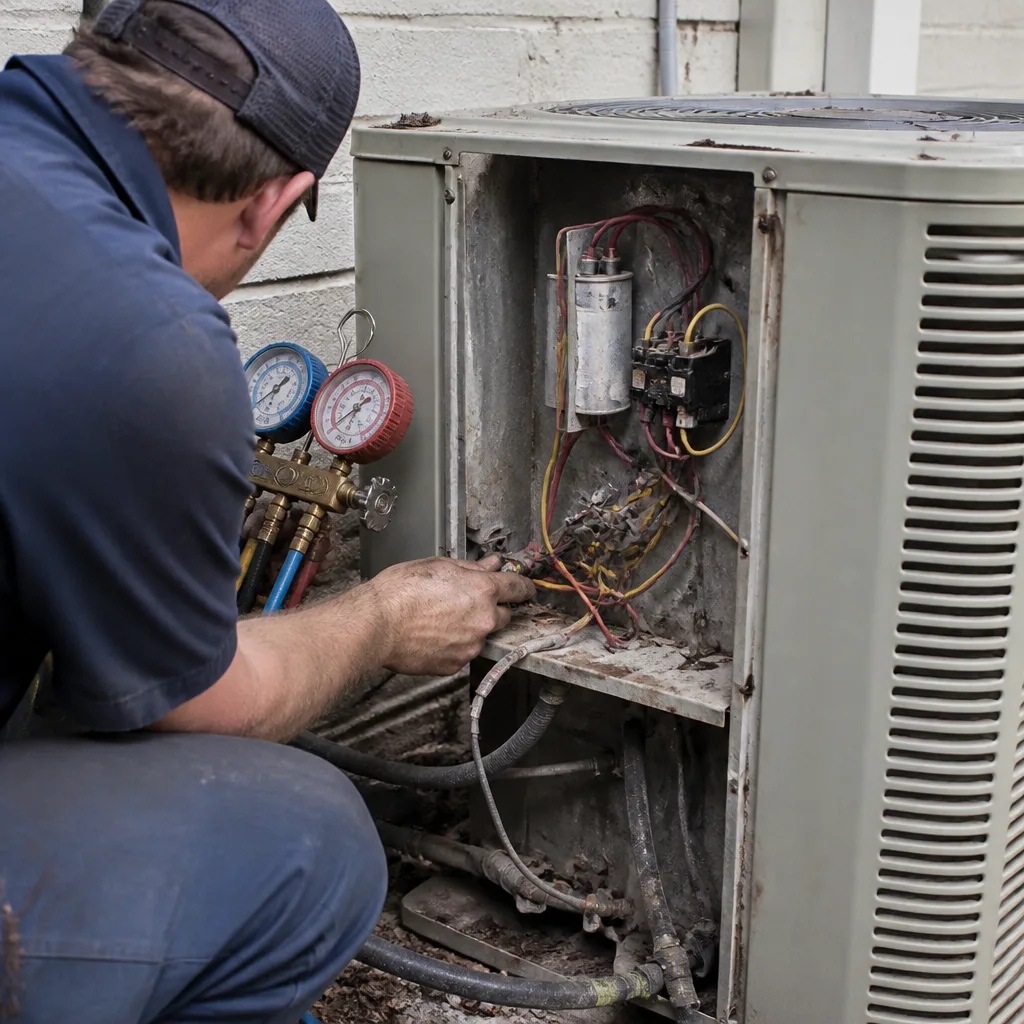 Before
 After
After Before
 After
After Before
 After
After