
Last updated October 16, 2026
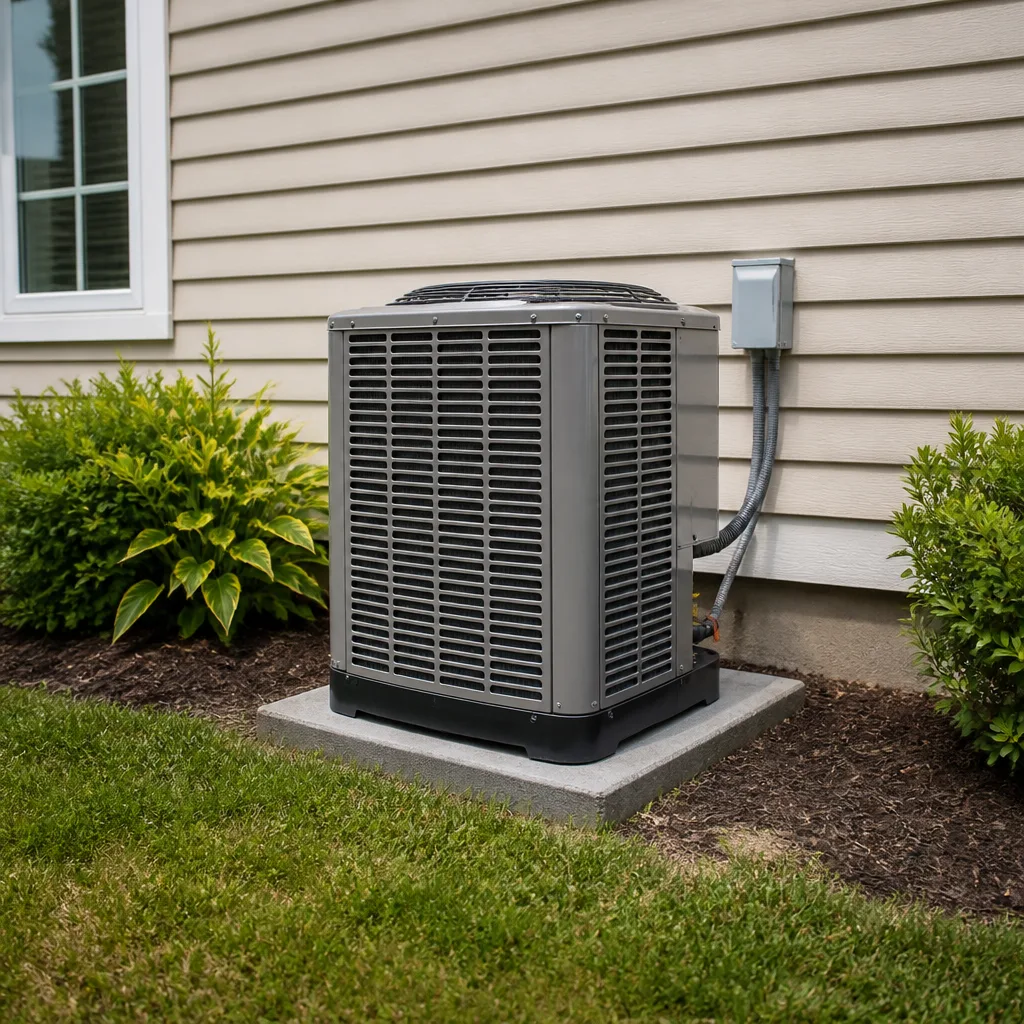 AC repair
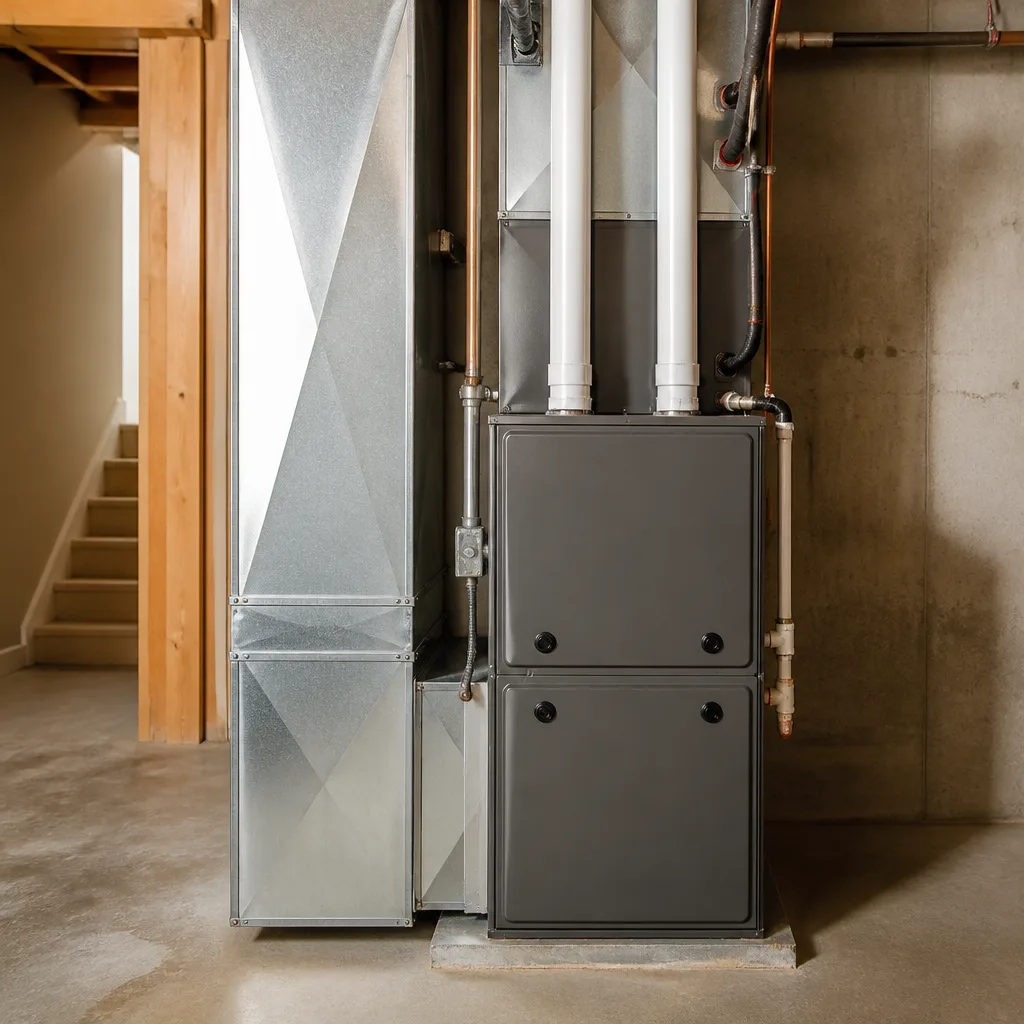 Furnace & heating
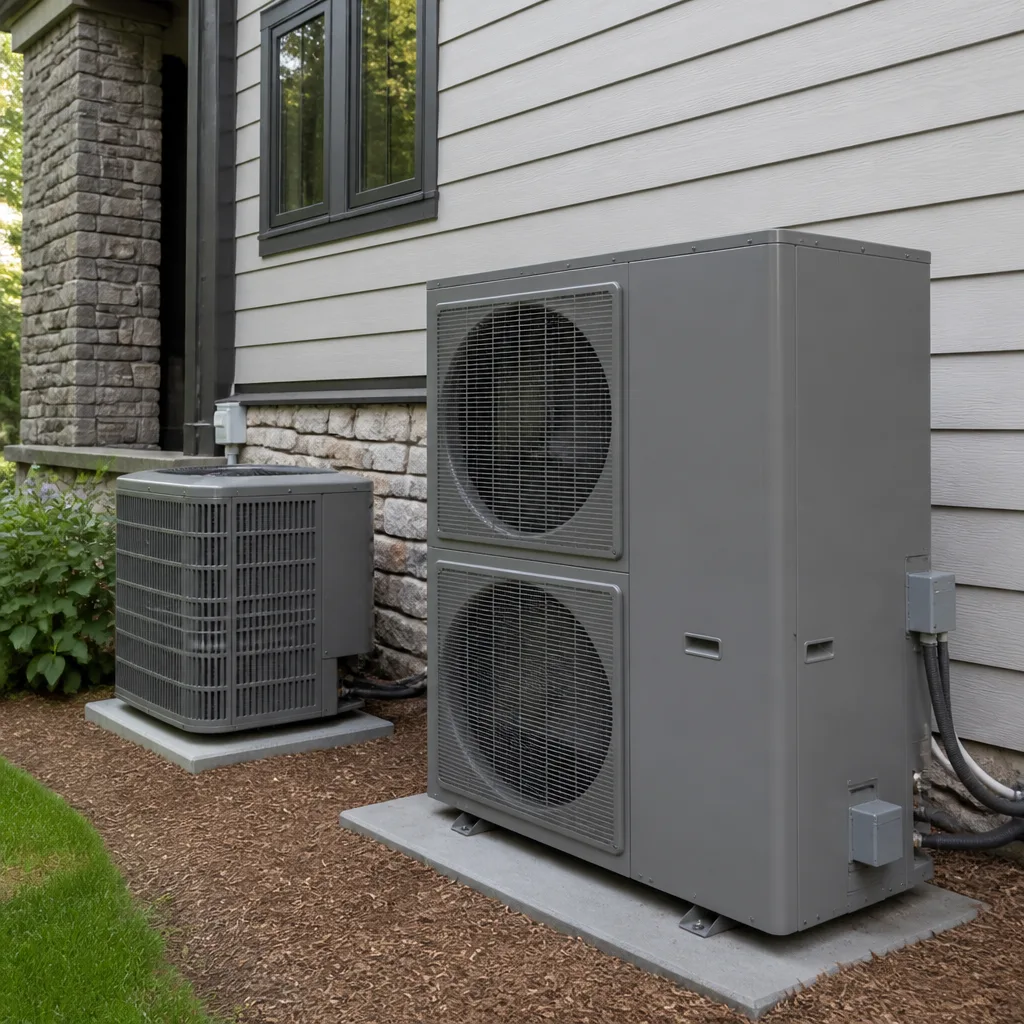 Heat pumps
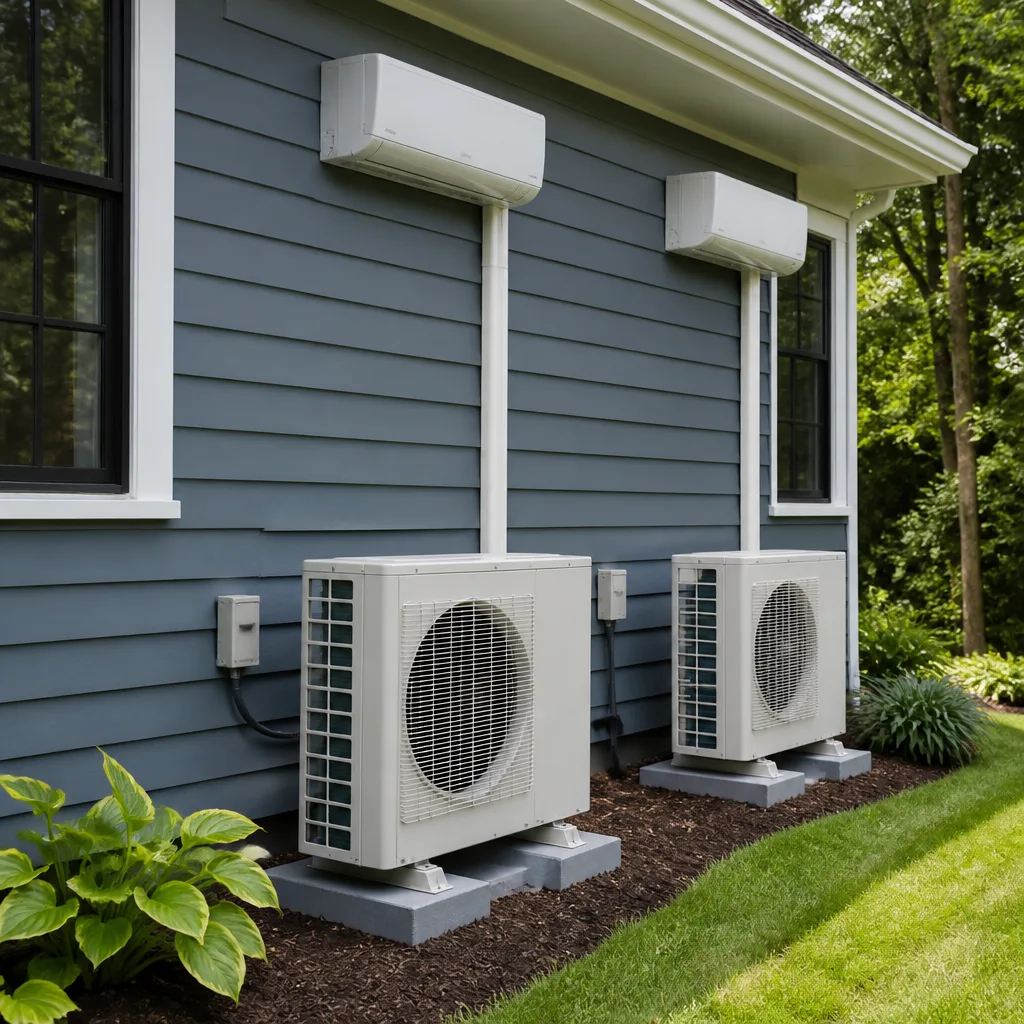 Ductless mini splits
 Carrier
 Trane
Trane Goodman
Seasonal tune-up and full diagnostic on your Carrier, Trane, or Goodman system - readings shown to you before any repair is proposed
Diagnosis first, numbers second - you approve the repair price before a single part goes in.
Get your free estimateHow to Hire a HVAC Contractor in Sandy Springs: A Step-by-Step Guide
In a 2023 Georgia Secretary of State enforcement report, HVAC contracting ranked in the top three trades for unlicensed-work complaints. That means the company with the best Google rating in your Sandy Springs zip code may not legally be allowed to pull a permit for the job you’re about to pay them for. This guide walks you through the exact steps to verify a contractor before they step foot in your house, the questions that expose estimate-bait pricing, and the mistakes that cost Sandy Springs homeowners thousands on installs and repairs. For related reading, see our HVAC Warning Signs: A Sandy Springs Homeowner’s Reference Guide.
Quick Answer
To hire an HVAC contractor in Sandy Springs, verify their Georgia license number on the Secretary of State website before scheduling, require a written quote with equipment model numbers and permit responsibility stated, confirm they carry general liability insurance, and ask four specific questions about pricing and guarantees before the technician arrives. Most legitimate Sandy Springs HVAC companies will provide all of this in under ten minutes without hesitation. A contractor who pushes back on any of these steps is telling you something useful about how the job will go.
Styles & brands we work with
Table of Contents
- Step 1: Verify the Georgia License Before You Schedule
- Step 2: Check the Insurance Certificate (And Know What It Actually Covers)
- Step 3: Ask Four Questions That Separate Written-Price Companies from Estimate-Bait
- Step 4: Read a Written Quote Like a Contract, Not a Number
- Step 5: Why the Lowest Bid Is Statistically the Highest-Risk Choice
- Step 6: Check the Guarantee Terms Before You Sign
- Step 7: What a Legitimate Sandy Springs HVAC Company Should Do on the Day of the Job
Step 1: Verify the Georgia License Before You Schedule
This takes less than two minutes and eliminates more risk than any other single step you’ll take. Georgia requires HVAC contractors performing work over $2,500 to hold a license issued by the State Construction Industry Licensing Board, which falls under the Georgia Secretary of State. The verification portal is on the Secretary of State’s website: go to the Professional Licensing Boards division, select “Verify a License,” and enter either the company name or the individual license holder’s name. You’re looking for an active status with an expiration date in the future.
In Sandy Springs specifically, you’ll encounter contractors who quote under the $2,500 threshold specifically to avoid the licensing requirement. That’s legal in Georgia, but it means the company has zero state oversight on that job. If something goes wrong, there’s no licensing board to file a complaint with. We recommend treating any contractor who structures quotes to stay under the permit threshold as a red flag, not a bargain.
Here’s the verification sequence we recommend:
- Get the full legal business name and the license holder’s name. A DBA (“doing business as”) name won’t always match the licensed entity. Ask for both.
- Verify on the Secretary of State portal. Check that the status is active, the expiration date is valid, and the license type matches the work being performed (conditioned air contractor, not just electrical).
- Check for disciplinary actions. The same portal lists board orders and consent agreements. Any unresolved action is a hard stop.
- Confirm the license is held by someone who will actually be on the job. Some companies operate under a “rented” license from someone who never shows up. Ask if the license holder supervises the work directly.
We’re a Garrison Partners company operating under The Garrison Standard since 2003. That means every Dalton Heating & Air Sandy Springs job is done by background-checked, uniformed technicians who work under active Georgia licensing. If you’re comparing contractors near North Springs or along Roswell Road, start with the license check and work from there. Most of the horror stories we hear from Sandy Springs homeowners start with skipping this step because the company “seemed fine on the phone.”
Step 2: Check the Insurance Certificate (And Know What It Actually Covers)
Here’s the part most hiring guides gloss over: requesting a certificate of insurance is not the same as understanding what it covers. Every legitimate HVAC company in Sandy Springs can email you a COI within minutes. The certificate should list two types of coverage: general liability and workers’ compensation. The liability limit should be at least $1 million per occurrence. Workers’ comp is non-negotiable if the company has employees; if they don’t carry it and a technician gets hurt on your property, the liability can fall on your homeowner’s insurance.
What general liability does not cover matters just as much. If a technician drops a condenser unit and damages your deck, general liability covers that. If they damage your ductwork during a repair and the damage is discovered three months later when your system starts leaking air, a good policy still covers it, but a cheap policy with a “completed operations” exclusion may not. Ask specifically whether the policy includes completed operations coverage. This is the difference between a contractor whose insurance is real and one whose certificate is a box to check.
In Sandy Springs, many homes in neighborhoods like Dunwoody Panhandle and Riverside were built in the 1970s and 1980s with ductwork that’s nearing the end of its service life. Technicians working in tight crawlspaces or attics with aging ducts are more likely to cause incidental damage than they would in a newer house. That’s not an excuse for sloppy work, but it does make the completed operations clause relevant to you specifically. Ask to see it.
Step 3: Ask Four Questions That Separate Written-Price Companies from Estimate-Bait
The way a contractor answers pricing questions before the job tells you more than any review. Here are the four questions we recommend every Sandy Springs homeowner ask before a technician arrives. Listen for direct, specific answers. Vagueness is the tell.
- “Will I get the price in writing before any work starts?” If the answer is anything other than “yes, on every job,” you’re dealing with estimate-bait. At Dalton Heating & Air, the price is in writing before any work starts, on every job, without exception. That’s a non-negotiable part of The Garrison Code. A contractor who won’t put the number in writing is reserving the right to change it later.
- “Does your quote include equipment model numbers?” A quote that says “16 SEER heat pump” without a manufacturer and model number is not a quote. It’s a suggestion. Model numbers lock the contractor to a specific unit with specific performance specs. If they can’t or won’t list them, they’re likely planning to install whatever is in the warehouse, not what you agreed to pay for.
- “What happens if the repair fails after you leave?” This is the question that exposes what a company actually stands behind. Most Sandy Springs HVAC companies offer a 30-day or 90-day warranty on repairs. Dalton Heating & Air provides a written guarantee on every repair for a full year through the 365-Day Done Right Promise. If the work fails within that year, we return at no charge. That’s not an upgrade or a premium option. It’s the standard.
- “Who handles the permit, and what will it cost?” A legitimate contractor answers this without pausing. In Sandy Springs, any equipment replacement requires a mechanical permit through the city. The contractor should state who pulls it, who pays for it, and whether the cost is included in the quote or listed as a separate line item. If a contractor suggests skipping the permit, end the conversation.
These four questions take two minutes on the phone. The difference between a company that answers them cleanly and one that hems and haws is the difference between a job that’s done right and one you’ll be calling someone else to fix. Our approach at Dalton Heating & Air Sandy Springs is that written pricing, written guarantees, and permit responsibility are not things you should have to ask about. They’re things we state upfront before you ask.
Step 4: Read a Written Quote Like a Contract, Not a Number
A legitimate written quote is a document, not a figure. When you get a quote from a Sandy Springs HVAC contractor, you should be able to read it and know exactly what you’re buying, what it will do, and who is responsible for what. Here’s what a real quote includes, line by line, and what each element actually protects you from.
- Equipment manufacturer and full model number. Not “a Trane system” or “a Rheem heat pump.” The model number tells you the exact efficiency rating, cooling capacity in tons, and airflow configuration. It also lets you look up the unit yourself to confirm it matches what’s being described.
- Refrigerant type. New systems in Sandy Springs should be R-410A or R-454B. If a quote lists R-22, the equipment is either old stock or a used unit being passed off as new. R-22 production ended in 2020, and the remaining supply is expensive. A quote that doesn’t state refrigerant type is incomplete.
- Scope of labor. What exactly is included? Disconnect and haul-away of the old unit? New line set? New thermostat? New condensate drain line? Condensate pump? Duct modifications? If it’s not listed, assume it’s not included.
- Permit responsibility and cost. This should be a line item, not a verbal promise. The quote should state who pulls the permit, the permit cost, and who is responsible if the inspection fails.
- Warranty terms. Manufacturer warranty (parts only, typically 10 years on major components when registered) and labor warranty (what the contractor covers). At Dalton Heating & Air, our labor guarantee is written for a full year on every repair. If a quote doesn’t list labor warranty in writing, it doesn’t exist.
- Payment terms. A deposit is normal on large installs, but no legitimate Sandy Springs contractor requires 100% payment before the job is complete. Half up front and half on completion is standard for equipment replacement. Any company demanding full payment before showing up is a red flag.
Marco Benitez, the owner at Dalton Heating & Air Sandy Springs, requires every quote to include all of the above before a customer signs anything. That’s how we’ve operated since we started as a Garrison Partners location, and it’s one of the reasons our customers don’t call us back to fix surprises. They don’t have surprises to fix.
Step 5: Why the Lowest Bid Is Statistically the Highest-Risk Choice
HVAC pricing in Sandy Springs follows a pattern that holds across most metro Atlanta suburbs: the spread between the highest and lowest bid on a full system replacement typically runs 25% to 40%. For a deeper breakdown of what drives those numbers, see our HVAC Cost Breakdown: The Sandy Springs Homeowner’s Reference for 2026. That’s a wide enough gap that the lowest bid looks like the obvious choice. It’s usually the riskiest. Here’s the math behind it.
Equipment is equipment. A 3-ton Lennox heat pump costs a contractor roughly the same amount regardless of which company buys it. Carrier, Goodman, Rheem, and York all sell through distribution with similar margins. So when one bid is dramatically lower than the others, the savings are coming from somewhere else: labor shortcuts, warranty gaps, or unlicensed work. Here’s where the cost gets cut, and what it costs you later:
- Labor shortcuts. Proper installation of a heat pump in a Sandy Springs house takes 6 to 10 hours for a two-person crew. A company that quotes half the labor is skipping steps: not pulling a vacuum on the refrigerant lines, not checking static pressure, not leveling the condenser. Those skipped steps shorten the life of the equipment from 15 years to 8 or fewer.
- Warranty gaps. Equipment manufacturers require the unit to be registered within 60 days of installation to activate the full 10-year parts warranty. Some low-bid contractors don’t register the equipment. If the compressor fails in year 4 and the unit was never registered, you’re paying for the part out of pocket.
- Subcontractor risk. The cheapest bidder is often not an HVAC company at all, but a general contractor who will subcontract the work to someone they’ve never met. If something goes wrong, the company that collected your money and the technician who did the work are two different entities. Good luck sorting that out.
- Code compliance. In Sandy Springs, mechanical work requires inspection. A contractor who is cutting corners on price is likely cutting corners on code. Failed inspections mean delays, and in some cases, redoing work that was already paid for. The cheapest quote plus a failed inspection plus a redo is more expensive than the middle bid would have been.
The Garrison Standard we operate under at Dalton Heating & Air means we don’t compete with the low bid and we don’t apologize for it. Every job includes a written price before any work begins, a written guarantee on every repair, and a free return visit if the repair fails within the guarantee period. Those things cost money to deliver. They also mean the price you pay is the price you were quoted, and the job is done right the first time. In our experience in Sandy Springs, homeowners who choose the lowest bid end up paying twice: once for the cheap job and once to have it done correctly.
Step 6: Check the Guarantee Terms Before You Sign
Every contractor says they stand behind their work. Very few put the terms in writing that would actually cost them money if they’re wrong. Here’s what to look for in a guarantee, and what separates a real guarantee from a marketing line.
First, the duration. A 30-day or 90-day labor warranty is the industry default. It means the company is betting their work will hold up for a month or a quarter. A full-year written guarantee is a different proposition. Our 365-Day Done Right Promise at Dalton Heating & Air covers every repair for a full year in writing. If the repair fails at any point during that year, we come back and make it right at no charge. No pro-rated coverage, no service fee, no argument.
Second, the trigger. A guarantee that only applies “if the same part fails” is narrower than it sounds. What if the repair holds but a different component fails as a result of the first problem? What if the system was misdiagnosed? A real guarantee covers the outcome: your system should work as it was supposed to after the repair. If it doesn’t, the contractor should return and make it right. That’s what a done-right guarantee means.
Third, the process. Some guarantees require you to file a claim with a third-party warranty company, which means hold times, claim forms, and denials. A legitimate guarantee is between you and the contractor. You call, they come back, they fix it. No claims process, no fine print. At Dalton Heating & Air Sandy Springs, the guarantee is part of The Garrison Code, not an add-on product.
When you’re comparing HVAC contractors in Sandy Springs, ask each one to show you their warranty terms in writing before you sign. Not tell you about them. Show you the document. The companies with real guarantees produce it immediately. The companies with marketing slogans suddenly get vague.
Step 7: What a Legitimate Sandy Springs HVAC Company Should Do on the Day of the Job
By the time the technician arrives, you should already know who is coming. Background-checked, uniformed technicians on every call is a Garrison Standard requirement, and it serves a practical purpose: you can verify the person at your door is the person the company said they’d send. If a company can’t tell you who’s coming until the truck pulls up, that’s a process problem, not a scheduling one.
Here’s what a professional HVAC visit in Sandy Springs looks like:
- The technician arrives inside the stated window. Not “sometime today.” The Garrison Code requires arrival inside the stated window. If a company can’t commit to a window, they can’t commit to anything else.
- The technician introduces themselves and confirms the scope of the visit. Before touching anything, the technician should explain what they’re there to do and what they’ll be checking.
- The work area is protected. Shoe covers, drop cloths, and surface protection in the work path are standard. If a company leaves a mess, that’s a reflection of how they work, not a coincidence.
- Diagnosis comes before a price. For repairs, the technician should diagnose the problem first, then provide a written price before any repair work starts. If the price is only given verbally or “roughly,” stop the job and get it in writing.
- The site is left clean. When the job is done, the work area should be cleaner than when the technician arrived. Old parts, packaging, and debris are hauled away, not left by the curb.
- The paperwork is complete. You should receive a written invoice detailing what was done, what was replaced, and the terms of the guarantee. If you don’t get it in writing, it didn’t happen.
These are the standards we hold ourselves to at Dalton Heating & Air Sandy Springs because they’re the standards The Garrison Code has required since 2003. Homeowners in Sandy Springs neighborhoods like Perimeter Center and Huntcliff tell us the same thing over and over: the difference between a good HVAC company and a bad one isn’t the equipment, it’s the discipline. The window was honored or it wasn’t. The price was written or it wasn’t. The site was clean or it wasn’t. Those things are all verifiable, and they’re all included in the job when you hire us.
Common Mistakes to Avoid
- Skipping the license check because the reviews are good. In Sandy Springs, a company can have hundreds of five-star reviews and no valid Georgia license. Reviews don’t verify legal status. The Secretary of State portal does, and it takes two minutes. Do the check before you schedule, not after something goes wrong.
- Accepting a verbal quote. A price that isn’t written down doesn’t exist. If a contractor won’t put the number in writing before work starts, you’re dealing with a company that plans to change it later. Walk away.
- Choosing the lowest bid. In HVAC, the lowest bid is the highest statistical risk. The savings come from somewhere: labor shortcuts, unregistered equipment warranties, or unlicensed work. In Sandy Springs, where summer temperatures regularly push past 90 degrees, a system installed wrong will fail at the worst possible time.
- Not asking who handles the permit. Equipment replacement in Sandy Springs requires a mechanical permit. If the contractor suggests skipping it or isn’t clear about who pulls it, that’s a sign they’re not doing the job by the book. The Garrison Code exists partly because permit-skipping is common in this market.
- Assuming all insurance certificates are the same. A certificate of insurance is only as good as what it covers. Ask specifically about completed operations coverage. If the technician damages your ductwork and it only shows up later, a policy without that clause leaves you holding the repair bill.
- Not asking about the guarantee before the work starts. The time to ask about warranty terms is before you sign, not after the repair fails. A company with a real guarantee will show you the terms in writing without hesitation. A company with a marketing slogan will change the subject.
- Paying in full before the job is complete. A deposit is standard on a large install. Full payment before the work is done is not. In Sandy Springs, we hear from homeowners who paid upfront and then couldn’t get the contractor back to finish the job. Don’t put yourself in that position.
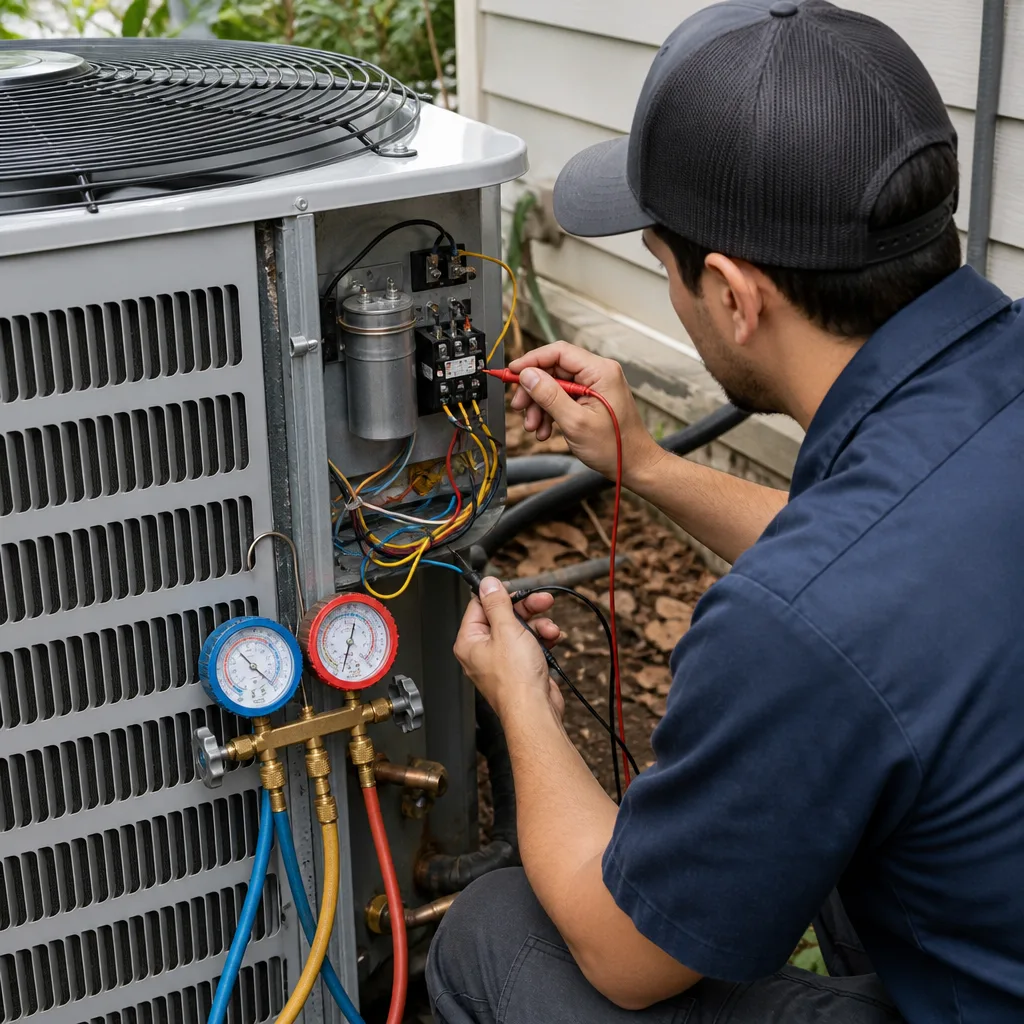
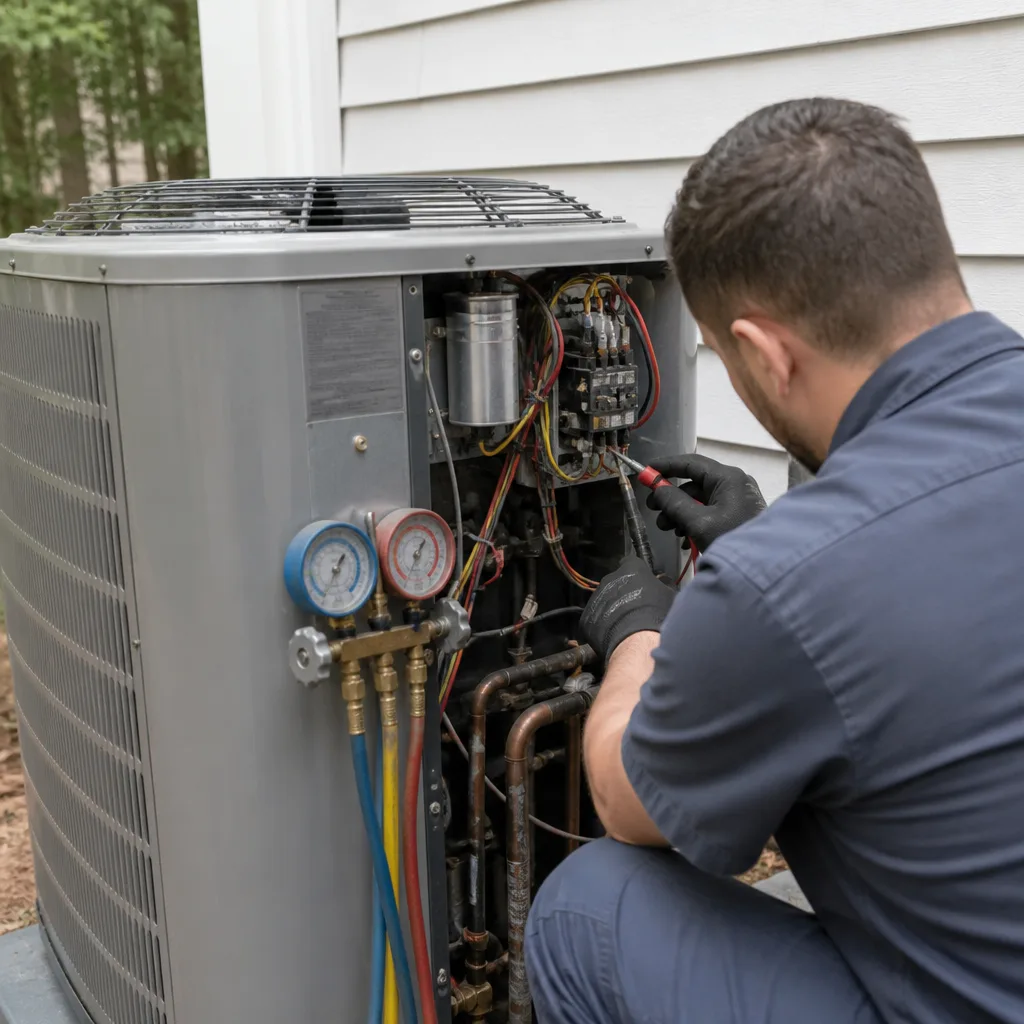
See the difference
 Before
 After
After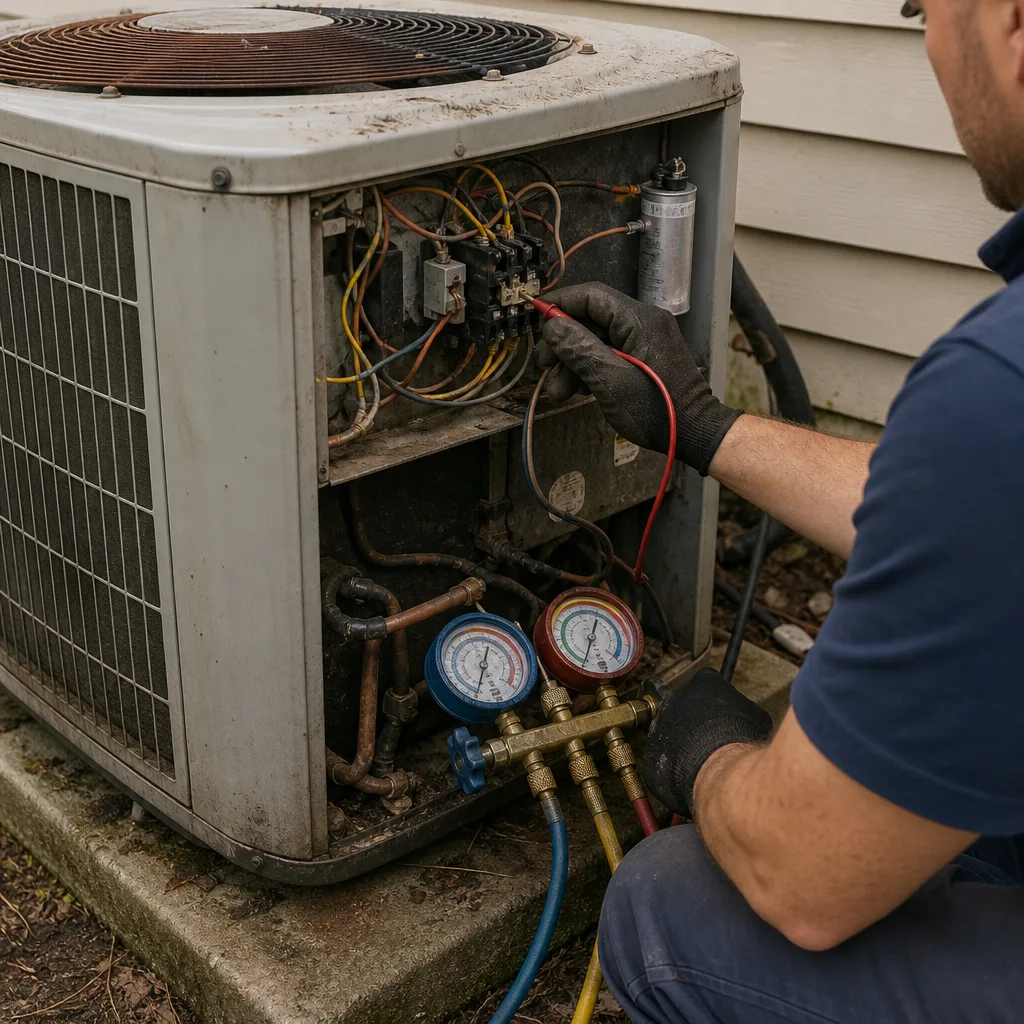 Before
 After
After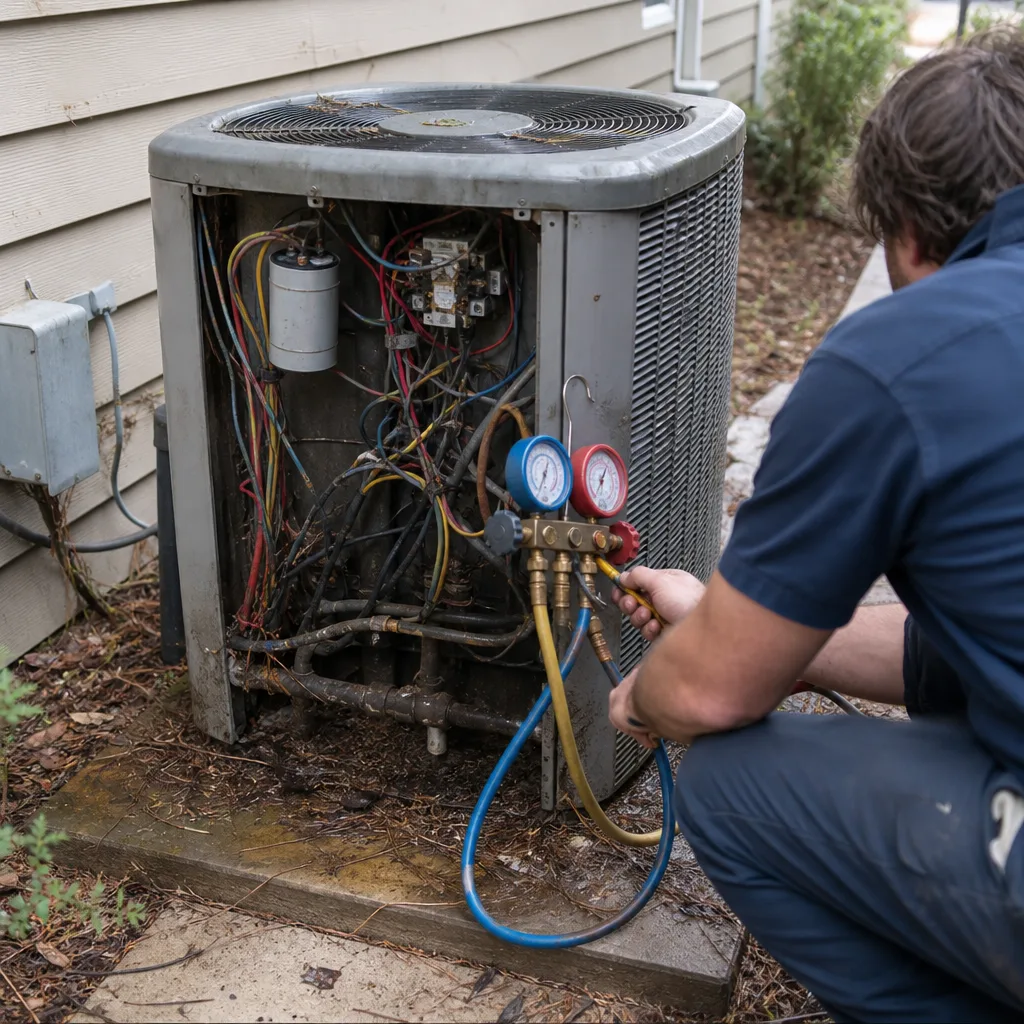 Before
 After
AfterWhen to Call a Professional
Some HVAC issues can wait a day or two. Others can’t. Call a professional immediately if your air conditioner stops cooling during a Sandy Springs heat wave with temperatures in the mid-90s, since a failed system in that heat is a health risk for elderly family members and young children. Same-day response matters if you hear grinding noises from your furnace in January, notice a burning smell from your vents, or see water pooling around your indoor unit. A refrigerant leak on an AC system also needs prompt attention: refrigerant leaks don’t fix themselves, and running a system low on charge damages the compressor over time. Also call right away if your system trips the breaker repeatedly. That’s an electrical issue, not just an HVAC inconvenience.
For the situations above, Dalton Heating & Air Sandy Springs offers same-day service throughout Sandy Springs. Our phone line is answered by a live person 24/7, not a voicemail queue. Call us at (478) 400-5908 for a free estimate, and we’ll tell you over the phone whether the problem can wait or needs attention today.
Frequently Asked Questions
Most HVAC repairs in Sandy Springs run between $150 and $450 for common issues like capacitors, contactors, and condenser fan motors, while compressor replacements and major component failures can range from $1,200 to $3,000. The exact cost depends on the system brand, the part, and how long the labor takes. At Dalton Heating & Air Sandy Springs, you get the price in writing before any work starts, so the cost won’t shift on you at the door. Call (478) 400-5908 for an exact quote on your system.
You verify a Georgia HVAC license by going to the Georgia Secretary of State’s website, navigating to the Professional Licensing Boards division, selecting “Verify a License,” and searching by company name or license holder name. The record will show whether the license is active, the expiration date, and any disciplinary actions. This check takes under two minutes and is the single most valuable step before hiring any Sandy Springs HVAC contractor.
A good rule of thumb is to replace rather than repair when the repair cost exceeds 30% of the system’s replacement value, or when the system is over 12 years old and using R-22 refrigerant. In Sandy Springs, where summer cooling loads are heavy, an aging system that’s lost efficiency is also costing you more every month in higher utility bills. We’re honest about this calculation: if a repair makes sense, we’ll tell you. If replacement is the better long-term call, we’ll show you the numbers and let you decide. You can learn more about heat pump installation in Sandy Springs on our dedicated page, or call for a straight assessment.
Yes, Dalton Heating & Air Sandy Springs offers same-day service for AC repairs in Sandy Springs when you call before early afternoon. Our phone line is answered by a live person 24/7, so you won’t leave a voicemail and hope for a callback. If your system is down in summer heat, call (478) 400-5908 and we’ll get a technician to you as fast as the schedule allows. See our AC repair in Sandy Springs page for details on what we service.
Yes, Georgia homeowners can access federal tax incentives under the Inflation Reduction Act for qualifying high-efficiency heat pumps and air conditioners, typically up to $2,000 for ENERGY STAR heat pump units. Some manufacturers also run seasonal rebates on systems from Lennox, Goodman, Rheem, and York. The programs change periodically, so call (478) 400-5908 and we’ll help you sort out what applies to your project before you commit to equipment.
The 365-Day Done Right Promise means every repair done by Dalton Heating & Air Sandy Springs is guaranteed in writing for a full year from the date of service. If the repair fails at any point during that year, we return and make it right at no charge. That’s not a pro-rated warranty or an upgrade you pay extra for. It’s the standard every Garrison Partners location operates under, and it’s been part of The Garrison Code since 2003.
For more about our approach to furnace work specifically, see furnace repair in Sandy Springs. And if you’re comparing companies, start with the Dalton Heating & Air Sandy Springs home page to see how we describe our standards and what to expect before you call.
The Bottom Line
Hiring an HVAC contractor in Sandy Springs comes down to four verifiable facts: the license is active, the insurance is real, the price is in writing, and the guarantee has teeth. Everything else is marketing. The Georgia Secretary of State license portal takes two minutes to check. A certificate of insurance should arrive by email before you schedule. A written quote with equipment model numbers and permit responsibility is a document you can hold a company to. And a full-year written guarantee is the difference between a contractor who bets on their work and one who bets on you not calling back. At Dalton Heating & Air Sandy Springs, those four things are not negotiable. Explore more guides & resources to protect your home and budget. They’re how we’ve operated under The Garrison Standard since 2003, and they’re what you’ll get on every job, from a capacitor replacement to a full system install.
Call (478) 400-5908 for a free estimate, and talk to a live person who can answer your questions about your specific system and situation.
Written by Marco Benitez, Owner at Dalton Heating & Air Sandy Springs, serving Sandy Springs since 2003.