
 Furnace & heating
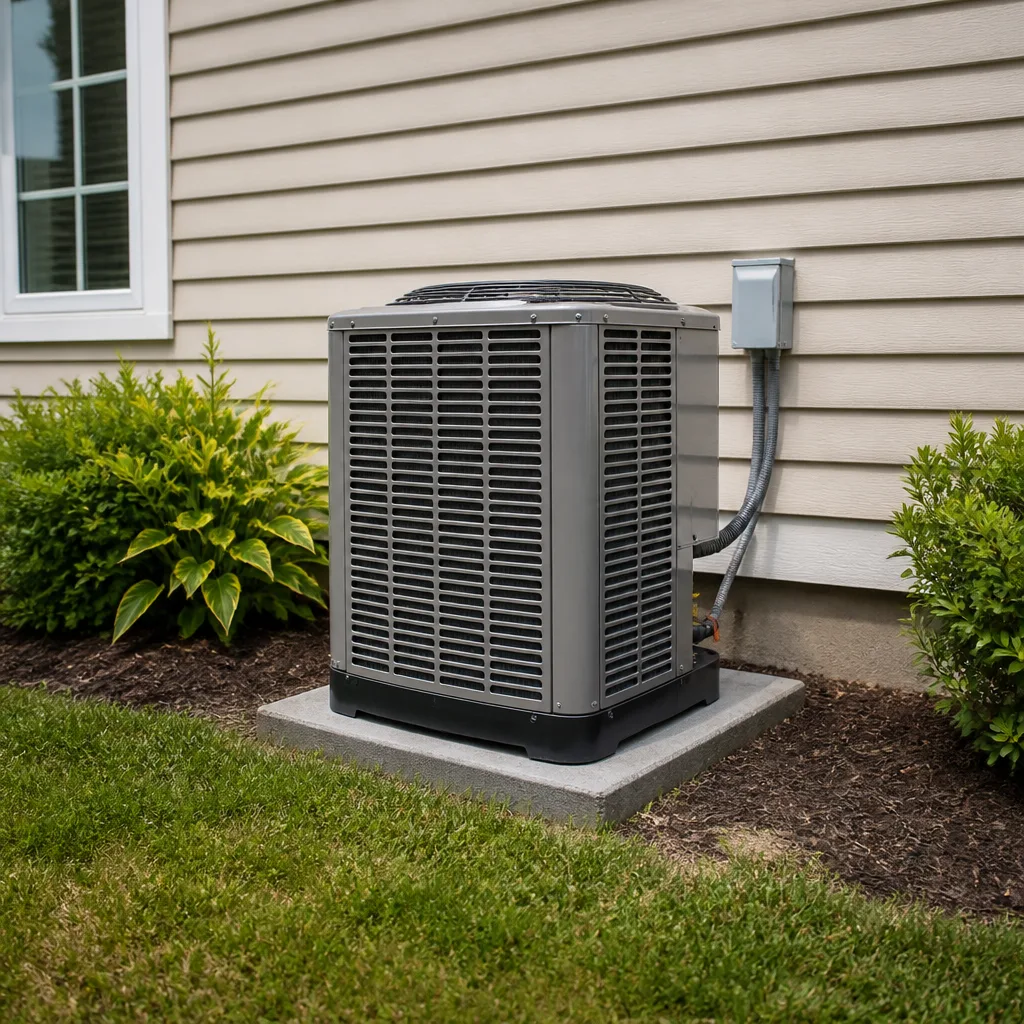 AC repair
 Heat pumps
 Ductless mini splits
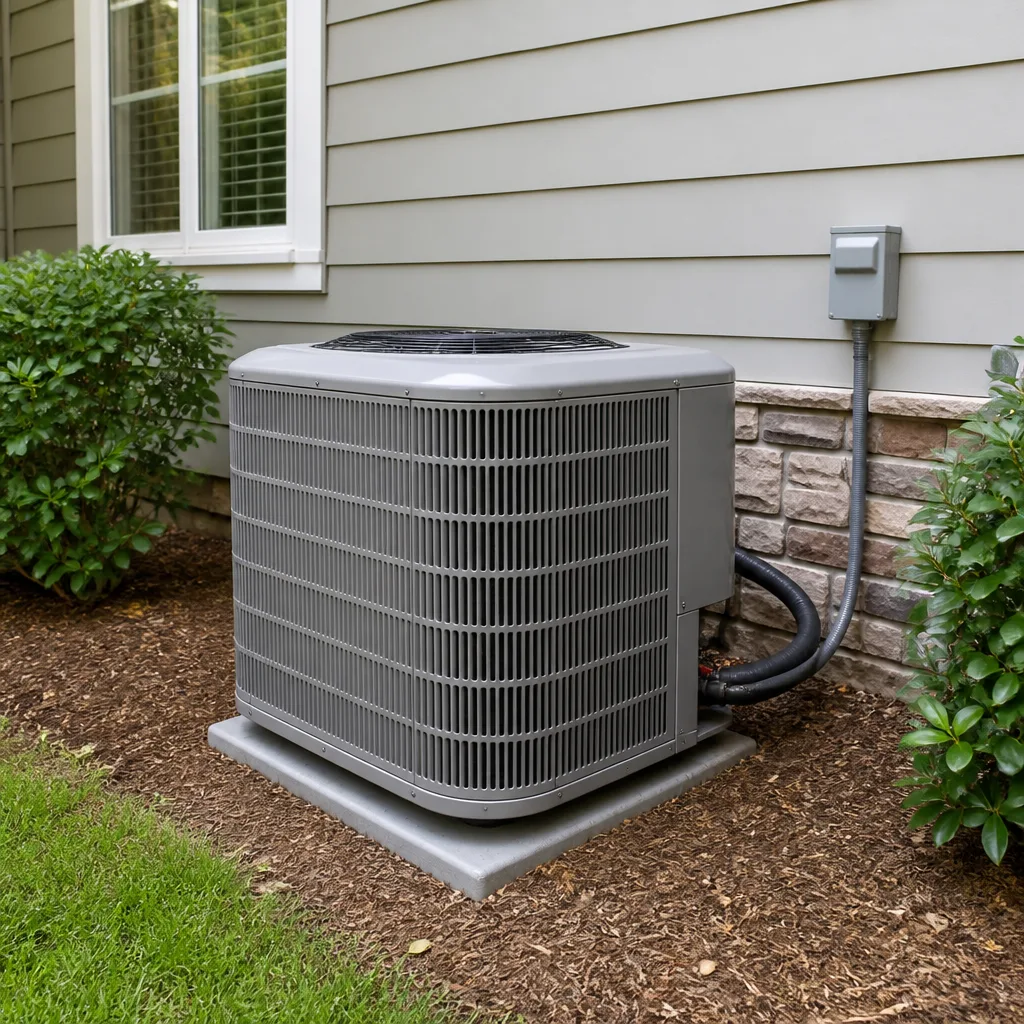 Carrier
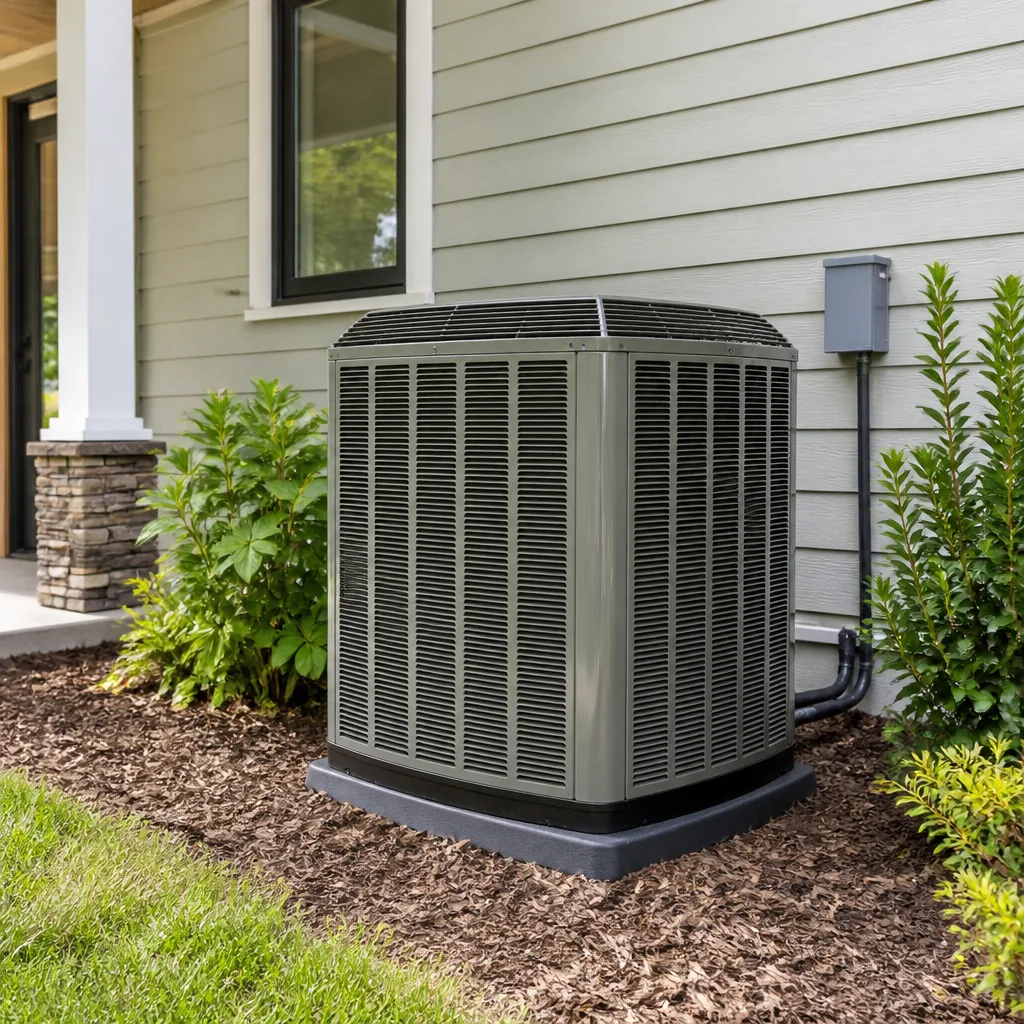 Trane
Trane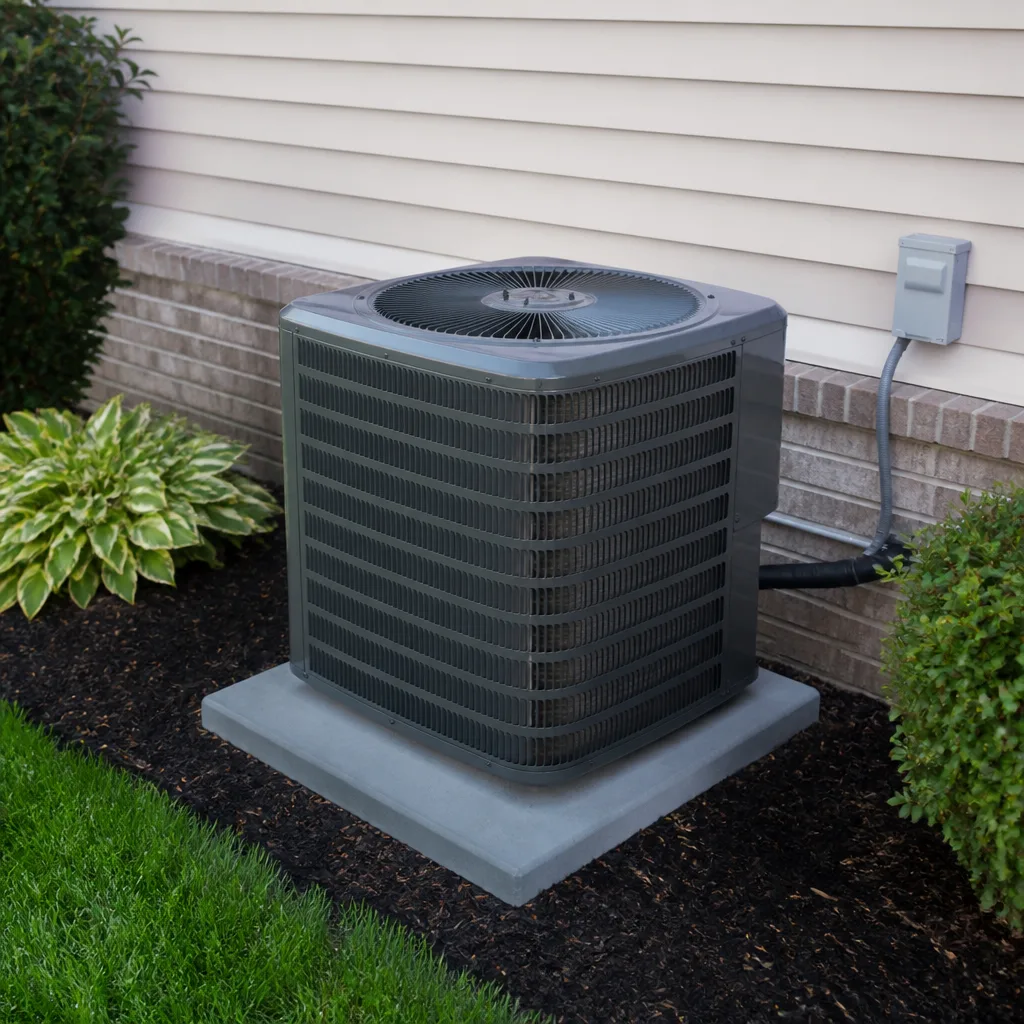 Goodman
Seasonal tune-up and full diagnostic on your Carrier, Trane, or Goodman system - readings shown to you before any repair is proposed
Diagnosis first, numbers second - you approve the repair price before a single part goes in.
Get your free estimateCarrier Capacitor Replacement: The Sandy Springs Owner’s Guide
A capacitor is the small cylinder inside your outside AC unit that gives the compressor and fan motor the jolt they need to start, and keeps them running steady. In Sandy Springs, a Carrier capacitor replacement typically runs $150 – $300 installed, and most swaps take under an hour once we’re on site. The phone call usually starts the same way: “the AC is humming but the fan isn’t spinning,” or “it kicked on and then stopped and now it just buzzes.” That buzz is the sound of a motor trying to start without enough stored voltage. It’s a capacitor failure about 80% of the time, and it’s the most common single repair we make on Carrier units in this area between May and September.
Here’s our promise on this repair: the price is in writing before we touch a single wire, the replacement capacitor we install is matched to your Carrier unit’s original specs, and the work is covered by our 365-Day Done Right Promise. That means if it fails inside a year, we come back and make it right at no charge.
Which Carrier Models This Applies To
Capacitors are not one-size-fits-all, and that’s where a lot of online advice falls apart. Carrier has used different capacitor configurations across its residential lines over the years. Most Carrier split systems fall into one of three groups:
- Single-stage air conditioners (Carrier Comfort, Performance series, and older WeatherMaker units): These typically use a dual-run capacitor, one cylinder that serves both the compressor and the condenser fan motor. Common ratings are 35/5, 40/5, 45/5, and 50/5 microfarads.
- Two-stage air conditioners (Carrier Infinity and higher-end Performance series): Many of these use separate capacitors for the compressor and fan, and the compressor side may be wired into the two-stage logic board with different microfarad ratings between stages.
- Heat pumps (Carrier Infinity, Performance, and Comfort heat pumps): These add a second run capacitor circuit for the reversing valve operation, so the original spec matters even more.
Here’s the compatibility gotcha most people miss: matching the microfarad rating is a hard requirement, not a suggestion. A 5% tolerance is standard. Putting a 45/5 where a 35/5 belongs will overwork the compressor winding and shorten its life. Putting a 35/5 where a 45/5 belongs means the compressor labors to start every cycle and eventually trips its thermal overload. We see this on Sandy Springs units where a previous tech grabbed “whatever was on the truck” and it limped along until the compressor was damaged.
If you want to identify your exact capacitor before calling, it’s printed right on the side of the cylinder: something like “45+5 uF ±5% 440 VAC.” That label tells us everything we need. A photo of it, along with your Carrier model number from the data plate inside the cabinet, is enough for us to bring the right part the first time.
OEM vs. aftermarket: Carrier uses capacitors sourced from a few major manufacturers, and the honest trade truth is that the aftermarket equivalents from the same manufacturers – Mars, Titan, and AmRad – are functionally identical to what ships in the OEM box, usually at a lower cost. We stock the aftermarket AmRad and Titan units specifically because they use a higher-temperature dielectric fluid than bargain capacitors, which matters in a Georgia attic or a west-facing condenser pad in Sandy Springs where the ambient temperature around the unit hits 120°F or more in July. We install what we would put on our own equipment.
Styles & brands we work with
Signs Your Carrier Capacitor Replacement Is Failing
Capacitors rarely fail all at once. They degrade over time, and your system gives you warnings before it dies completely. Here are the five we hear about most from Sandy Springs homeowners:
- The outside unit hums, but the fan doesn’t turn. That’s the compressor’s start winding drawing locked-rotor current while the capacitor fails to deliver enough voltage to break the rotor free. It’s a hard sound to miss, and you should kill the breaker if you hear it because the compressor is overheating internally.
- The fan spins slowly, or only starts if you push it with a stick. A weak run capacitor delivers less than the full phase shift the fan motor needs. It still starts, barely, but it’s drawing heavy current the whole time. We’ve measured underspeed condenser fans at 60 – 70% of rated RPM from capacitors that tested at half their label rating.
- The AC works in the morning but trips the breaker by mid-afternoon. Heat raises electrical resistance and pushes a failing capacitor further past its limits. A capacitor that holds at 7 a.m. gives out at 3 p.m. when the rooftop in Dunwoody or the brick wall beside your condenser has been baking for hours.
- The compressor starts, runs a few seconds, and shuts off. That short-cycle pattern is often the thermal overload inside the compressor tripping because the start capacitor isn’t bringing it up to speed fast enough. Not every short cycle is a capacitor, but when it’s paired with a warm compressor shell, it’s high on the list.
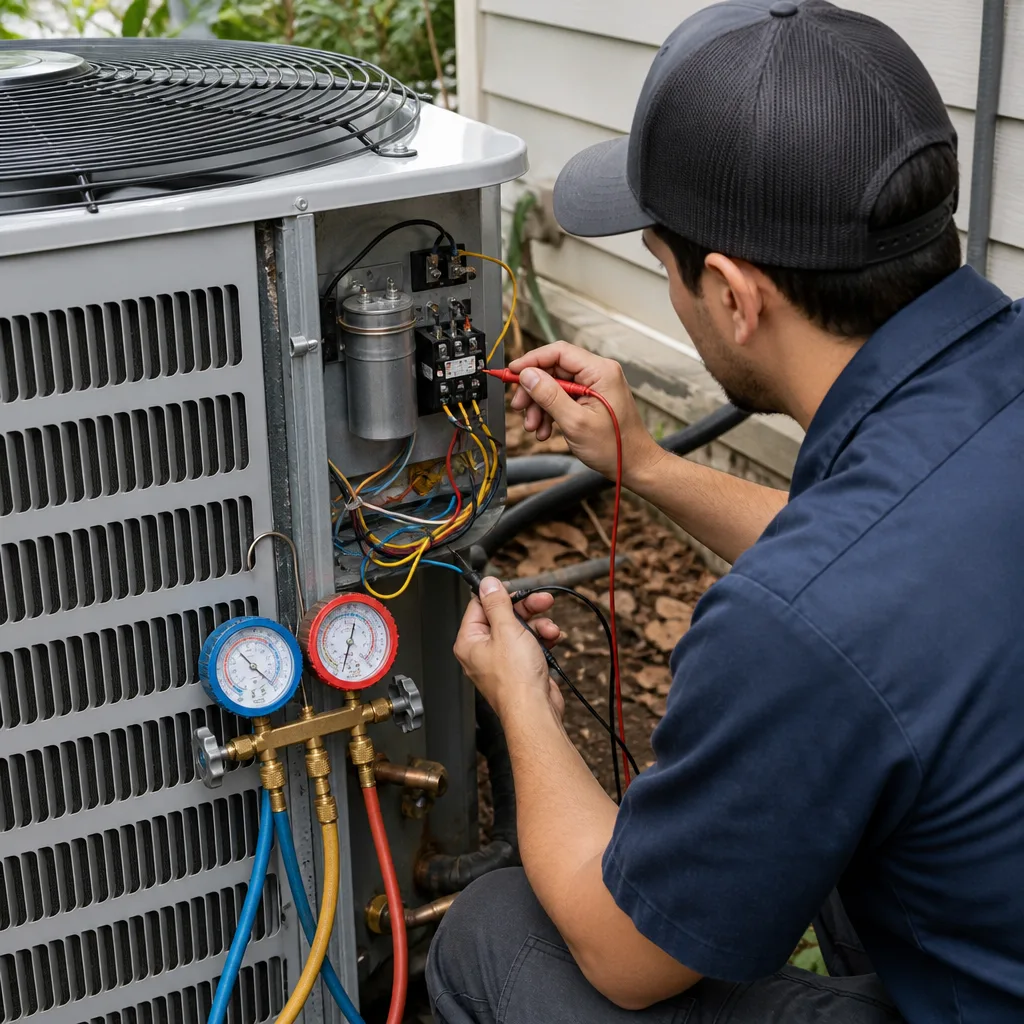
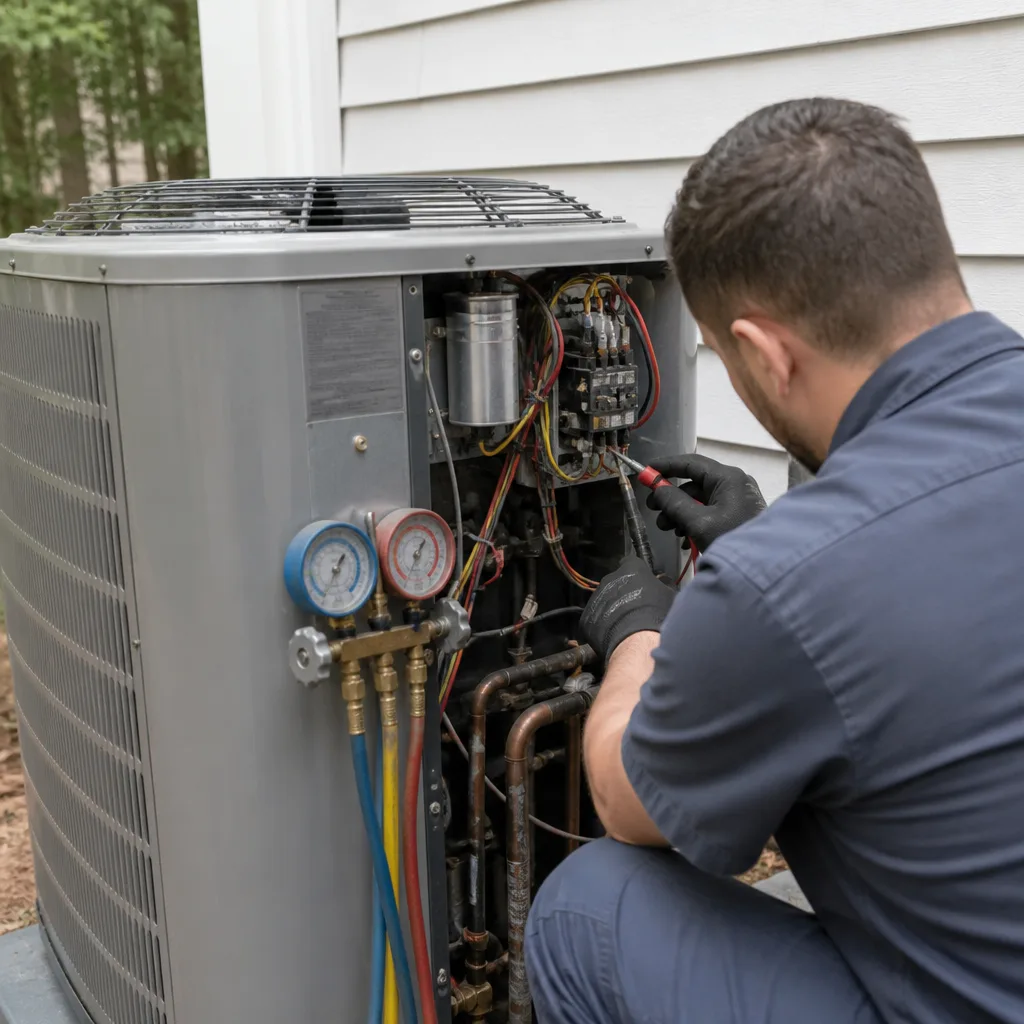
- The capacitor case is swollen, split, or leaking oil. Inside the metal can is a dielectric fluid that breaks down under sustained heat. When it degrades, the pressure vents out the top or bulges the case. If you open the control panel and see a capacitor that looks puffed up or has staining around the terminals, that’s not “still fine for now.” That’s done.
See the difference
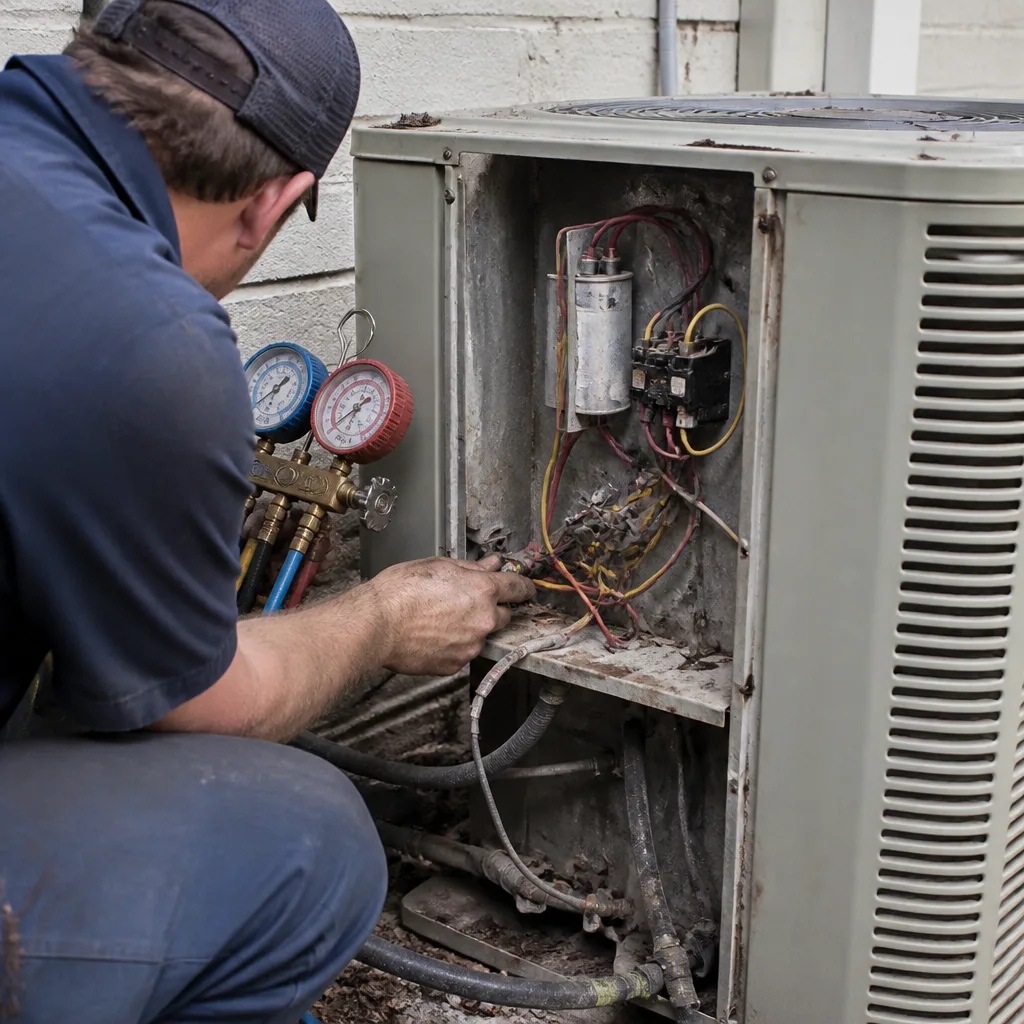 Before
 After
After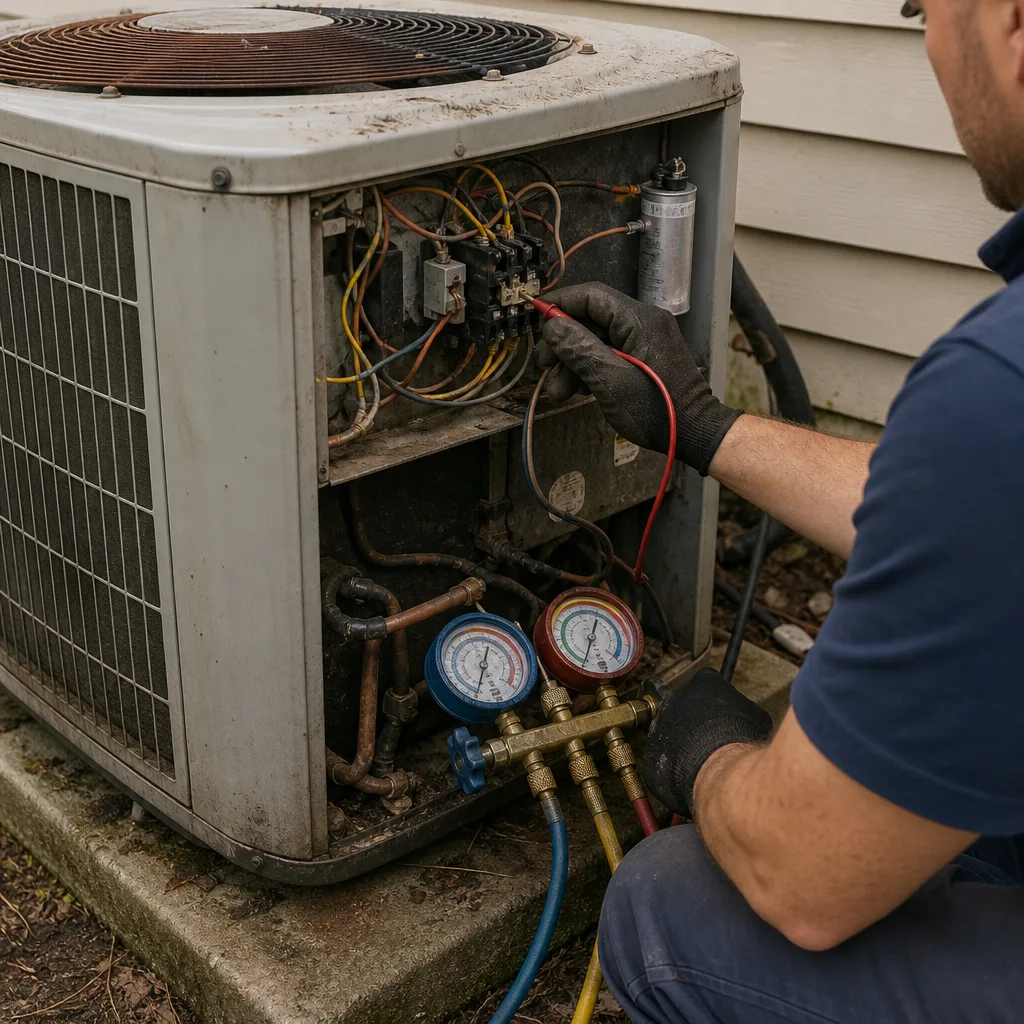 Before
 After
After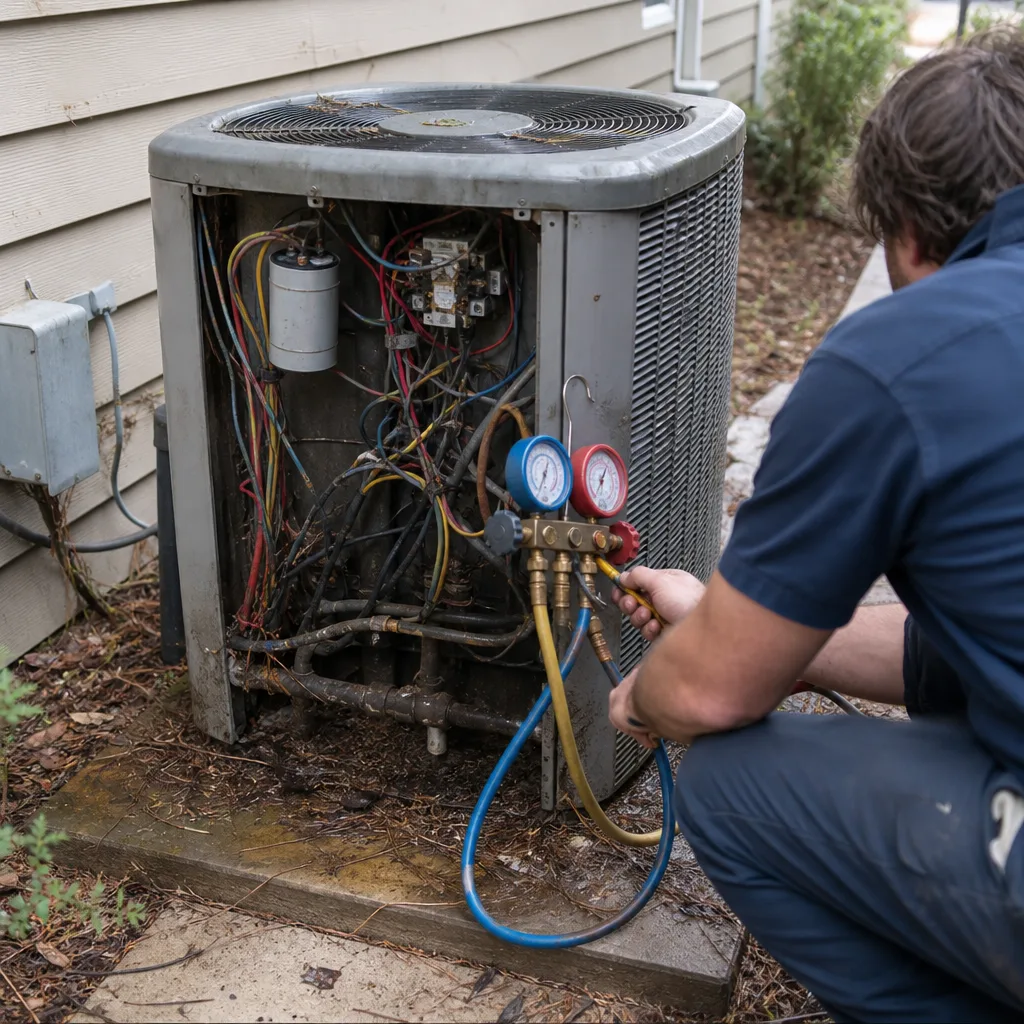 Before
 After
AfterReplacement Cost & What’s Included
Here’s the straight breakdown for Sandy Springs. A Carrier-compatible dual-run capacitor in the common ratings (35/5 through 50/5) costs $25 – $70 as a part. Our installed price for the job runs $150 – $300, which includes the service call, the part, labor, and a full written guarantee on the work for one year.
What moves the price inside that range is access. If your Carrier condenser is on a pad in the back yard with clear access, it’s a quick job. If it’s in a tight enclosure, behind a fence gate we need a ladder over, or buried in overgrown landscaping near the Chattahoochee River corridor where things grow fast, it takes longer and we quote accordingly. There is no overtime charge for a Saturday capacitor call in July. The price we write is the price you pay.
Here’s what’s included every time, because this is how Dalton Heating & Air operates under The Garrison Standard:
- Written price before any work begins. We quote the capacitor replacement, you see it, you approve it, then we start. Nothing moves forward on a handshake.
- Diagnostic confirmation. We don’t replace a capacitor on a guess. We test the old part with a capacitance meter and show you the reading if you want to look.
- The correct part matched to your Carrier’s spec sheet. Not a “close enough” that gets through the summer.
- A written guarantee covering the part and labor for a full year. If it fails, we return and replace it at no cost. That’s the 365-Day Done Right Promise, and it’s included, not an add-on.
The most common mistake we see in this area is a Sandy Springs homeowner who paid $90 for a “capacitor special” from a one-man operation, and the part lasted eight weeks. Then the tech doesn’t answer. A capacitor that fails early usually wasn’t rated for the heat, wasn’t matched to the spec, or came from a shelf where it sat for six years. We buy from supply houses that move inventory constantly, and we warranty what we install.
DIY or Call Us?
Let’s be honest about what’s safe here, because a capacitor holds a charge even after the power is off, and that charge is enough to hurt you. We’ve had techs zap themselves on capacitors that had been sitting disconnected for an hour. So if you’re asking whether to open the control panel yourself, here’s the line:
Safe to check: You can look at the capacitor label through the access panel and take a photo of the numbers. You can check your breaker, clear weeds around the unit, and listen for the hum. That’s all useful, and you can send us the photo.
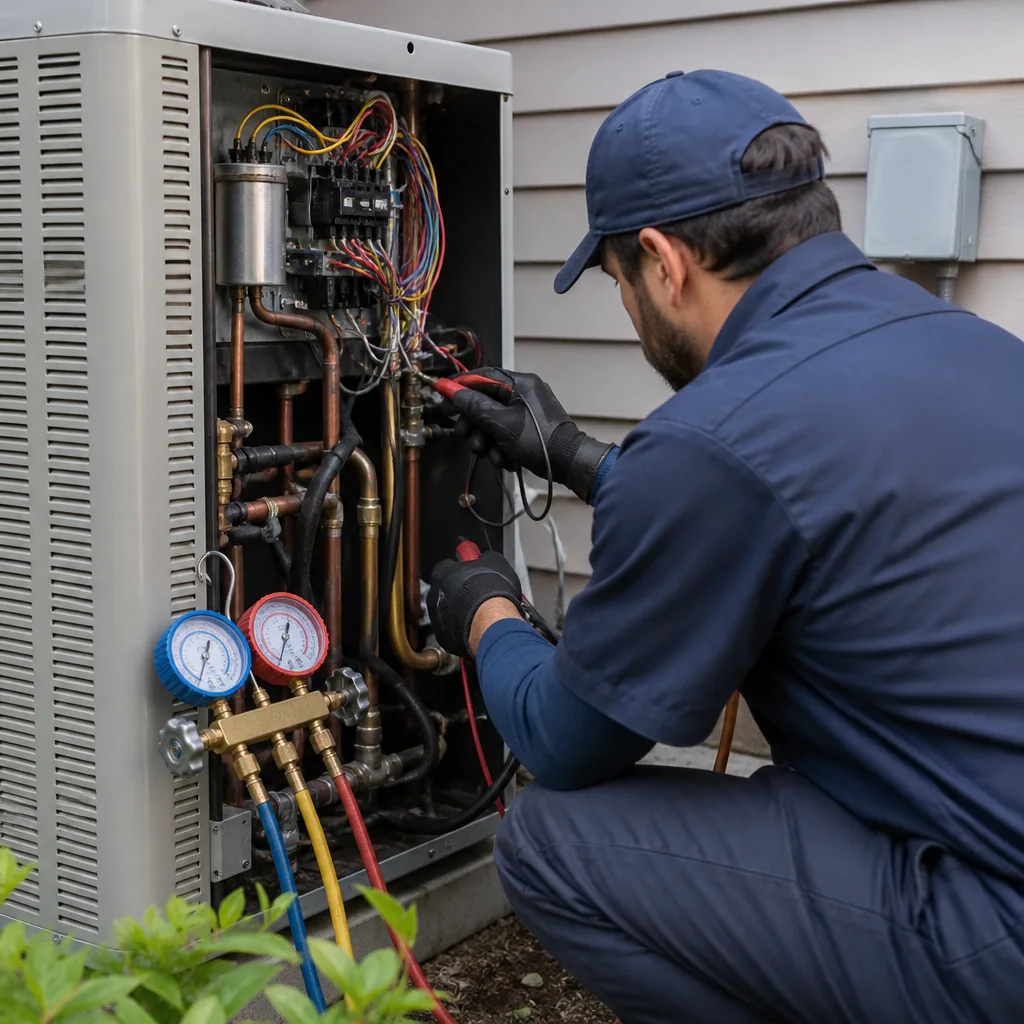
Not safe to do without training: Removing an old capacitor, discharging it safely, wiring the new one with the correct polarity markings, and checking the fan motor and compressor amp draw afterward. Those connections use spade terminals that need to be crimped or seated correctly, and a loose connection on a 440-volt capacitor circuit causes arcing and burn marks very quickly.
If you’re on the fence about whether it’s really the capacitor and not the fan motor or the contactor, that’s exactly what the diagnostic call is for. We’ll tell you what failed, why it failed, and what the written price is. Call Marco and the crew at (478) 400-5908 and you’ll get a live person, not a callback request.
“Tell me what it’s doing, and I’ll tell you what it costs – in writing, before we start.”
FAQs
A quality capacitor in a Carrier unit here typically lasts 7 – 10 years before its rated capacitance drops enough to matter, but the Georgia heat is a real factor. Capacitors degrade faster when the condenser sits in direct afternoon sun or against a heat-reflecting wall. We’ve replaced five-year-old capacitors near Abernathy Road where the units were running long cycles through hot brick-and-concrete microclimates. If your unit is older than eight years and the capacitor has never been changed, it’s living on borrowed time. Call (478) 400-5908 and we’ll test it on the next call before it fails at the worst moment.
No. A capacitor is a sealed component with a dielectric fluid inside; there is no serviceable part inside the can. When the capacitance drops or the case swells, the whole part gets replaced. Anyone who opens one up and “repairs” it is not doing you a favor. The good news is it’s one of the cheaper parts in the whole system to replace.
Most capacitor swaps are done in 30 – 60 minutes once we’re on site. That includes shutting down the system, discharging the old capacitor safely, removing it, installing the matched replacement, tightening the connections, testing the unit’s start-up amperage, and watching it run a full start cycle. We don’t rush the testing just because the part is simple.
Yes. Our service trucks in Sandy Springs carry the common Carrier-compatible dual-run ratings (35/5, 40/5, 45/5, 50/5) plus single-run fan capacitors and start capacitors for two-stage models. We also stock equivalent parts for the other brands we service: Trane and Lennox. On the rare occasion we need an unusual spec, it’s a same-day supply house pickup, not a multi-day wait. Call (478) 400-5908 and we’ll confirm we have yours on the truck before we head your way.
Written by Marco Benitez, Owner, Dalton Heating & Air Sandy Springs at Dalton Heating & Air Sandy Springs, serving Sandy Springs and nearby areas.