
 Furnace & heating
 AC repair
 Heat pumps
 Ductless mini splits
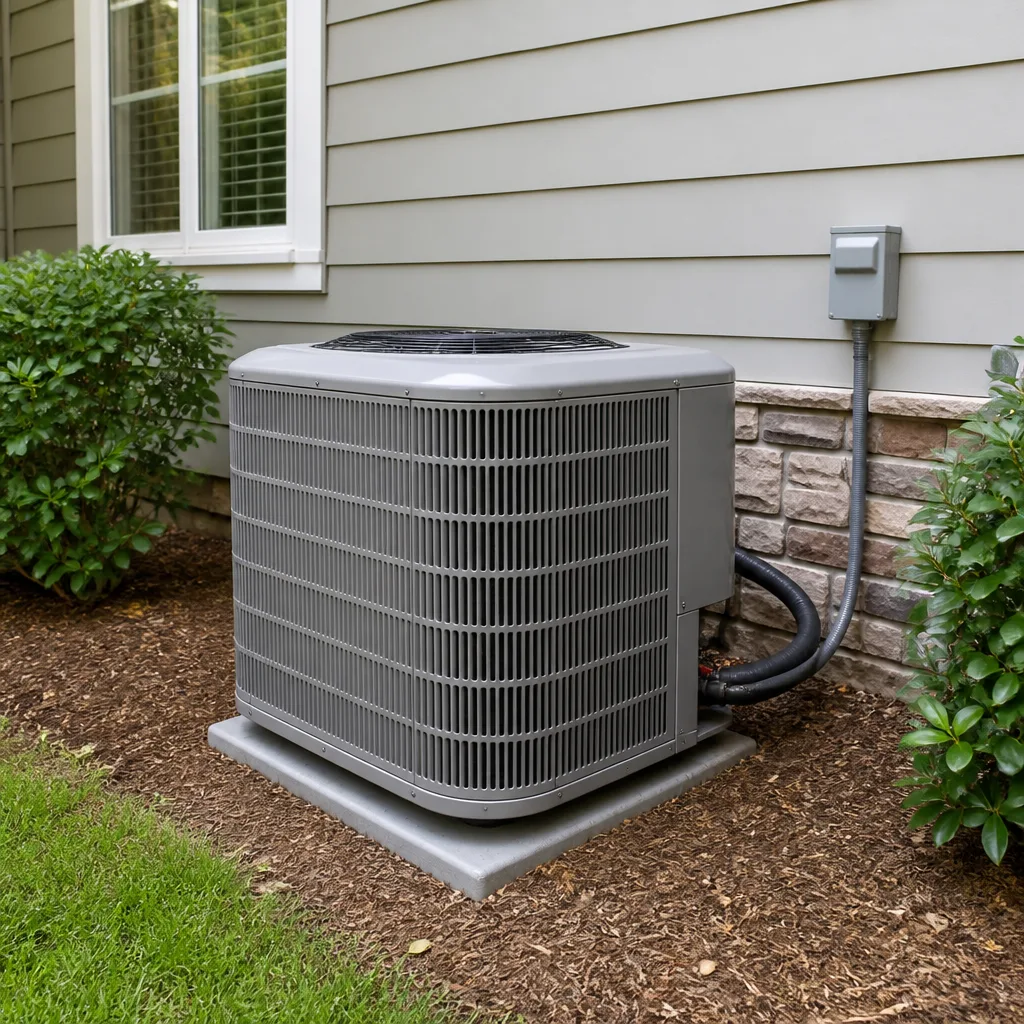 Carrier
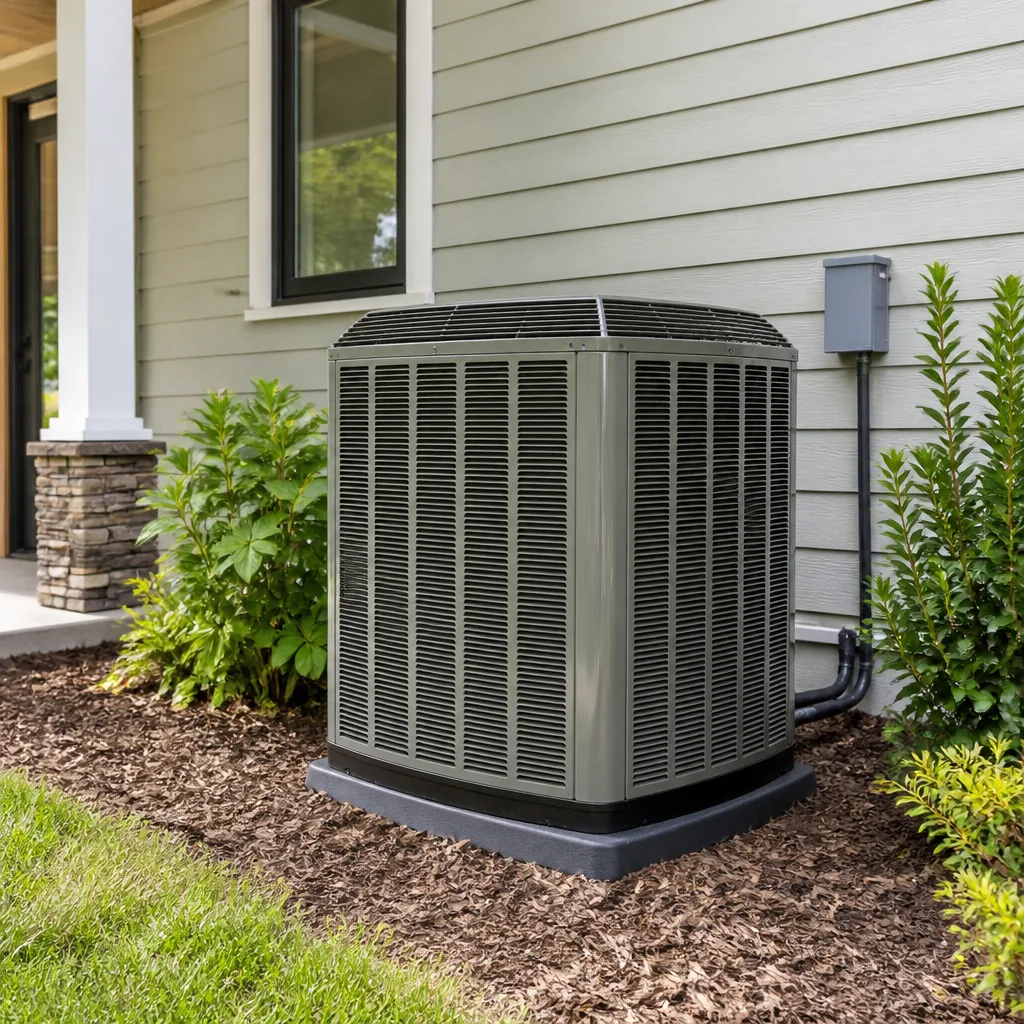 Trane
Trane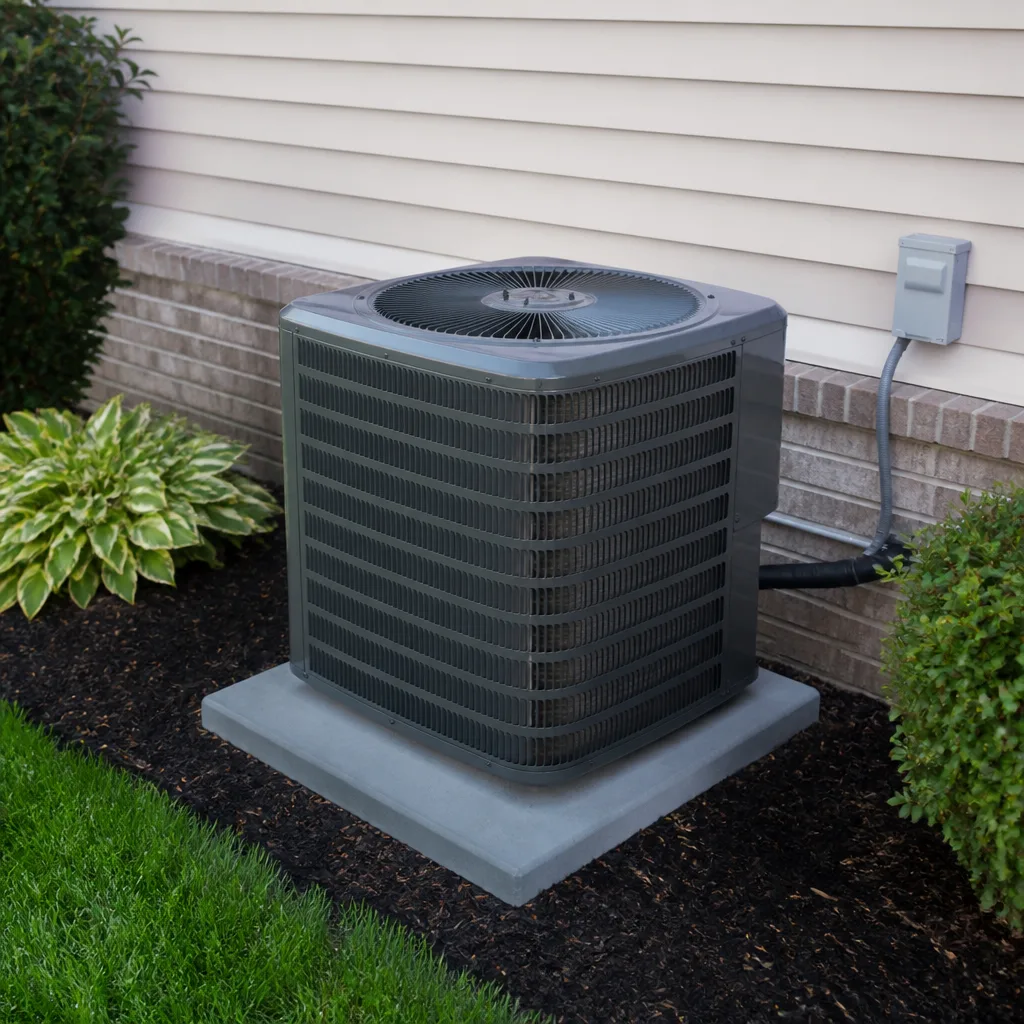 Goodman
Seasonal tune-up and full diagnostic on your Carrier, Trane, or Goodman system - readings shown to you before any repair is proposed
Diagnosis first, numbers second - you approve the repair price before a single part goes in.
Get your free estimateGoodman Capacitor Replacement: The Sandy Springs Owner’s Guide
We stock and install Goodman-compatible capacitors for most residential Goodman and Amana outdoor condensing units, with typical installed replacement running $150 – $375 in Sandy Springs depending on the capacitor’s rating and whether it’s a single or dual-run unit. Same-day service is usually available when you call before noon, and every job gets a written price before we touch a single wire. Most homeowners discover the problem when the outdoor unit hums but the fan won’t spin, or the compressor clicks and gives up on a 94-degree afternoon when the condenser has been baking on the west side of a house off Mount Vernon Highway.
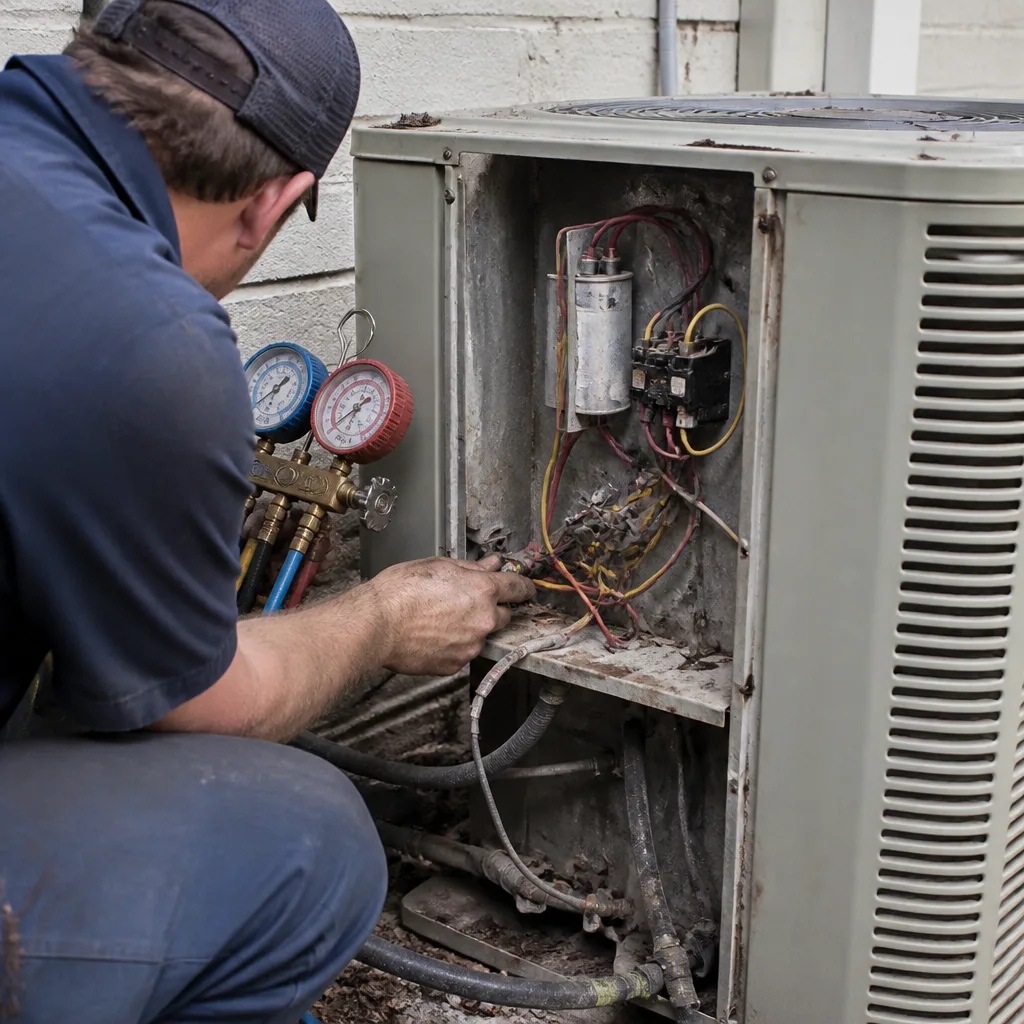
The capacitor is the electrical kick-starter for your Goodman’s fan motor and compressor. It stores voltage and releases it in a quick jolt to get those motors turning. When it fails, the system either won’t start at all or it strains, overheats, and shuts down on thermal overload. You might also catch it early if you see the capacitor’s top bulging like a soup can left in a hot car. That’s a visual tell worth checking before you lose cooling entirely.
Which Goodman Models This Applies To
If your outdoor unit says Goodman or Amana on the data plate, there’s a strong chance it uses a dual-run capacitor. That includes the GSX, GSZ, SSX, and SSZ series condensing units spanning 13 SEER through 16 SEER, plus the older CLQ and CK lines still running in plenty of Sandy Springs homes built in the 1990s and early 2000s. The capacitor itself is a small metal cylinder, typically 1.5 to 2 inches in diameter and 4 to 5 inches tall, mounted inside the electrical compartment behind the access panel.
The getting-it-right part is matching the microfarad (MFD or µF) rating printed on the capacitor’s side label, not guessing by the unit’s tonnage. A 3-ton Goodman may call for a 45/5 µF dual capacitor, while a 2.5-ton may want a 40/5. Close enough is not close enough here. We also match the voltage rating, typically 370 or 440 VAC. Goodman ships with OEM capacitors, and we carry both OEM and quality aftermarket equivalents like AmRad and Titan HD on the truck. The right aftermarket part often outlasts the original, but it has to have the same or higher voltage rating and the exact same microfarad rating, never approximate.
One compatibility gotcha worth knowing: Goodman units built after roughly 2010 shifted to oval capacitors in some models, where the older square ones won’t fit the mounting strap without an adapter. We see that mismatch occasionally when someone grabbed a universal part from a big-box store and then couldn’t close the access panel.
Styles & brands we work with
Signs Your Goodman Capacitor Replacement Is Failing
- Outdoor unit hums but the fan doesn’t turn. The capacitor has lost enough capacity to start the fan motor, so the motor just sits there drawing locked-rotor current until the thermal protector trips. This is the classic call we get from Sandy Springs homeowners who open the back door and hear the unit groaning.
- Compressor clicks and shuts off repeatedly. The compressor tries to start, can’t get the jolt it needs, and the start relay drops out. Repeat this enough times and the compressor windings take damage that a capacitor alone won’t fix.
- System runs for a few minutes, then the breaker trips. A weak capacitor forces the compressor to pull more current than the circuit can supply. The breaker is doing its job. The capacitor isn’t.
- AC is running but blowing warm or barely-cool air. Sometimes the fan motor runs on residual voltage but the compressor never actually starts, so the indoor unit pushes air across a coil that isn’t getting cold.
- Visible bulging, rust, or oil residue on the capacitor itself. Capacitors fail from heat and age. A bulged top means the internal dielectric has broken down and the can is under pressure. Oil leaking out means it’s already vented and it’s done.
See the difference
 Before
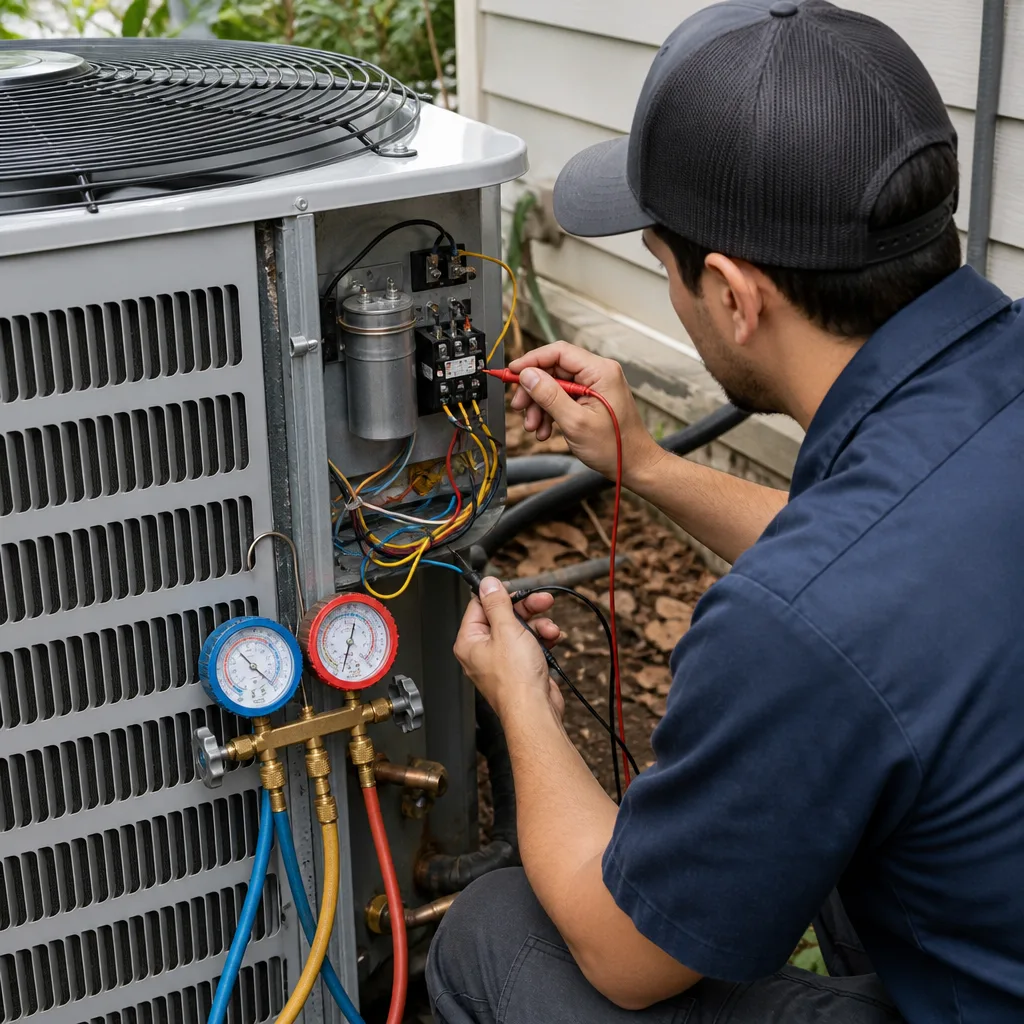 After
After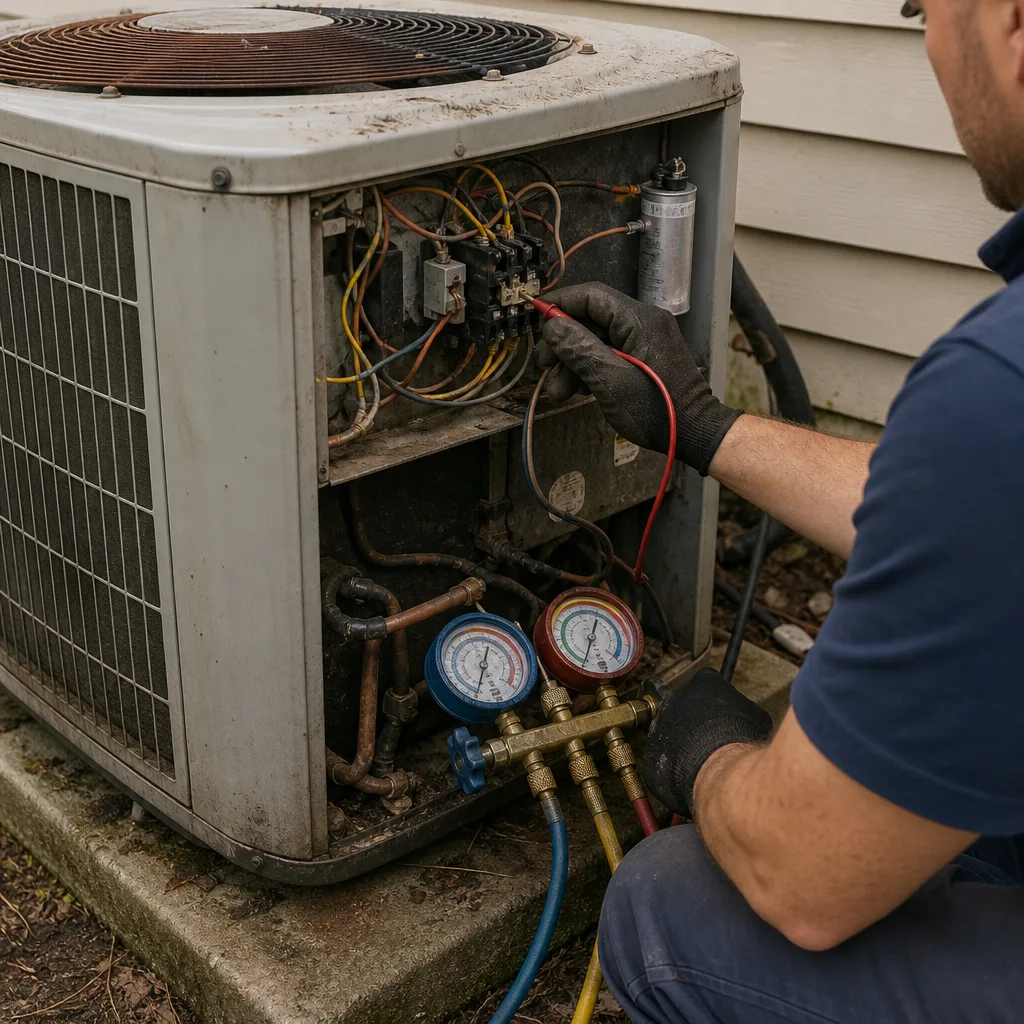 Before
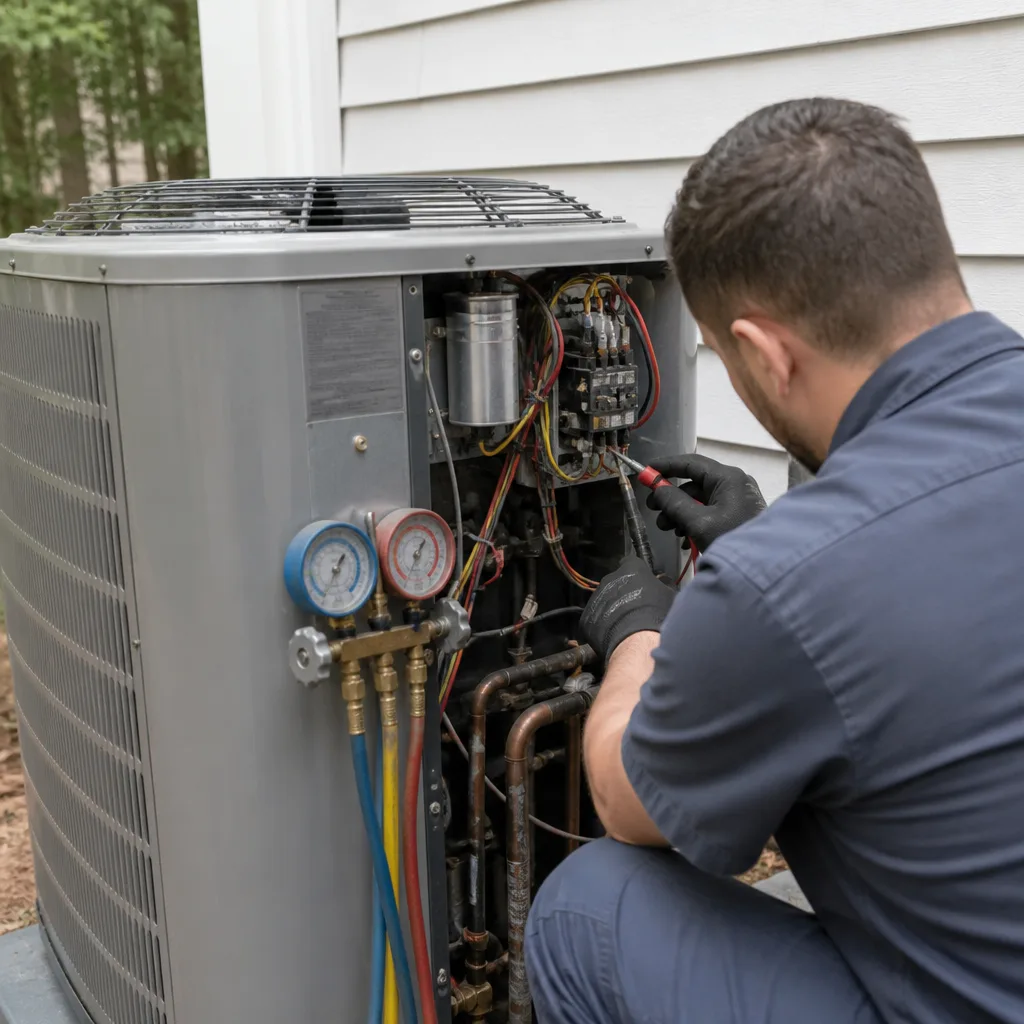 After
After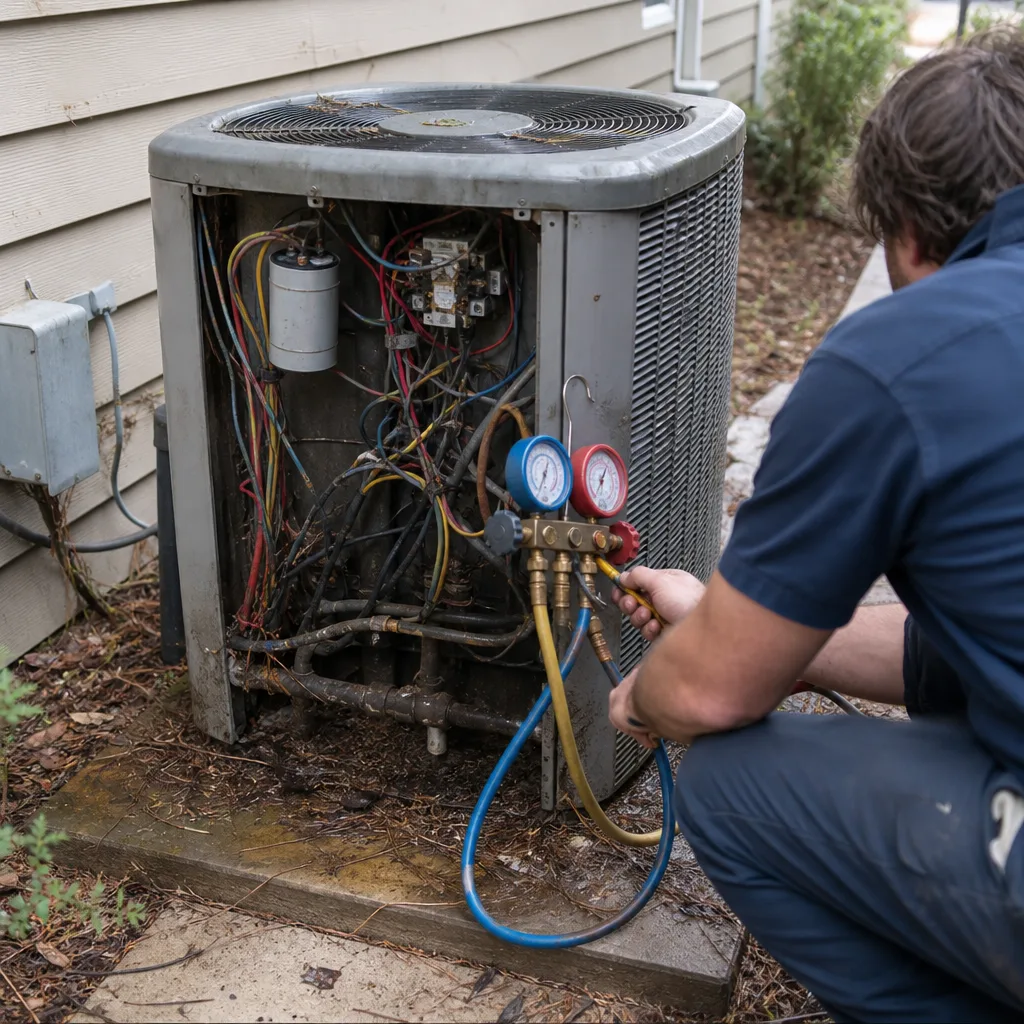 Before
 After
AfterReplacement Cost & What’s Included
For a Goodman capacitor replacement in Sandy Springs, you’re looking at $150 – $375 installed. A basic single capacitor swap falls at the lower end of that range. A dual-run capacitor, which runs both the fan and compressor, lands in the $225 – $375 range depending on the microfarad rating and whether we’re installing an OEM Goodman part or a premium aftermarket unit. The price you get is the price on the invoice. We write it down before any work begins, every time, no exceptions.
What’s included: the capacitor itself, the service call, testing of the fan motor and compressor to confirm the capacitor was the actual failure point, tightening all electrical connections in the condenser cabinet, and a full-year written guarantee on the repair. If the replacement capacitor or our workmanship fails inside 365 days, we come back at no charge under our 365-Day Done Right Promise. That’s the rule, not the exception.
One thing worth knowing: we don’t swap a capacitor and walk away while the system is still straining. We test the compressor’s amp draw after the new part goes in, because a failed capacitor can mask other problems, and a system that was running hot for weeks may have more going on. If we find something else, you’ll hear about it with a written price before we touch it.
DIY or Call Us?
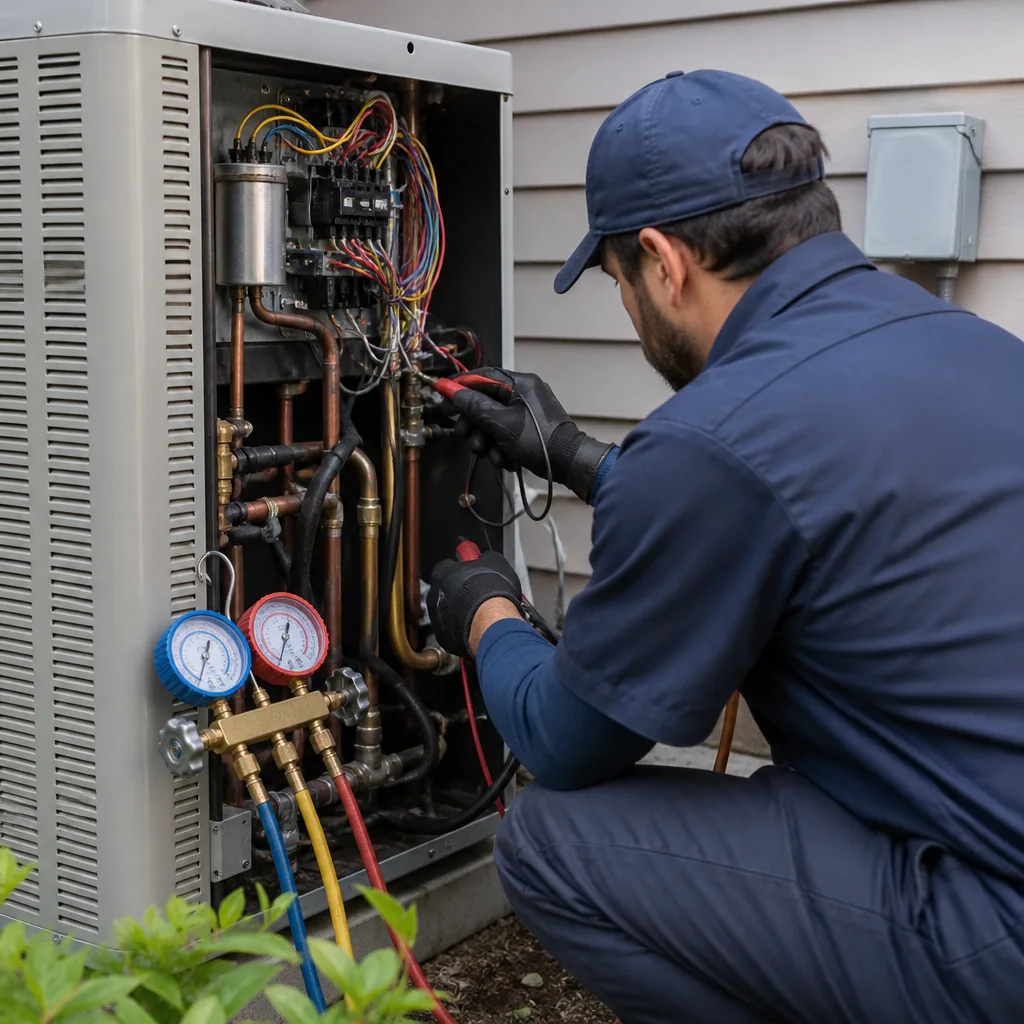
Let’s be straight about the danger here. A capacitor holds an electrical charge even after the disconnect is pulled. Touch the wrong terminals and you’ll get a shock that can stop your heart. We discharge the capacitor with a resistor before we handle it, and we still treat it like it’s live until we’ve verified it isn’t. This is not a part to swap casually. A trained technician with the right tools should handle the actual replacement.
What you can do safely: look at the capacitor through the access panel if you’re comfortable removing one panel (with power off at the disconnect and the breaker), and check for bulging or oil. That’s a diagnostic step, not a repair step. If it looks failed, call us at (478) 400-5908 and we’ll get a technician with the right capacitor for your Goodman on the way. Marco Benitez has walked plenty of Sandy Springs homeowners through this exact phone call: you describe what the unit is doing, we tell you what the job will cost, in writing, before we start.
FAQs
A Goodman capacitor in the Sandy Springs climate typically lasts 5 to 10 years, with most failing closer to the 5-year mark because Georgia heat plus frequent cycling wears them down faster than in milder climates. If your unit is over 5 years old and you’ve never had the capacitor replaced, it’s already on borrowed time.
No. A capacitor cannot be repaired. Once the internal dielectric breaks down, the part is done, and the only fix is a correct-rating replacement. Anyone offering to “repair” a capacitor is not doing you a favor. Call (478) 400-5908 for an honest replacement quote.
A Goodman capacitor replacement typically takes 30 to 60 minutes once the technician is on site, including pulling the disconnect, testing the old capacitor, installing the new one, checking amp draw on the compressor and fan motor, and buttoning everything back up. You’ll have a written price before the work starts, not after.
Yes. We carry the most common Goodman single and dual-run capacitor ratings on our service vehicles, including 35/5, 40/5, 45/5, 50/5, and 60/5 µF in both 370 and 440 VAC. We also stock OEM Goodman parts and quality aftermarket equivalents, plus capacitors for Carrier, Trane, and Lennox systems we service around Sandy Springs.
Written by Marco Benitez, Owner, Dalton Heating & Air Sandy Springs at Dalton Heating & Air Sandy Springs, serving Sandy Springs and nearby areas.